About this artwork
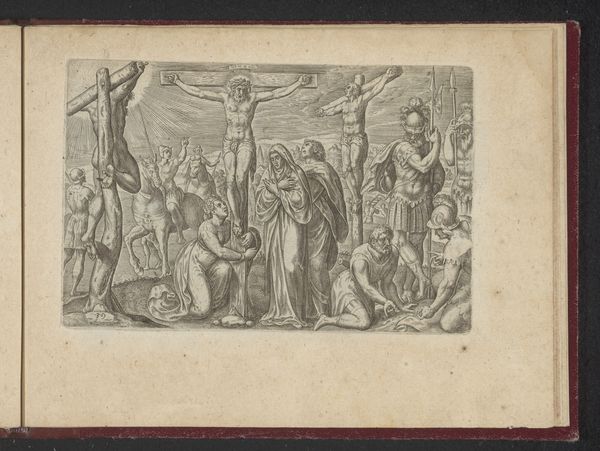
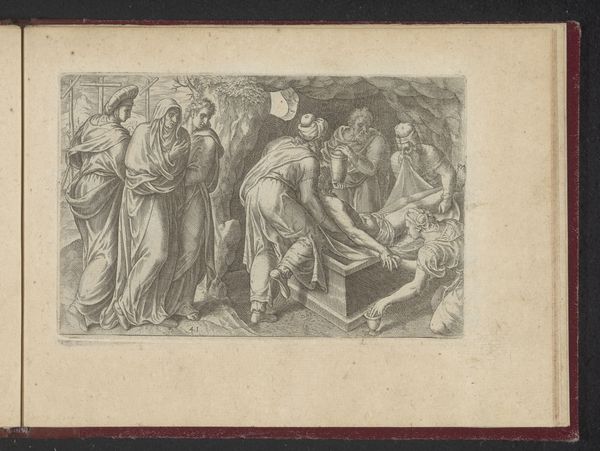
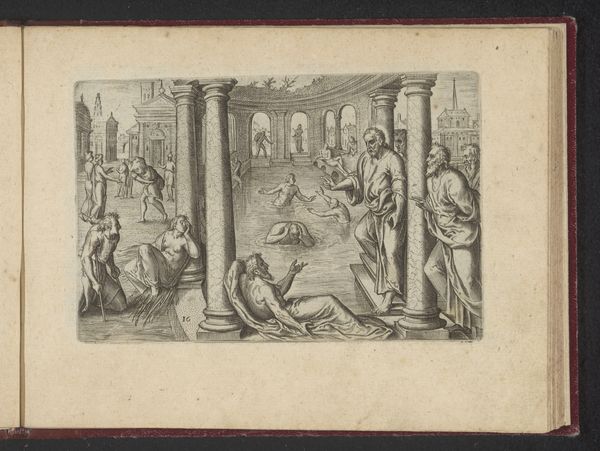
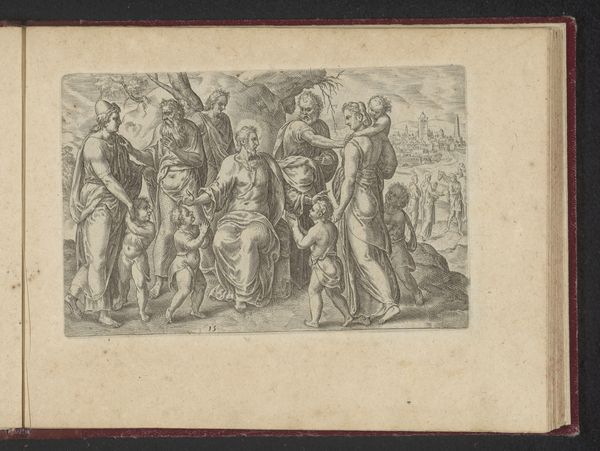
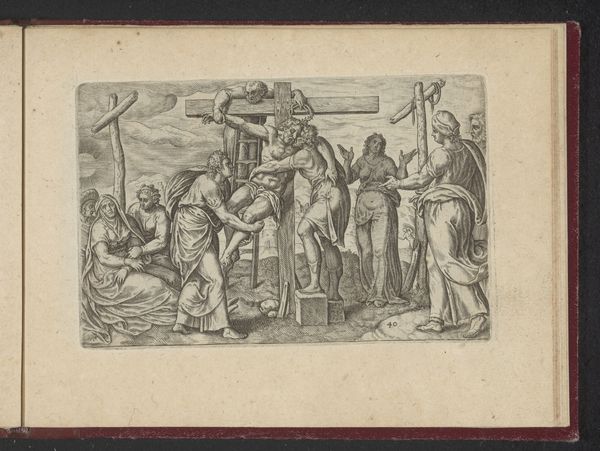
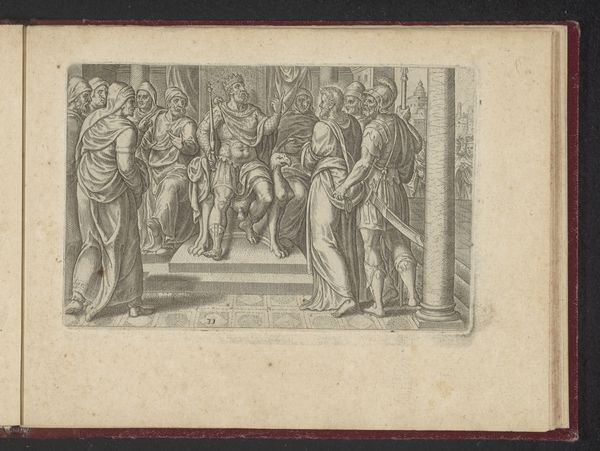
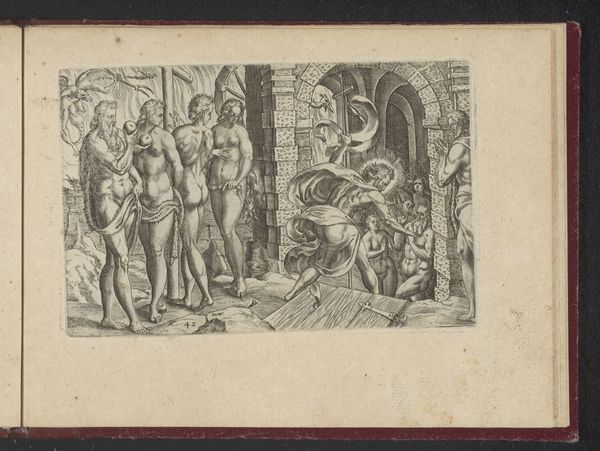
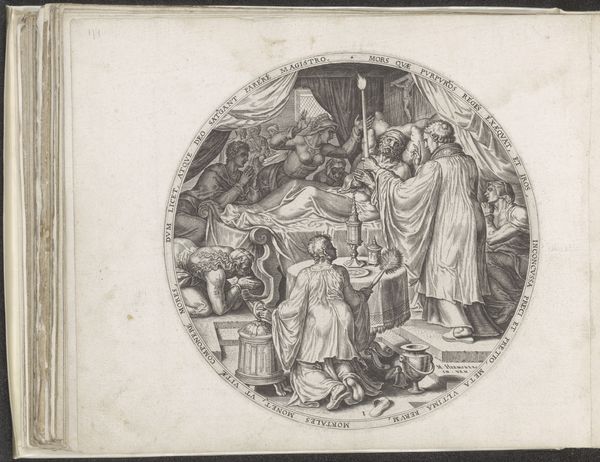
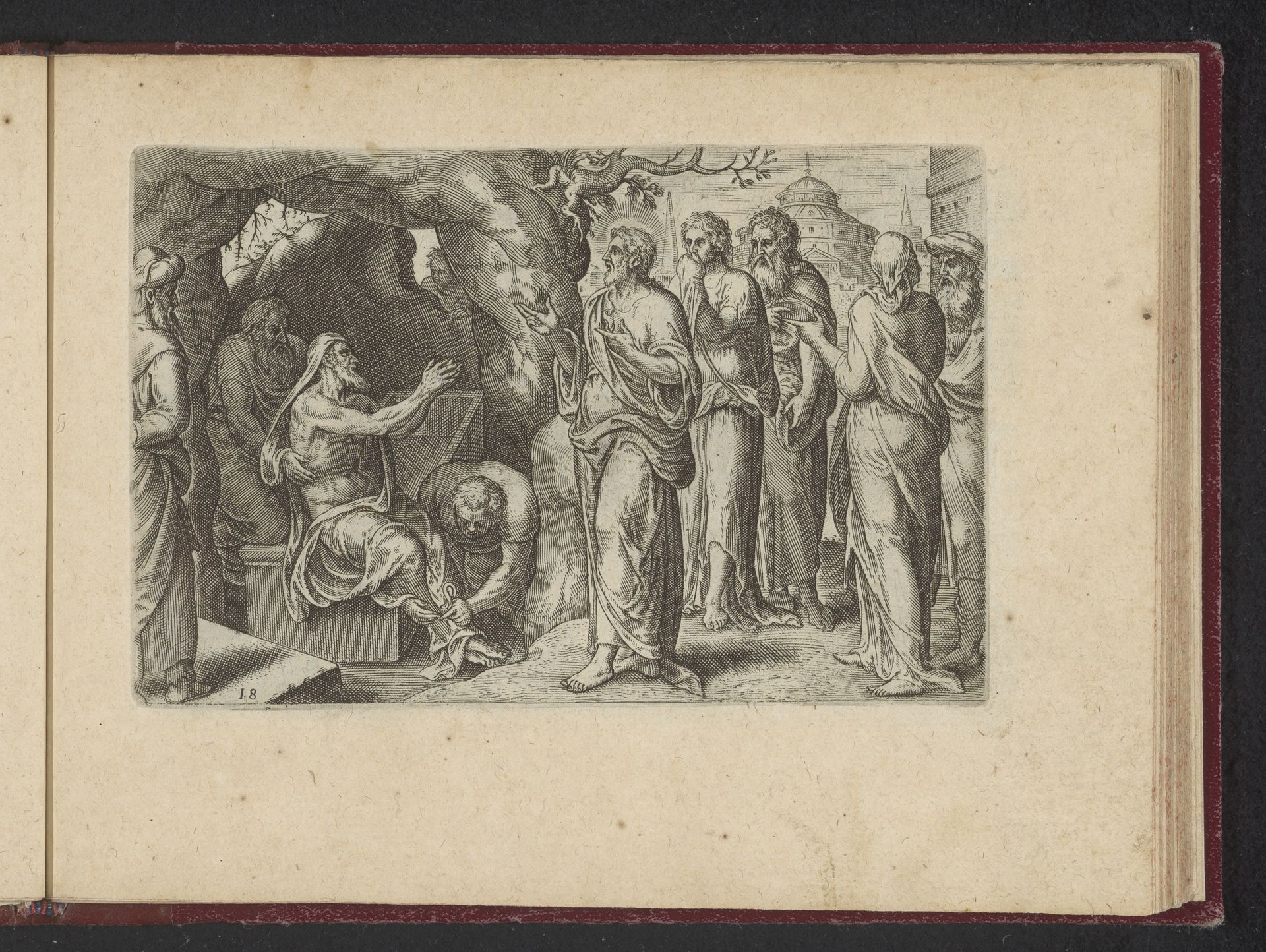
This is Philips Galle's engraving, "Opwekking van Lazarus," created around the late 16th century. The composition, dominated by fine lines and shading, evokes a somber yet miraculous atmosphere. Galle masterfully uses the contrast between light and shadow to direct our attention to the central figures: Lazarus emerging from his tomb and Christ, who stands tall. The lines, meticulously etched, define the folds of the clothing and the texture of the rocky landscape, creating depth and movement within the restricted monochrome palette. The semiotic weight of this image lies in its challenge to fixed states. Death, symbolized by Lazarus bound and entombed, is destabilized by the potent figure of Christ. Through formal elements, Galle visually articulates a narrative of transformation, challenging our understanding of the boundaries between life and death. The artwork operates within a structured religious discourse, yet it also destabilizes these established meanings through its emphasis on visual and emotional impact. It allows for continuous re-evaluation.

Artwork details
- Medium
- print, engraving
- Dimensions
- height 92 mm, width 139 mm, height 137 mm, width 183 mm
- Location
- Rijksmuseum
- Copyright
- Rijks Museum: Open Domain
Tags
Comments
Share your thoughts
About this artwork
This is Philips Galle's engraving, "Opwekking van Lazarus," created around the late 16th century. The composition, dominated by fine lines and shading, evokes a somber yet miraculous atmosphere. Galle masterfully uses the contrast between light and shadow to direct our attention to the central figures: Lazarus emerging from his tomb and Christ, who stands tall. The lines, meticulously etched, define the folds of the clothing and the texture of the rocky landscape, creating depth and movement within the restricted monochrome palette. The semiotic weight of this image lies in its challenge to fixed states. Death, symbolized by Lazarus bound and entombed, is destabilized by the potent figure of Christ. Through formal elements, Galle visually articulates a narrative of transformation, challenging our understanding of the boundaries between life and death. The artwork operates within a structured religious discourse, yet it also destabilizes these established meanings through its emphasis on visual and emotional impact. It allows for continuous re-evaluation.
Comments
Share your thoughts