About this artwork
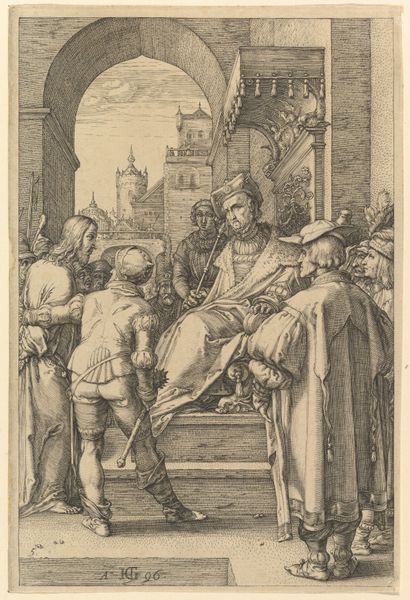
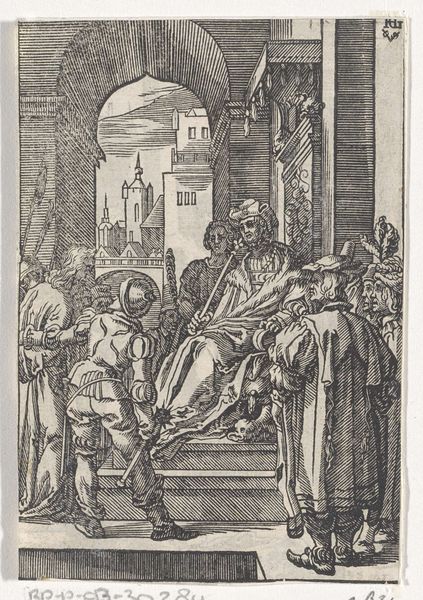
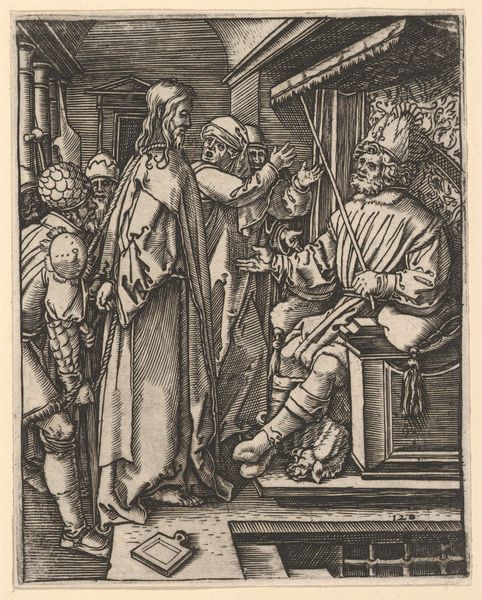
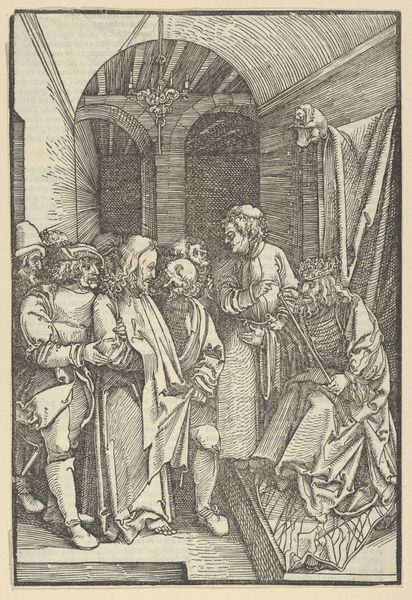
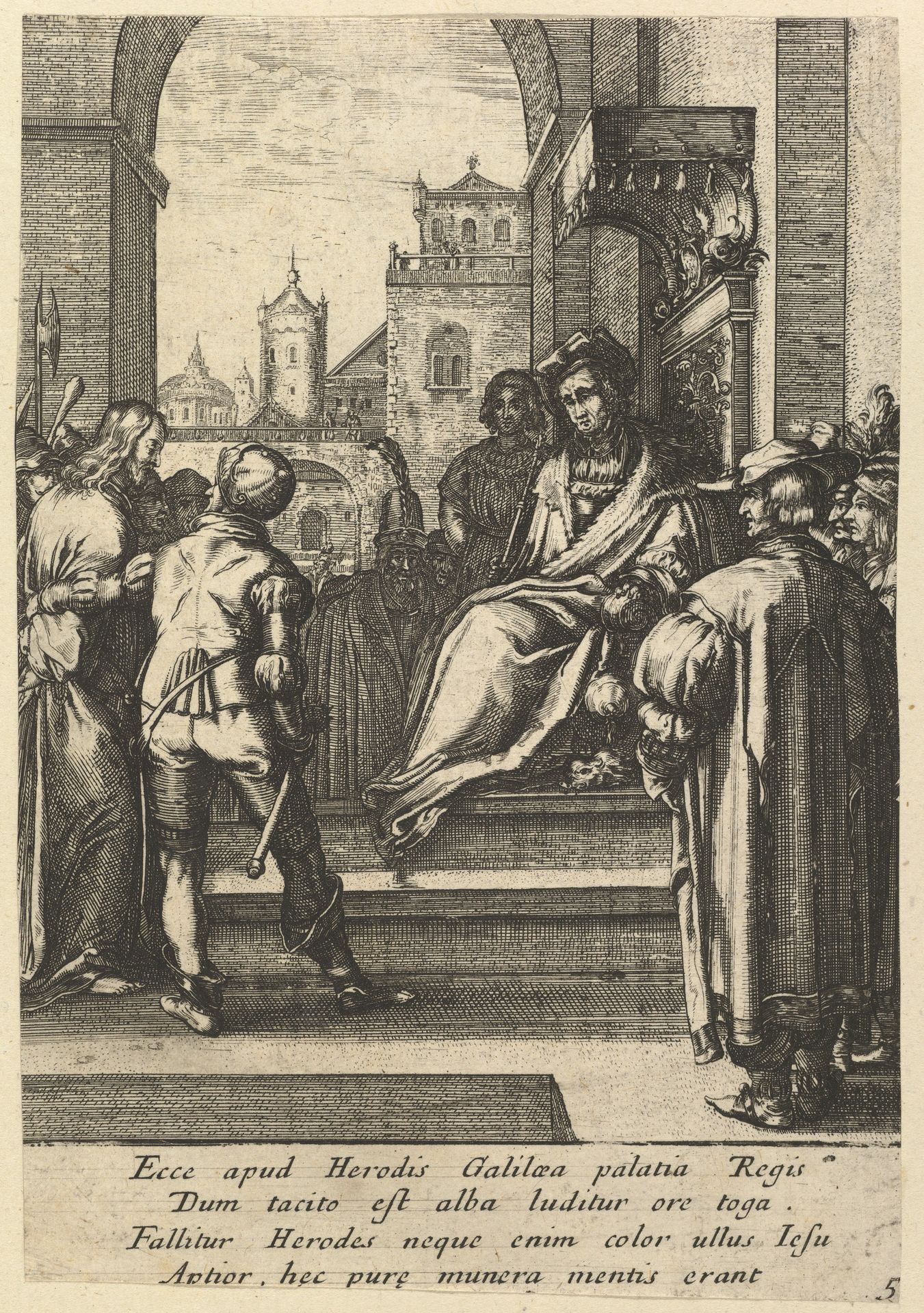
Nicolas Cochin etched this print depicting "Christ Before Pilate" in the 17th century. Note the prominent display of power through architectural and symbolic elements: Pilate sits elevated on an elaborate throne, a visual cue to his authority. Consider how the motif of the "throne" resonates through history, from ancient Near Eastern potentates to the Roman emperors, each imparting a sense of divine right and power. Yet, this image subverts the trope. Pilate appears almost weary, while Christ stands humbly before him. This juxtaposition elicits a psychological tension, challenging the viewer to question the nature of true authority. The throne as a seat of power has taken on diverse forms across cultures, yet its underlying message remains: it is a stage upon which dramas of power, justice, and fate are enacted. The symbolic weight of this motif persists, evolving through history and engaging us on a subconscious level, prompting contemplation on the human condition and the timeless dance between power and morality.
Christ Before Pilate, from "The Passion of Christ"
1610 - 1700


Artwork details
- Medium
- drawing, print, engraving
- Dimensions
- Sheet: 5 9/16 × 3 7/8 in. (14.1 × 9.8 cm)
- Location
- Metropolitan Museum of Art, New York, NY
- Copyright
- Public Domain
Tags
Comments
Share your thoughts
About this artwork
Nicolas Cochin etched this print depicting "Christ Before Pilate" in the 17th century. Note the prominent display of power through architectural and symbolic elements: Pilate sits elevated on an elaborate throne, a visual cue to his authority. Consider how the motif of the "throne" resonates through history, from ancient Near Eastern potentates to the Roman emperors, each imparting a sense of divine right and power. Yet, this image subverts the trope. Pilate appears almost weary, while Christ stands humbly before him. This juxtaposition elicits a psychological tension, challenging the viewer to question the nature of true authority. The throne as a seat of power has taken on diverse forms across cultures, yet its underlying message remains: it is a stage upon which dramas of power, justice, and fate are enacted. The symbolic weight of this motif persists, evolving through history and engaging us on a subconscious level, prompting contemplation on the human condition and the timeless dance between power and morality.
Comments
Share your thoughts