1876
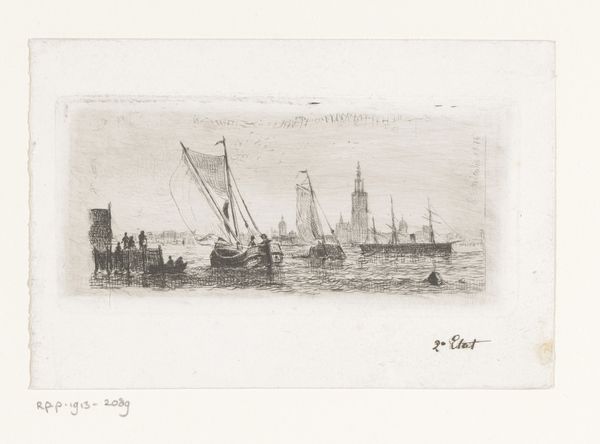
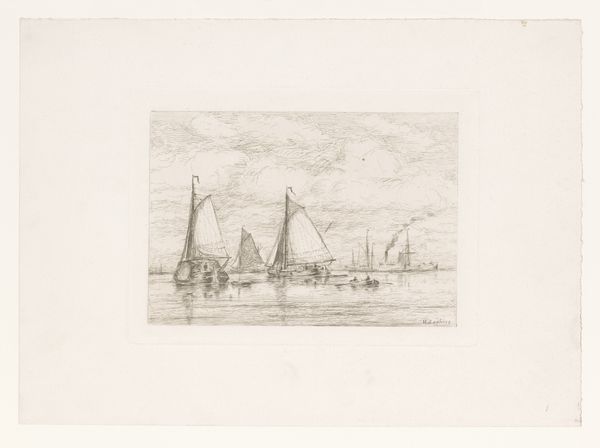
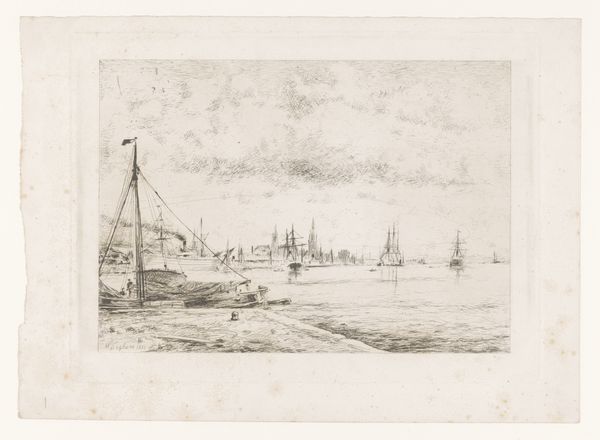
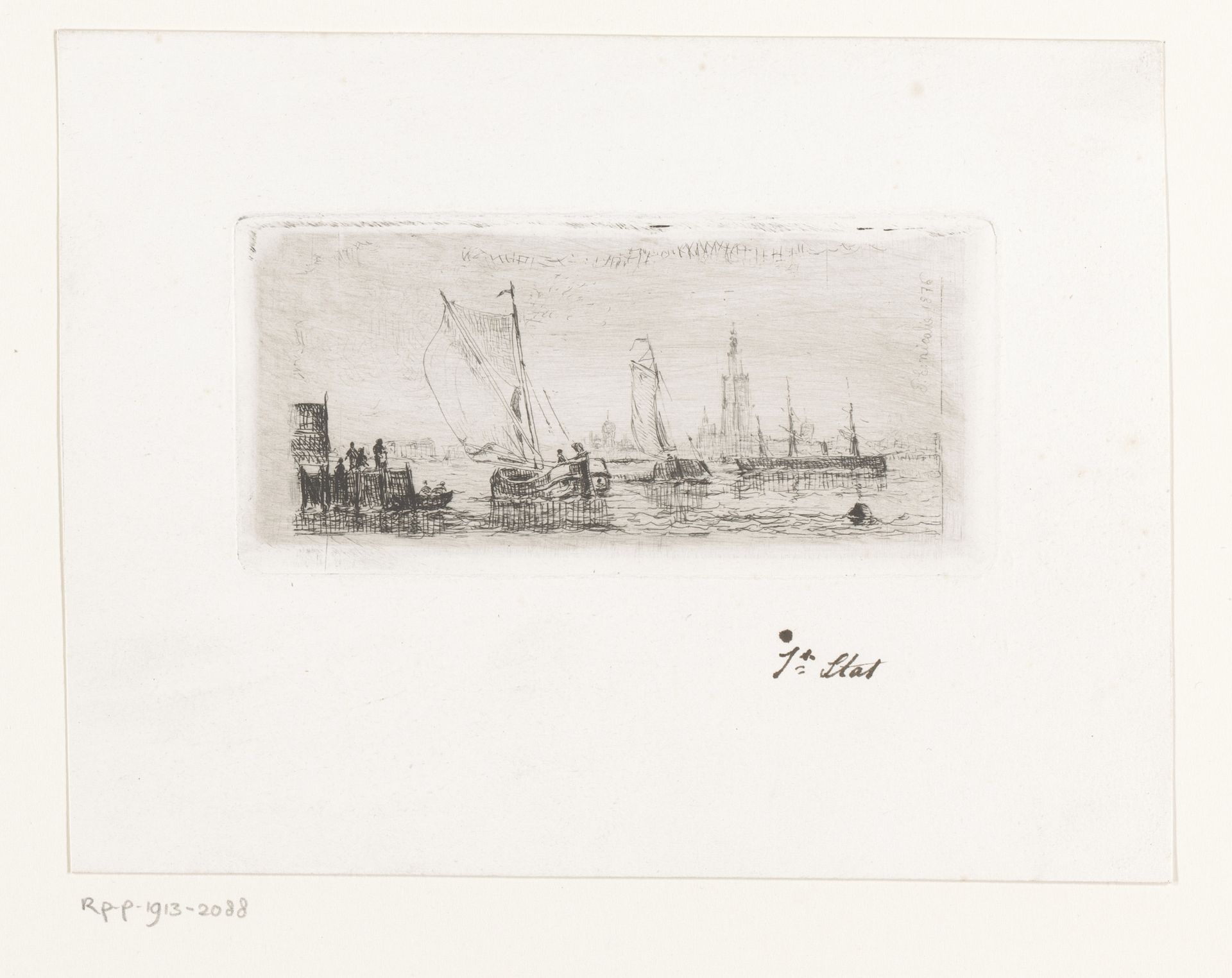
Schepen in het water bij de haven van Antwerpen

Paul Emile Nicolié
1828 - 1894Location
RijksmuseumListen to curator's interpretation
Curatorial notes
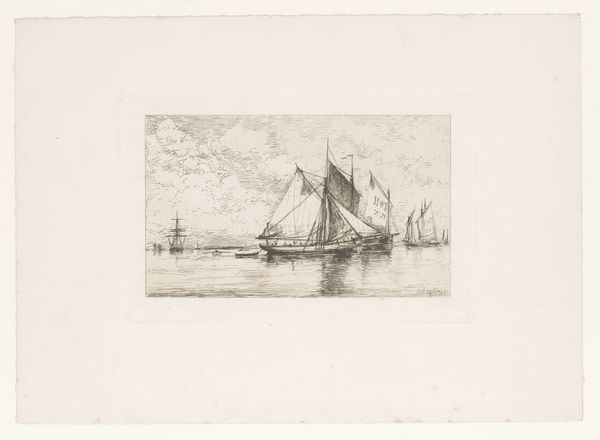
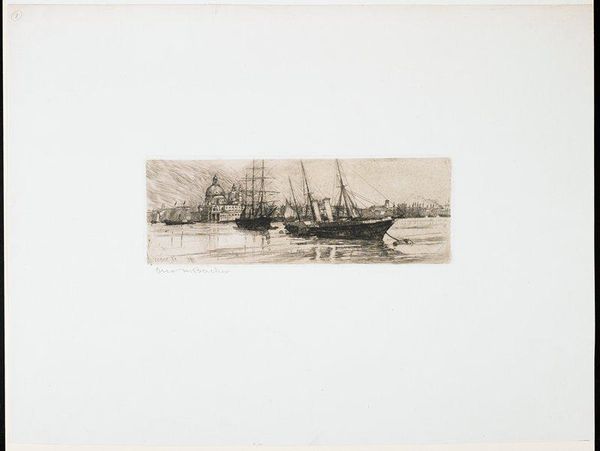
Editor: This etching, "Ships in the Water near the Port of Antwerp," was created by Paul Emile Nicolie in 1876. The monochromatic palette gives it a rather nostalgic feel. What kind of imagery do you think the artist wanted to portray with it? Curator: It’s interesting you pick up on the nostalgic feel. Looking at this, I'm immediately drawn to the interplay of light and shadow. See how the masts echo the steeples in the distance, tying maritime activity to the city's spiritual heart? The harbor, throughout time, has always been a locus for trade and movement, it makes me wonder, what symbolic meanings of voyage or transit do you observe? Editor: I see the symbolism with trade routes! The boats could also represent adventure, change, maybe even uncertainty for some people. So, the etching style almost gives the piece a distant, fading-memory sort of mood? Curator: Precisely! The medium enhances that. Etching captures intricate details, but also leaves room for interpretation through its textures. Also, the choice of etching instead of a painting is critical. How do you see etching's graphic nature informing its cultural resonance at the end of the 19th century? Editor: Hmmm… I suppose, the etchings are easily reproduced as prints. That also meant wider circulation, it brought a lot of artwork to more people! Curator: Yes, democratization through reproducibility. Nicolie immortalized an industrious age. We glimpse an intersection of individual stories within this collective, echoing throughout culture still. Editor: That’s a helpful reminder to consider artistic intent with materials, too! It goes deeper than I thought! Curator: Indeed. We uncover connections by examining even the finest visual threads!