About this artwork
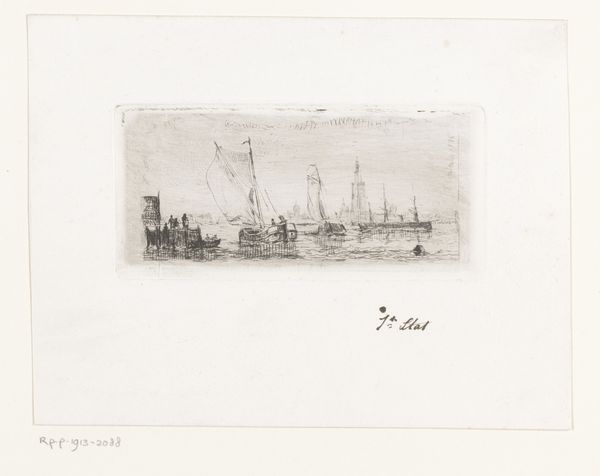
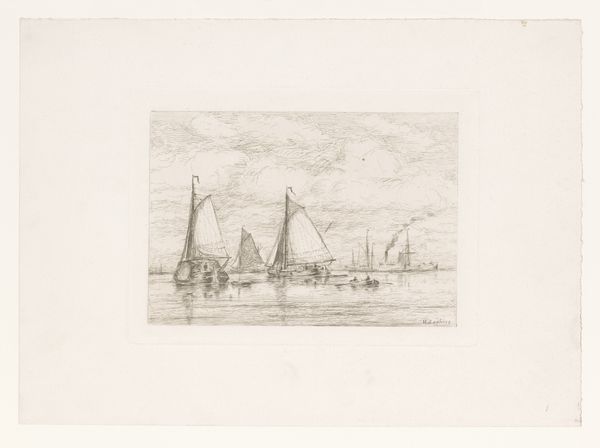
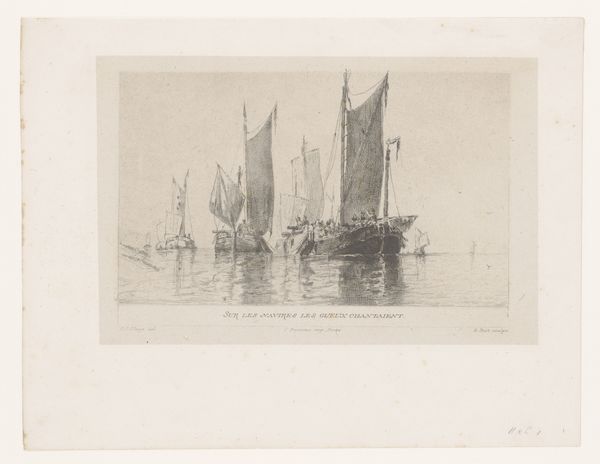
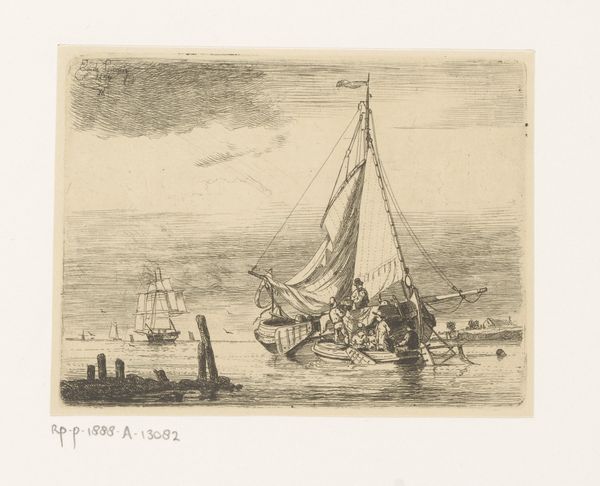
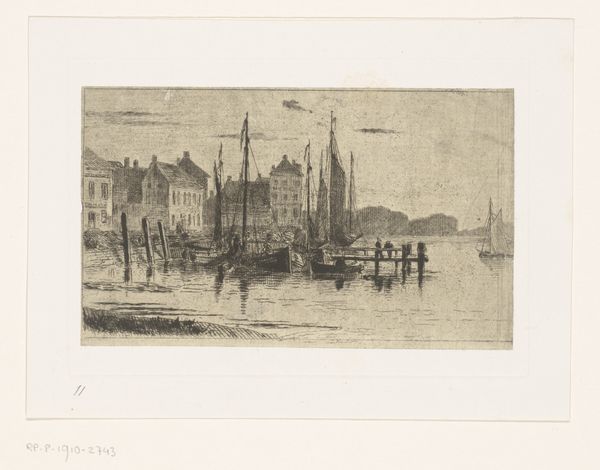
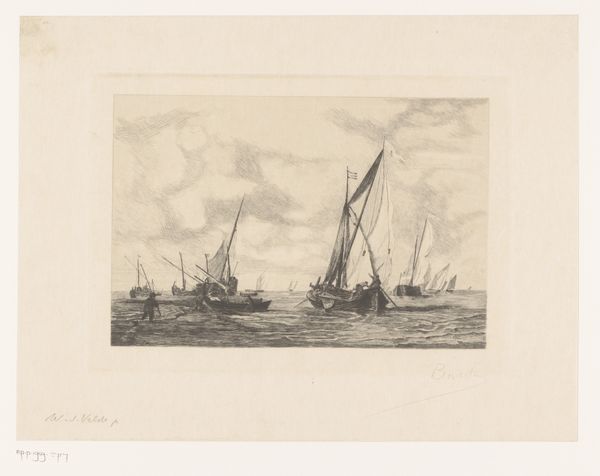
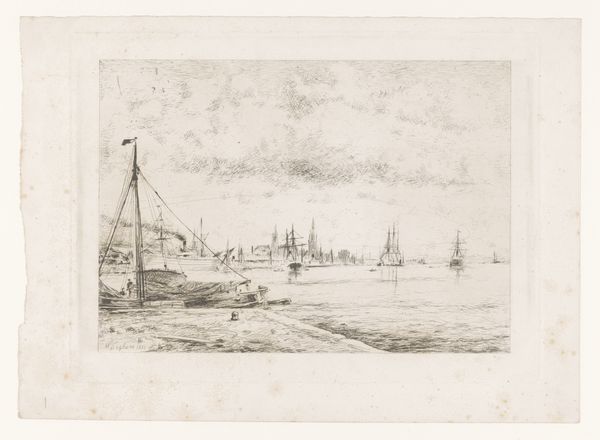
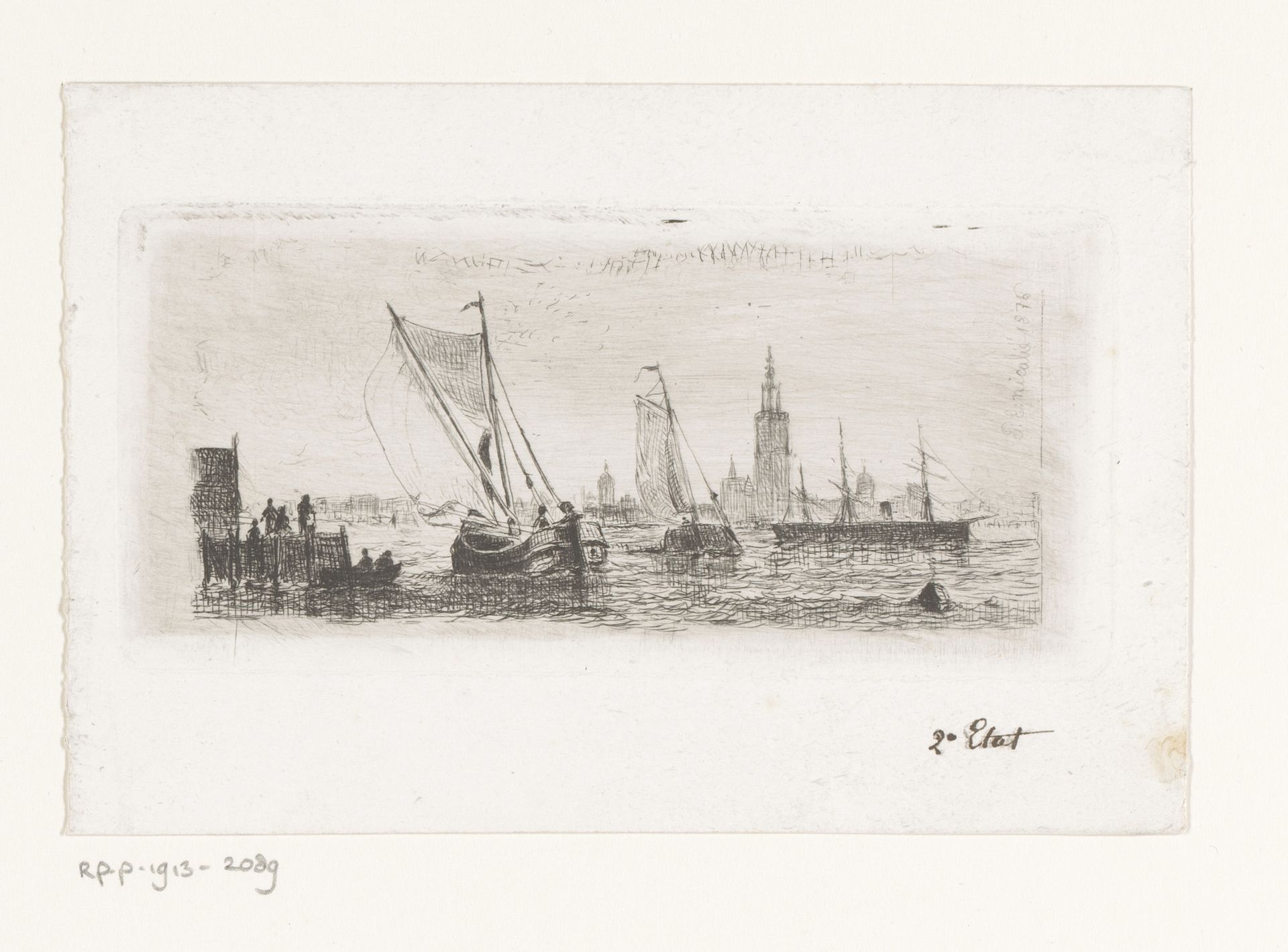
Paul Emile Nicolie made this etching of ships in the harbor of Antwerp sometime in the 19th century. This is a print, and it's worth considering how that process shapes what we see. The artist would have covered a metal plate with a waxy, acid-resistant ground. He then used a sharp needle to draw his composition, exposing the metal underneath. The plate was then submerged in acid, which bit into the exposed lines, creating grooves. Ink was applied to the plate, filling these grooves, and the surface was wiped clean. Finally, the plate was pressed onto paper, transferring the ink and creating the print. This process allows for the creation of multiple identical images, making art more accessible and reflecting the rise of industrialization and mass production during this time. Look closely, and you can see the delicate lines and tonal variations achieved through this meticulous process. The print captures a bustling harbor scene, but also hints at the changing landscape of art and society.
Schepen in het water bij de haven van Antwerpen 1876

Paul Emile Nicolié
1828 - 1894Location
RijksmuseumArtwork details
- Medium
- print, etching
- Dimensions
- height 74 mm, width 155 mm
- Location
- Rijksmuseum
- Copyright
- Rijks Museum: Open Domain
Tags
impressionism
etching
landscape
etching
cityscape
Comments
No comments
About this artwork
Paul Emile Nicolie made this etching of ships in the harbor of Antwerp sometime in the 19th century. This is a print, and it's worth considering how that process shapes what we see. The artist would have covered a metal plate with a waxy, acid-resistant ground. He then used a sharp needle to draw his composition, exposing the metal underneath. The plate was then submerged in acid, which bit into the exposed lines, creating grooves. Ink was applied to the plate, filling these grooves, and the surface was wiped clean. Finally, the plate was pressed onto paper, transferring the ink and creating the print. This process allows for the creation of multiple identical images, making art more accessible and reflecting the rise of industrialization and mass production during this time. Look closely, and you can see the delicate lines and tonal variations achieved through this meticulous process. The print captures a bustling harbor scene, but also hints at the changing landscape of art and society.
Comments
No comments