About this artwork
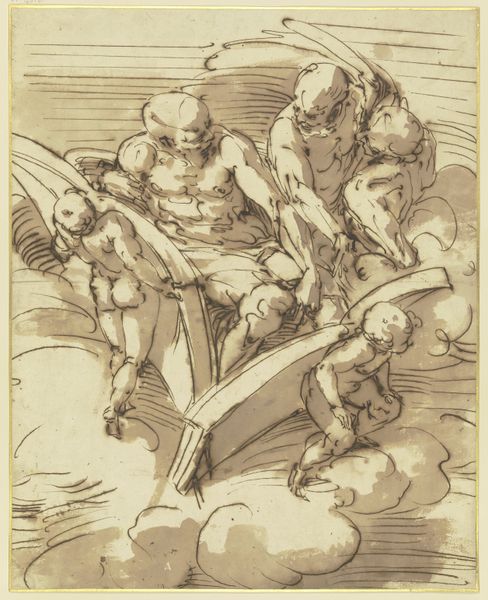
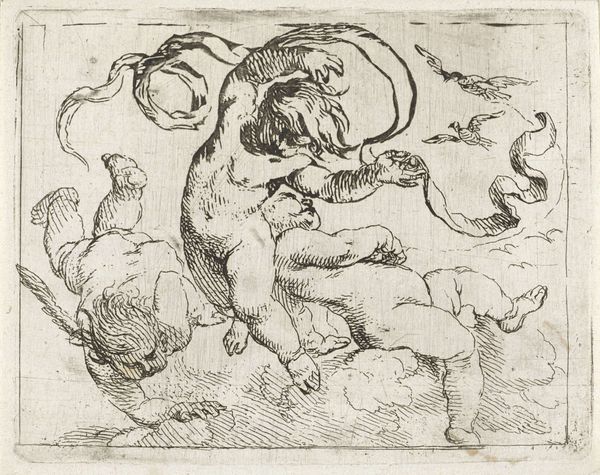
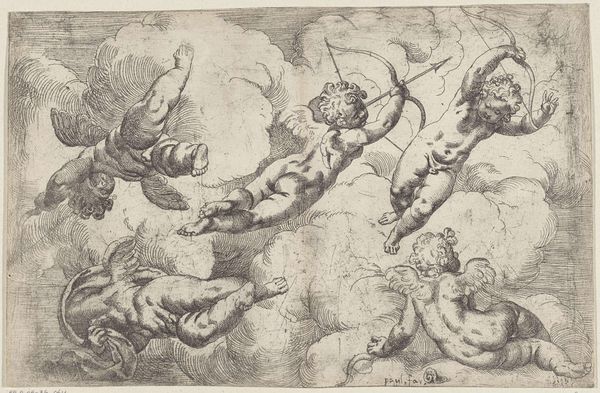
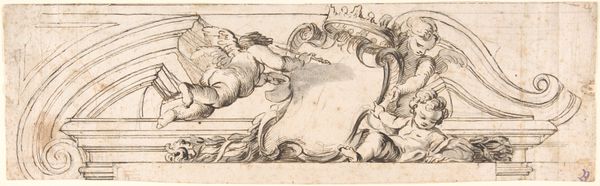
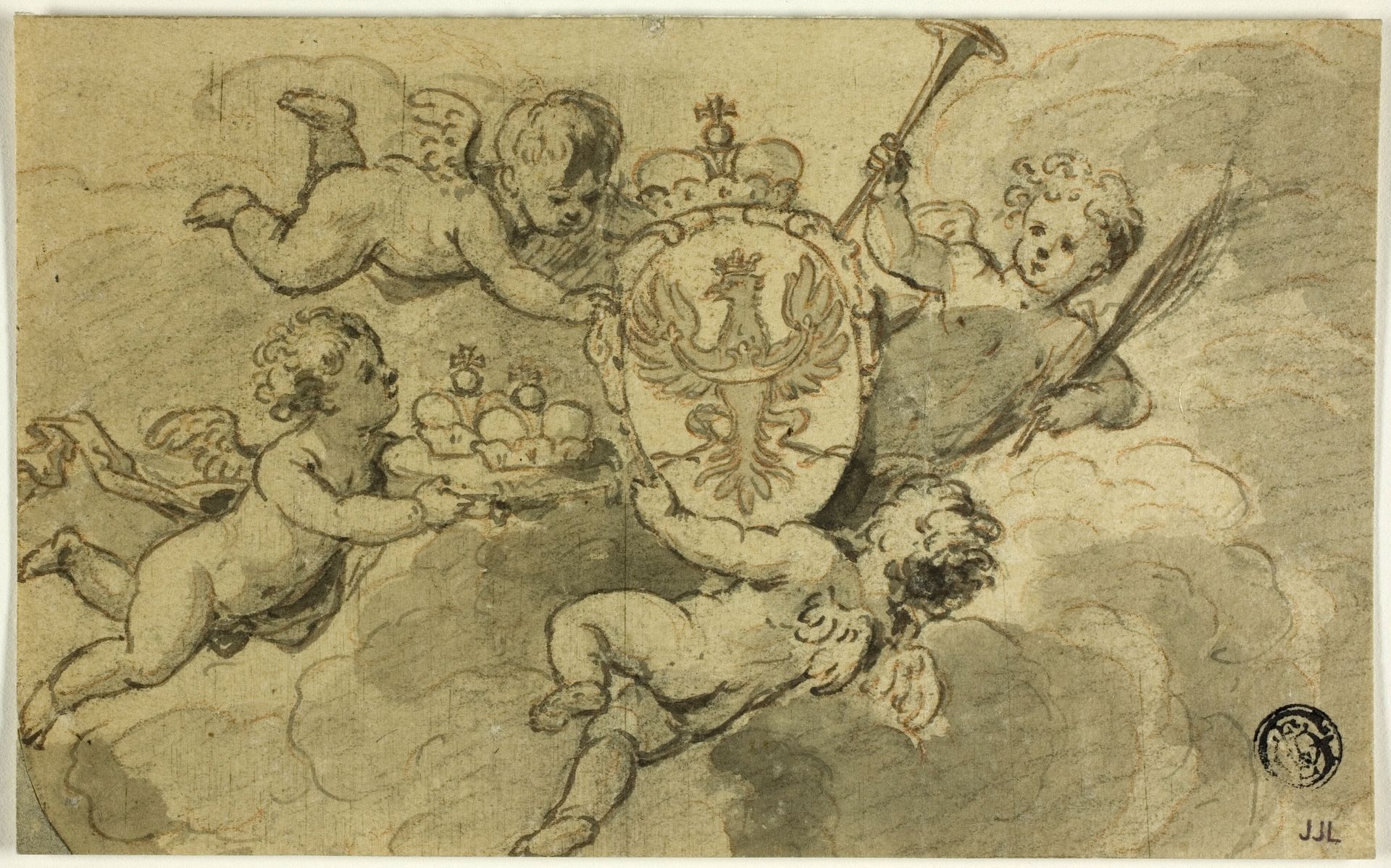
Gerard de Lairesse created this drawing called *Putti and Coat of Arms* using pen and brown ink with gray wash on cream laid paper. De Lairesse worked during the Dutch Golden Age, a period marked by economic prosperity and cultural flourishing for the Dutch Republic. Here, putti, those chubby male children often found in baroque art, surround a coat of arms. These figures are not gender-neutral. They are gendered as male, and they are an idealized version of male. Historically, the image of putti in art was often associated with themes of love, innocence, and divine presence. What does it mean to see them represented here, lifting the coat of arms? The coat of arms itself serves as a symbol, an assertion of identity, prestige, and lineage. By combining it with putti, de Lairesse is perhaps imbuing it with a sense of divine right, or eternal glory. The artwork invites reflection on power, heritage and legacy.
Putti and Coat of Arms
n.d.


Artwork details
- Medium
- drawing, print, paper, ink, chalk
- Dimensions
- 97 × 157 mm
- Location
- The Art Institute of Chicago
- Copyright
- Public Domain
Tags
Comments
Share your thoughts
About this artwork
Gerard de Lairesse created this drawing called *Putti and Coat of Arms* using pen and brown ink with gray wash on cream laid paper. De Lairesse worked during the Dutch Golden Age, a period marked by economic prosperity and cultural flourishing for the Dutch Republic. Here, putti, those chubby male children often found in baroque art, surround a coat of arms. These figures are not gender-neutral. They are gendered as male, and they are an idealized version of male. Historically, the image of putti in art was often associated with themes of love, innocence, and divine presence. What does it mean to see them represented here, lifting the coat of arms? The coat of arms itself serves as a symbol, an assertion of identity, prestige, and lineage. By combining it with putti, de Lairesse is perhaps imbuing it with a sense of divine right, or eternal glory. The artwork invites reflection on power, heritage and legacy.
Comments
Share your thoughts