About this artwork
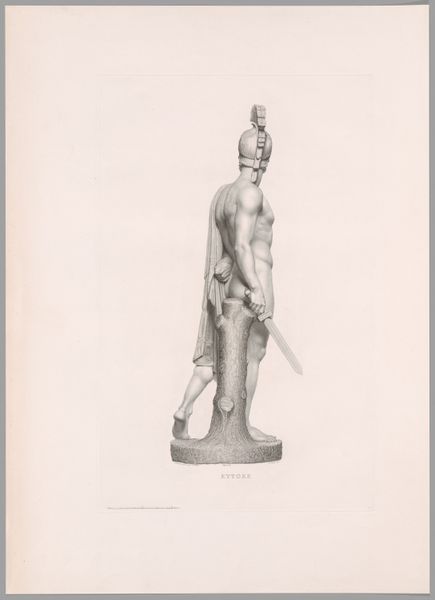
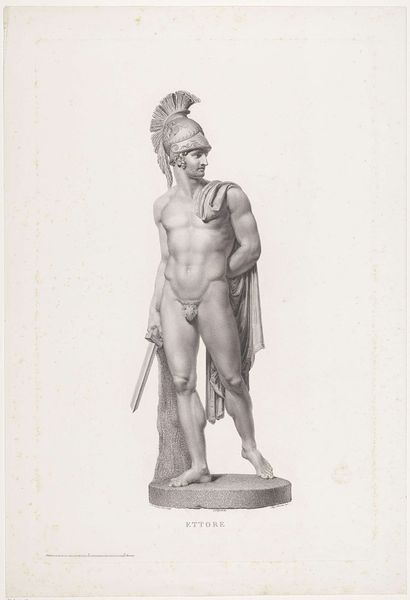
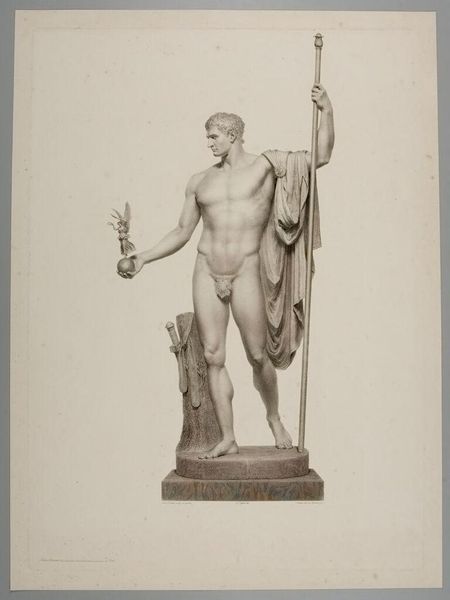
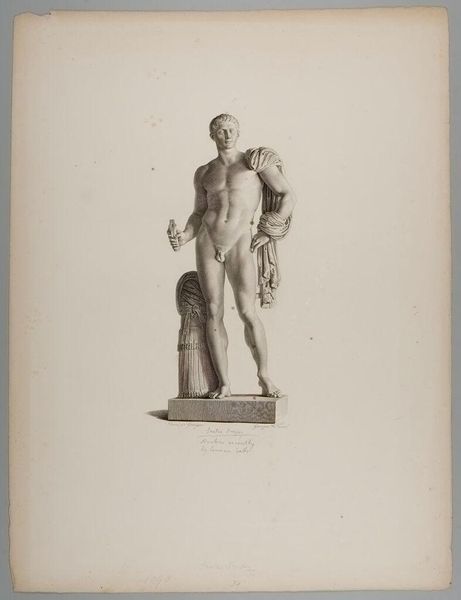
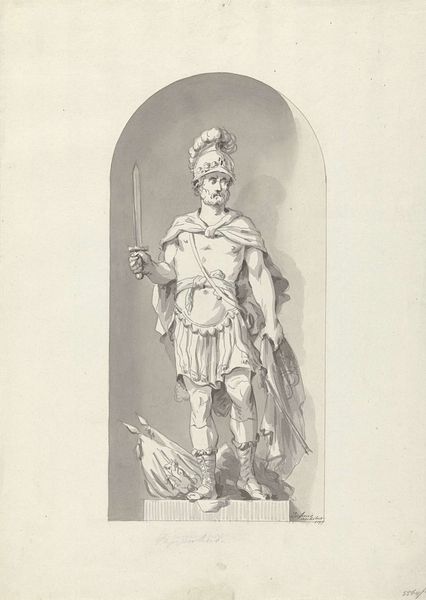
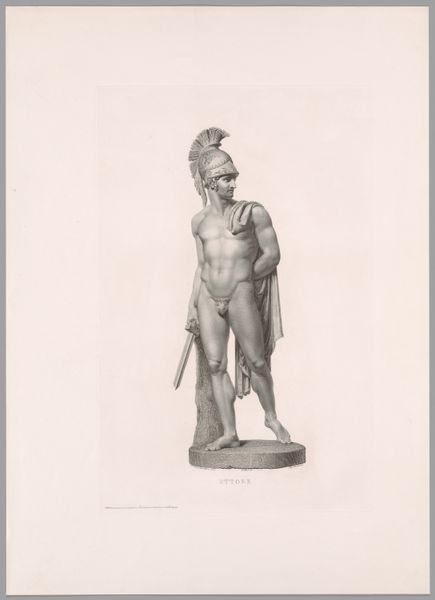
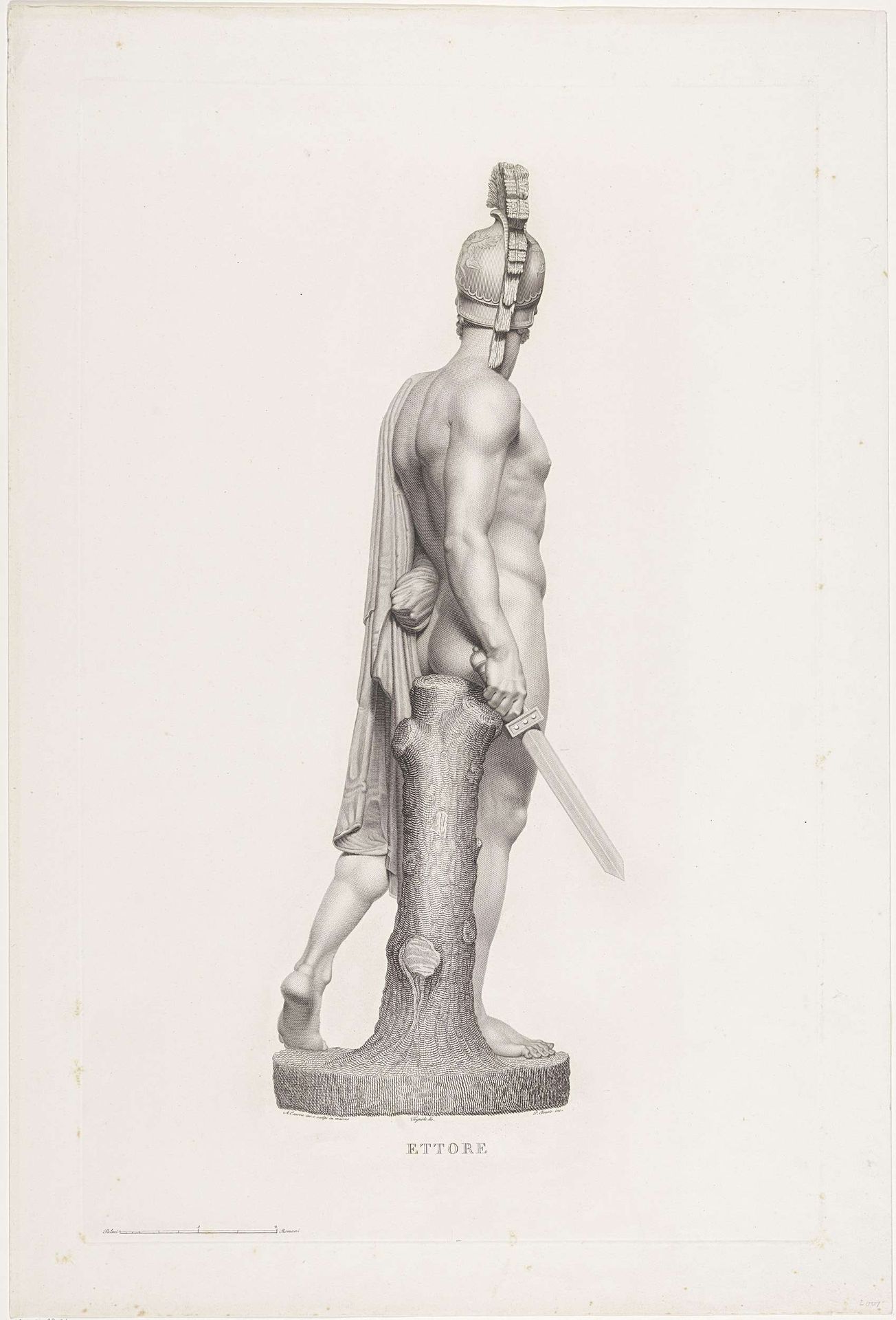
This is Pietro Bonato's print of Hector, made in the late eighteenth or early nineteenth century. The medium here is lithography, a relatively new technology at the time, which allowed for the relatively quick and cheap reproduction of images. The print is made using a stone matrix; the design is drawn on the surface with a greasy crayon, then treated with acid to fix it. The stone is then dampened and inked; the ink adheres only to the greasy areas, and is transferred to paper in a press. This process allowed Bonato to create a detailed and precise image of the sculpture, with delicate shading and fine lines. The lithographic process, therefore, allowed Bonato to make this classical hero accessible to a wider audience, connecting ancient ideals with contemporary society. It demonstrates how new technologies democratize culture and challenge established hierarchies.

Artwork details
- Medium
- drawing, graphite
- Dimensions
- height 640 mm, width 406 mm
- Copyright
- Rijks Museum: Open Domain
Tags
portrait
drawing
neoclacissism
classical-realism
charcoal drawing
figuration
form
pencil drawing
line
graphite
history-painting
graphite
Comments
No comments
About this artwork
This is Pietro Bonato's print of Hector, made in the late eighteenth or early nineteenth century. The medium here is lithography, a relatively new technology at the time, which allowed for the relatively quick and cheap reproduction of images. The print is made using a stone matrix; the design is drawn on the surface with a greasy crayon, then treated with acid to fix it. The stone is then dampened and inked; the ink adheres only to the greasy areas, and is transferred to paper in a press. This process allowed Bonato to create a detailed and precise image of the sculpture, with delicate shading and fine lines. The lithographic process, therefore, allowed Bonato to make this classical hero accessible to a wider audience, connecting ancient ideals with contemporary society. It demonstrates how new technologies democratize culture and challenge established hierarchies.
Comments
No comments