About this artwork
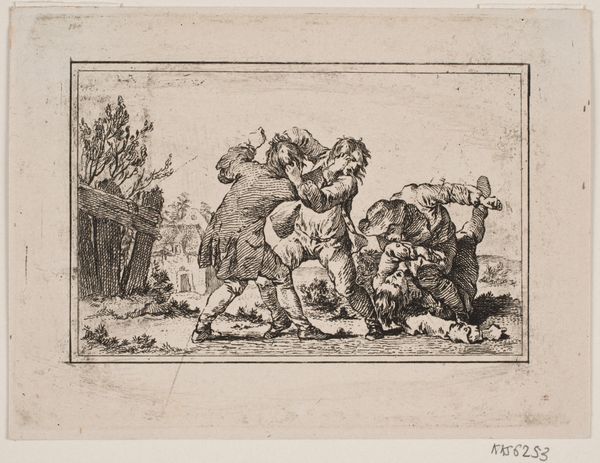
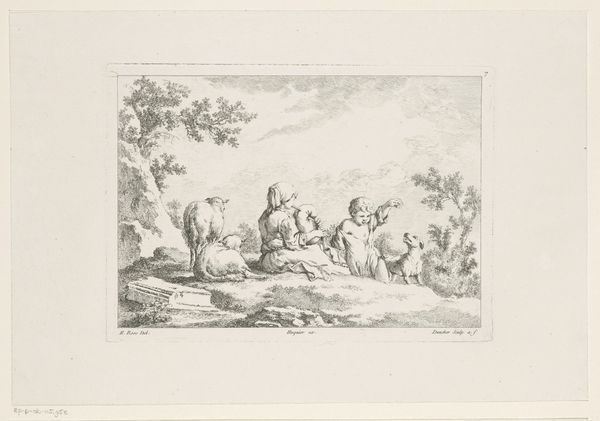
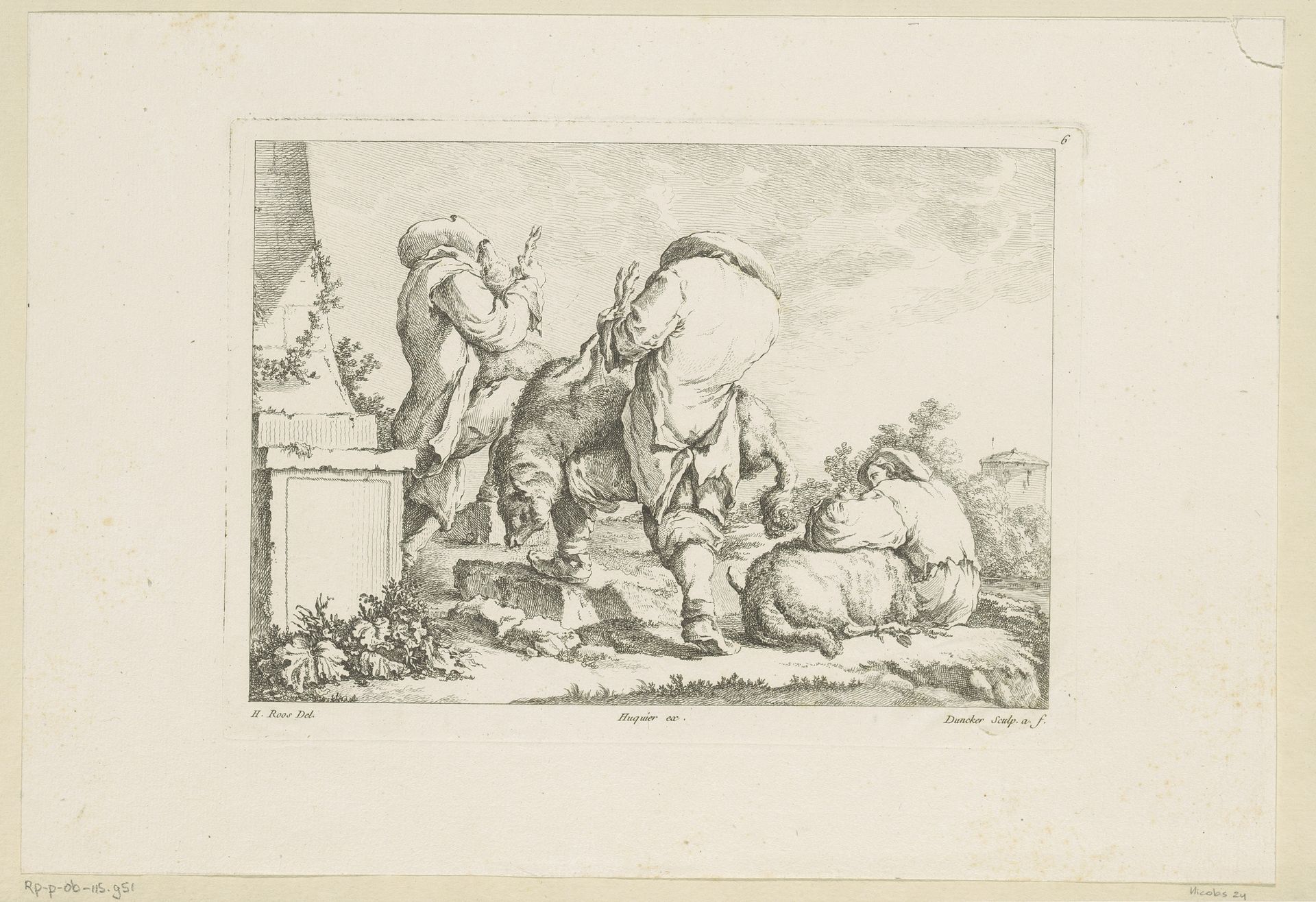
Balthasar Anton Dunker created this print, "Drie mannen vangen drie schapen," sometime in the late 18th century. Dunker, working in an era defined by the Enlightenment, offers us a pastoral scene that subtly questions the era's ideals. The image presents three men in the act of capturing three sheep, yet there's an undeniable awkwardness to their movements. The men seem more clumsy than capable. Dunker subtly critiques the conventional artistic representations of rural life which often idealized the simplicity and virtue of country folk. What does it mean to depict labor this way? Is it a commentary on class, a reflection of the social hierarchy where the laboring class was often viewed with a mix of disdain and amusement by the elite? The emotional tone is muted, almost detached, inviting us to contemplate the relationship between the figures and their task. Through this etching, Dunker invites us to consider the complexities of labor, class, and representation in a changing world.
Drie mannen vangen drie schapen
1769 - 1772

Balthasar Anton Dunker
1746 - 1807Location
RijksmuseumArtwork details
- Dimensions
- height 184 mm, width 253 mm
- Location
- Rijksmuseum
- Copyright
- Rijks Museum: Open Domain
Comments
Be the first to share your thoughts about this work.
About this artwork
Balthasar Anton Dunker created this print, "Drie mannen vangen drie schapen," sometime in the late 18th century. Dunker, working in an era defined by the Enlightenment, offers us a pastoral scene that subtly questions the era's ideals. The image presents three men in the act of capturing three sheep, yet there's an undeniable awkwardness to their movements. The men seem more clumsy than capable. Dunker subtly critiques the conventional artistic representations of rural life which often idealized the simplicity and virtue of country folk. What does it mean to depict labor this way? Is it a commentary on class, a reflection of the social hierarchy where the laboring class was often viewed with a mix of disdain and amusement by the elite? The emotional tone is muted, almost detached, inviting us to contemplate the relationship between the figures and their task. Through this etching, Dunker invites us to consider the complexities of labor, class, and representation in a changing world.
Comments
Be the first to share your thoughts about this work.