About this artwork
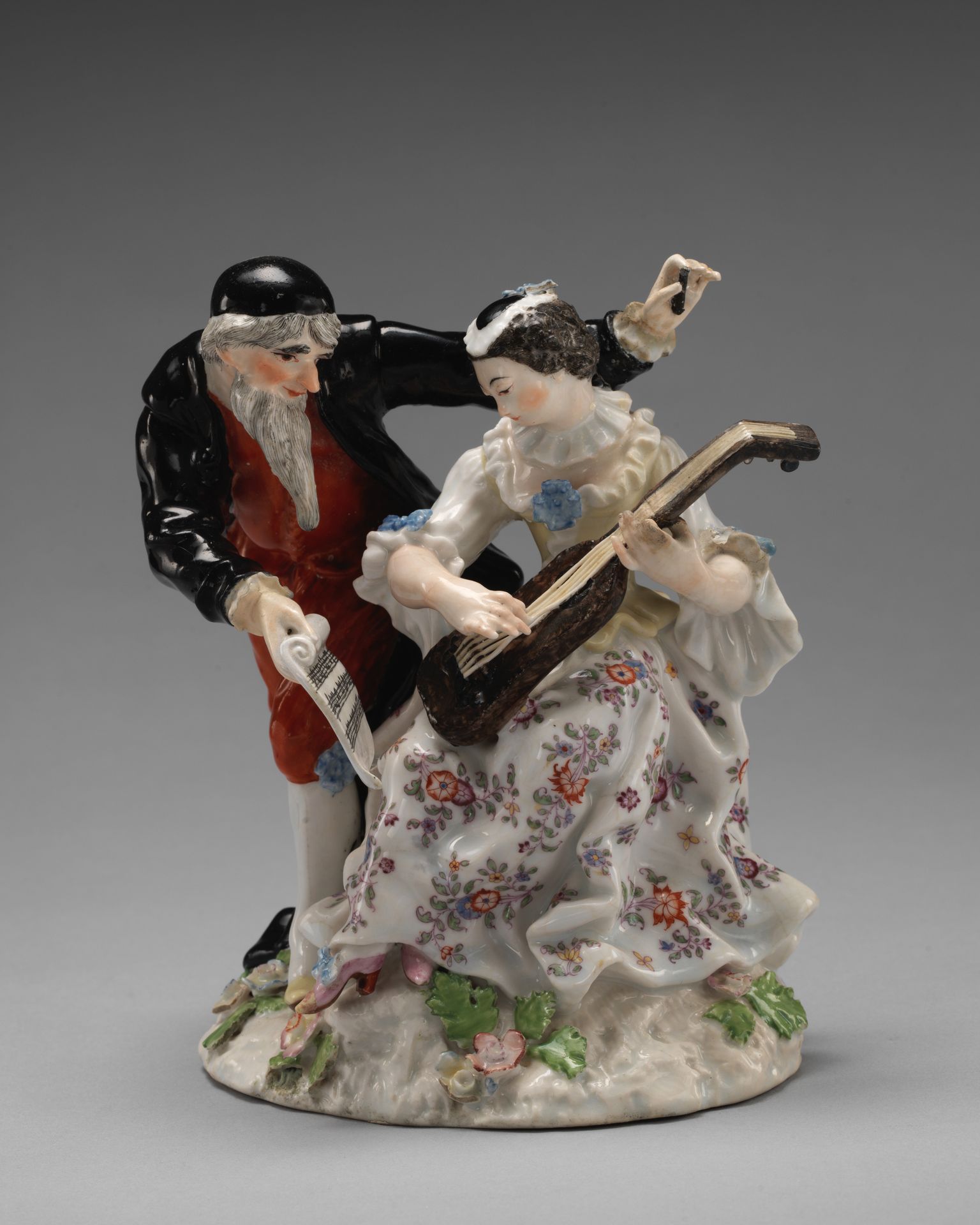
The Chelsea Porcelain Manufactory created “Pantaloon and Columbine,” a porcelain sculpture, during its existence from 1745-1784. This delicate work encapsulates figures from the Commedia dell'Arte, a form of popular theatre that originated in Italy. The sculpture stages a moment between Pantaloon, the elderly, often lecherous merchant, and Columbine, a clever and alluring servant girl. Pantaloon presents her with sheet music, perhaps an attempt to woo her, while Columbine strums a stringed instrument, seemingly amused by his advances. These characters, though archetypes, were often portrayed with nuanced personalities, challenging the strict social norms of the time through satire and wit. This sculpture then, serves as a playful commentary on class and gender dynamics. The detailed costumes and expressive gestures of the figures draw us into their world, inviting us to consider the complexities of human relationships and social expectations.
Pantaloon and Columbine
1748 - 1758

Chelsea Porcelain Manufactory
1744 - 1784
The Metropolitan Museum of Art
Metropolitan Museum of Art, New York, NYArtwork details
- Medium
- ceramic, porcelain, sculpture
- Dimensions
- 6 3/4 × 6 in. (17.1 × 15.2 cm)
- Location
- Metropolitan Museum of Art, New York, NY
- Copyright
- Public Domain
Tags
Comments
Share your thoughts
About this artwork
The Chelsea Porcelain Manufactory created “Pantaloon and Columbine,” a porcelain sculpture, during its existence from 1745-1784. This delicate work encapsulates figures from the Commedia dell'Arte, a form of popular theatre that originated in Italy. The sculpture stages a moment between Pantaloon, the elderly, often lecherous merchant, and Columbine, a clever and alluring servant girl. Pantaloon presents her with sheet music, perhaps an attempt to woo her, while Columbine strums a stringed instrument, seemingly amused by his advances. These characters, though archetypes, were often portrayed with nuanced personalities, challenging the strict social norms of the time through satire and wit. This sculpture then, serves as a playful commentary on class and gender dynamics. The detailed costumes and expressive gestures of the figures draw us into their world, inviting us to consider the complexities of human relationships and social expectations.
Comments
Share your thoughts