About this artwork
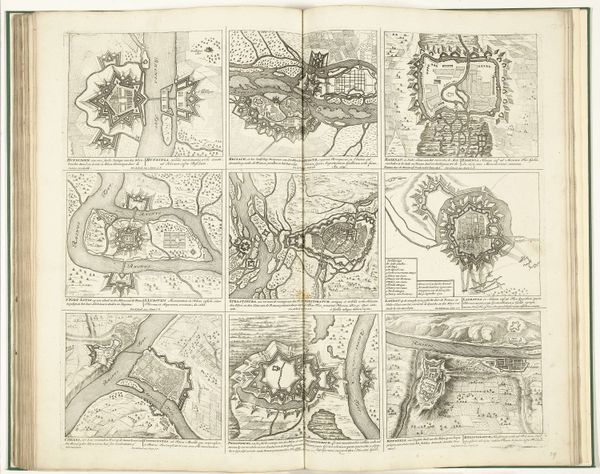
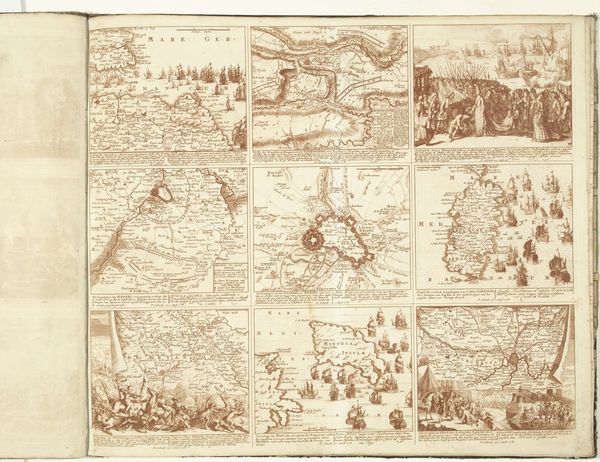
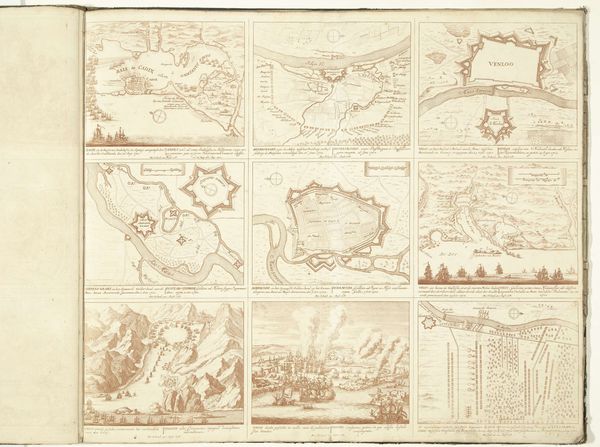
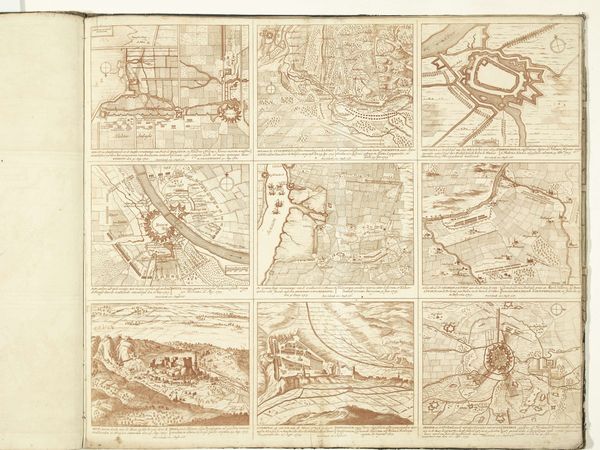
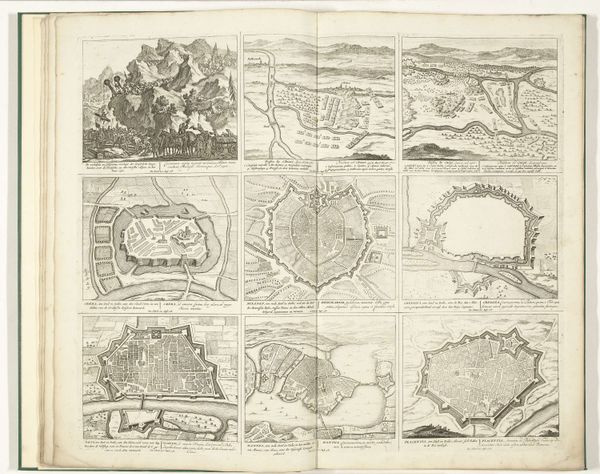
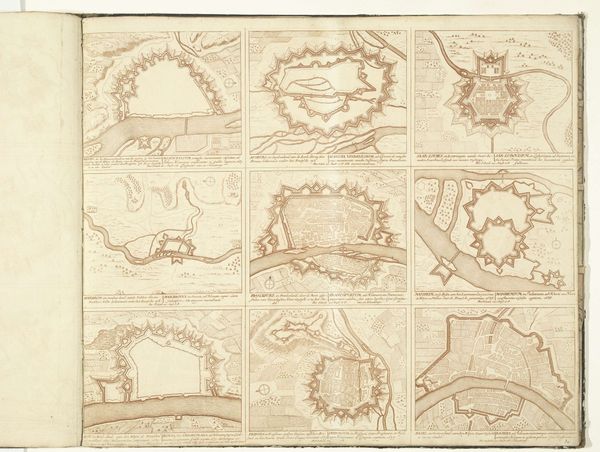
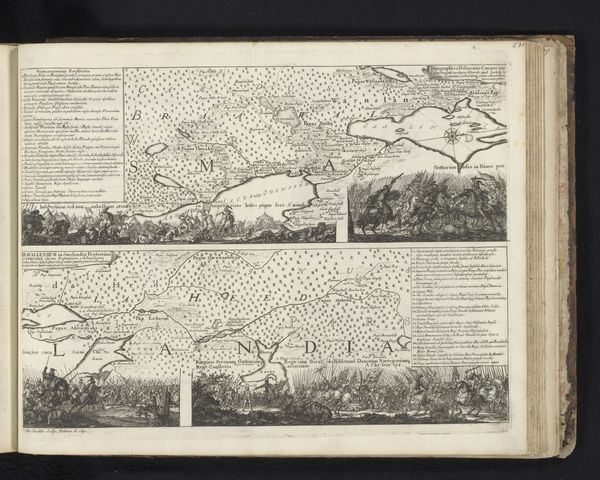
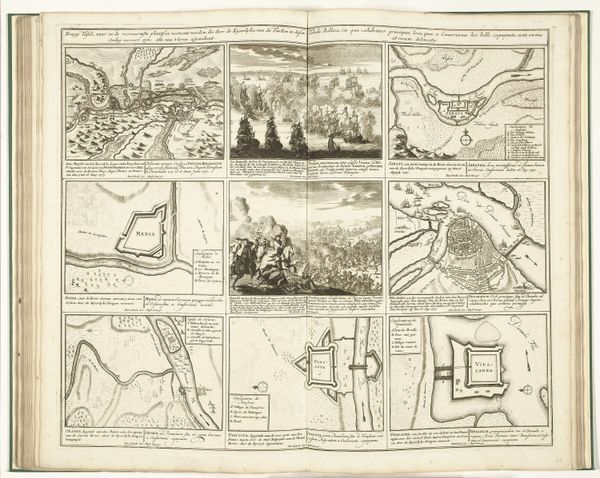
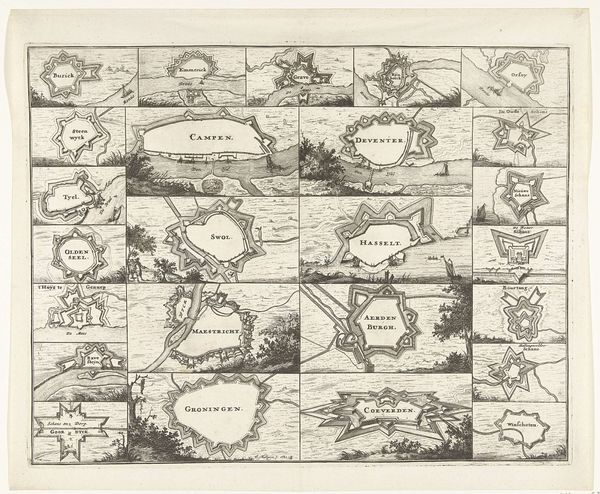
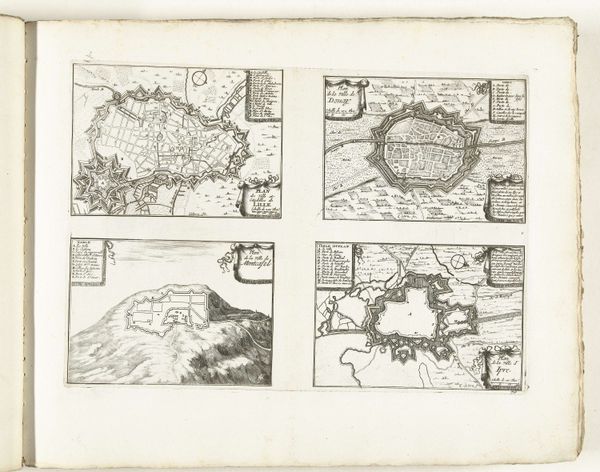
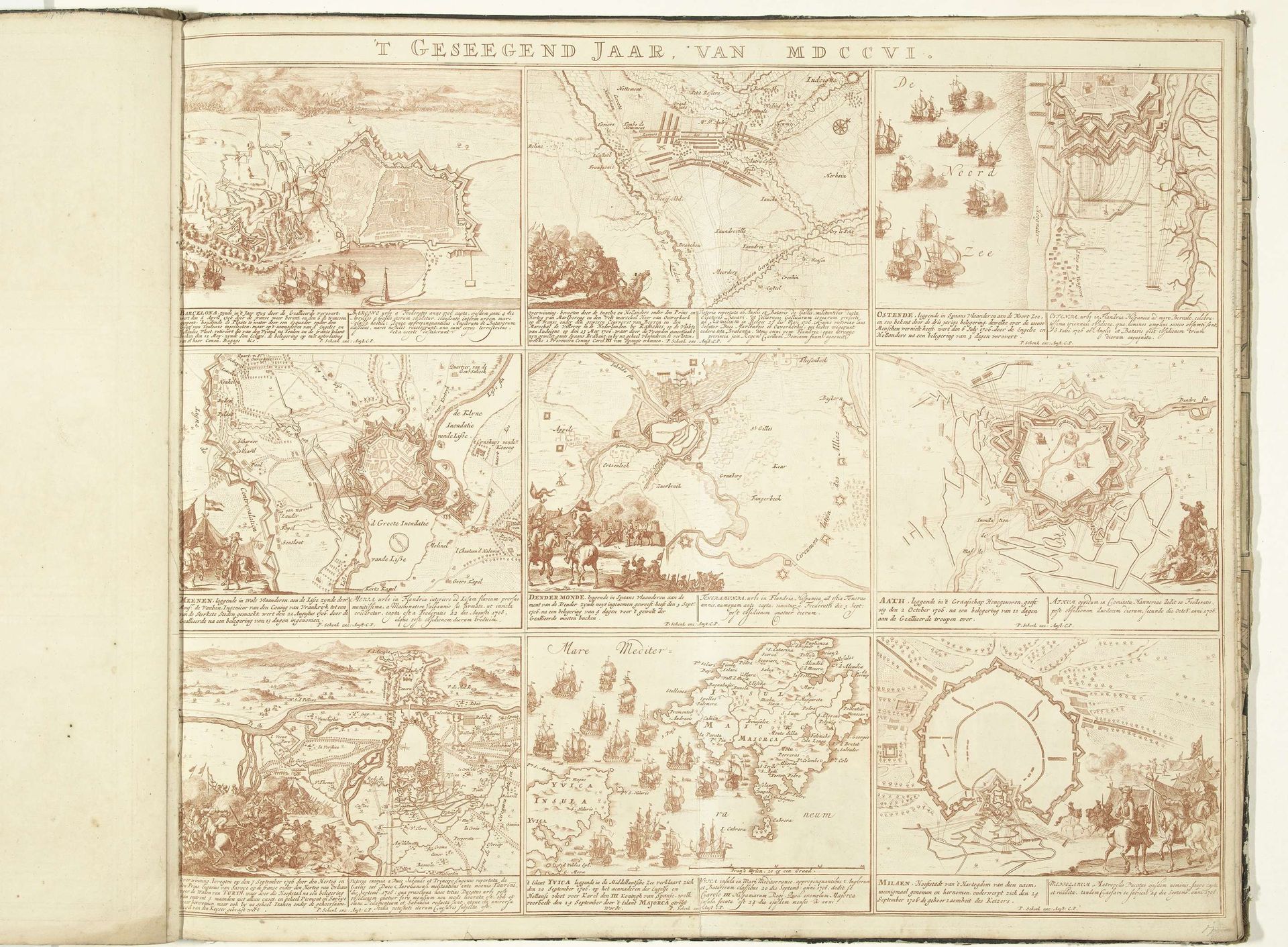
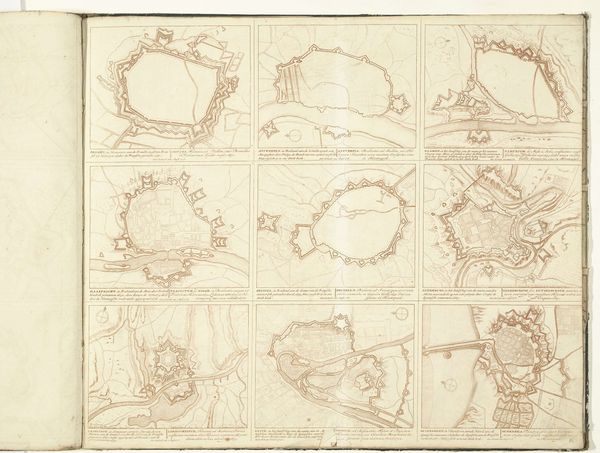
Pieter Schenk created this print, Schouwburg van den oorlog, in 1706 using etching. It is a Dutch perspective on the military conflicts of the time. The scenes depict various battles and sieges from the War of the Spanish Succession, reflecting the Netherlands' involvement in European power struggles. These maps are not just geographical tools, they are narratives of dominance and control. Consider the people who are being displaced, whose lands are being fought over. The visual language of cartography is employed to serve a political agenda, shaping public opinion and reinforcing national identity. This detailed depiction of war can invite reflection on the human cost of conflict. The act of mapping itself—of claiming knowledge and ownership of territory—speaks volumes about cultural values and beliefs. The map invites us to consider the relationship between knowledge, power, and representation.
Schouwburg van den oorlog (blad VII), 1706
1706 - 1710
Pieter Schenk
1660 - 1711Location
RijksmuseumArtwork details
- Medium
- drawing, ink, engraving
- Dimensions
- height 505 mm, width 585 mm
- Location
- Rijksmuseum
- Copyright
- Rijks Museum: Open Domain
Tags
Comments
Share your thoughts
About this artwork
Pieter Schenk created this print, Schouwburg van den oorlog, in 1706 using etching. It is a Dutch perspective on the military conflicts of the time. The scenes depict various battles and sieges from the War of the Spanish Succession, reflecting the Netherlands' involvement in European power struggles. These maps are not just geographical tools, they are narratives of dominance and control. Consider the people who are being displaced, whose lands are being fought over. The visual language of cartography is employed to serve a political agenda, shaping public opinion and reinforcing national identity. This detailed depiction of war can invite reflection on the human cost of conflict. The act of mapping itself—of claiming knowledge and ownership of territory—speaks volumes about cultural values and beliefs. The map invites us to consider the relationship between knowledge, power, and representation.
Comments
Share your thoughts