c. 1730
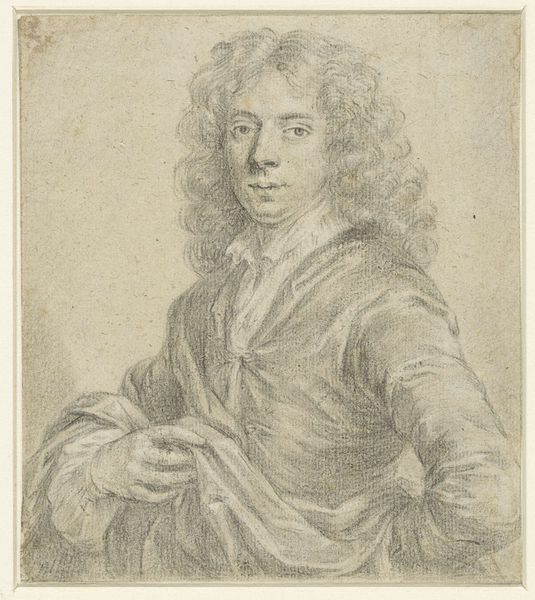
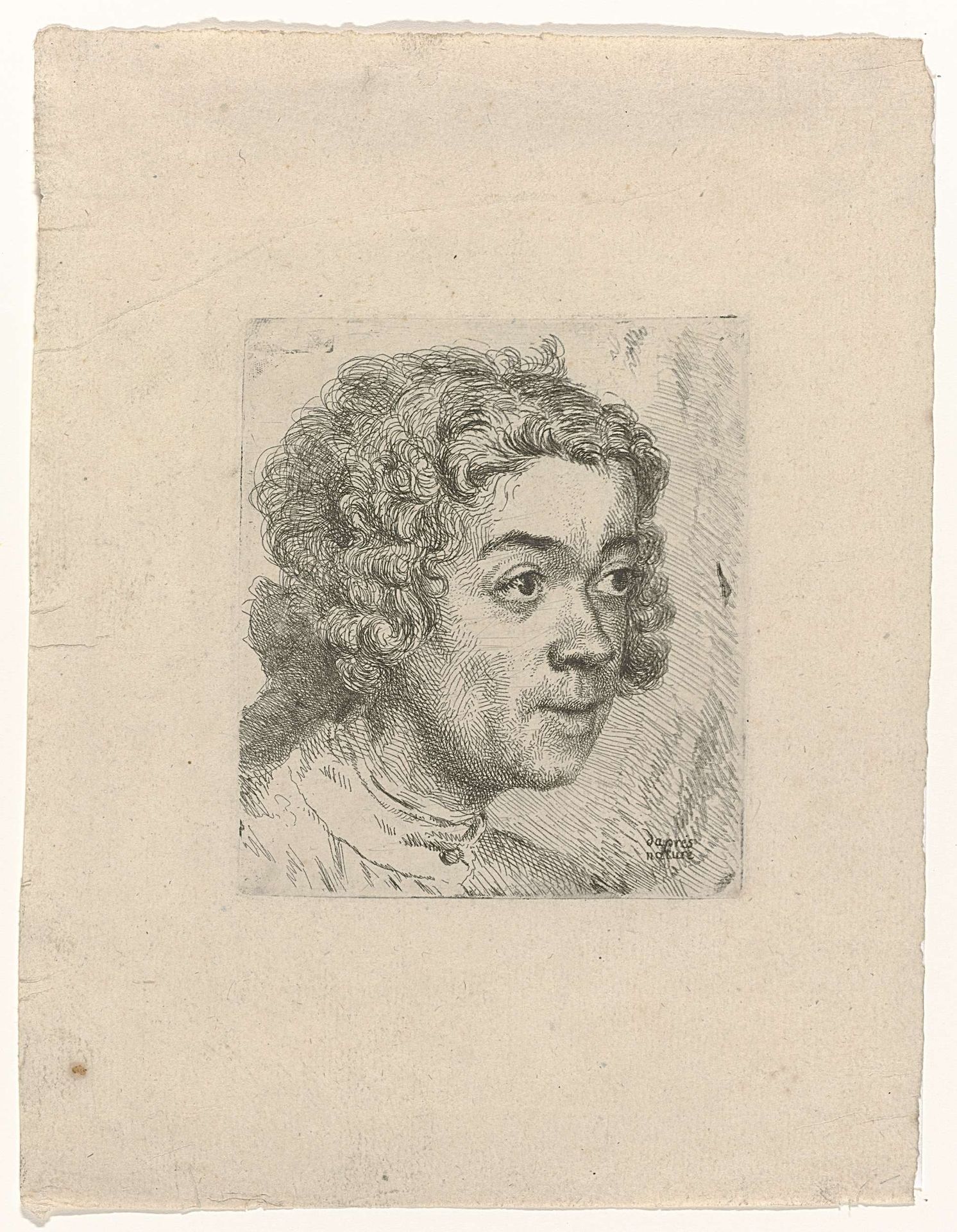
Zelfportret van Jean Etienne Liotard

Jean-Étienne Liotard
1702 - 1789Location
RijksmuseumListen to curator's interpretation
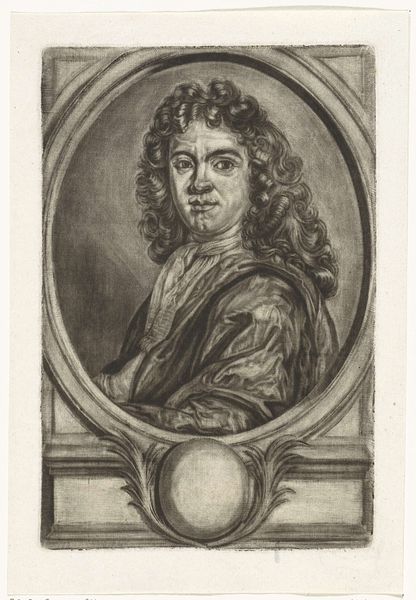
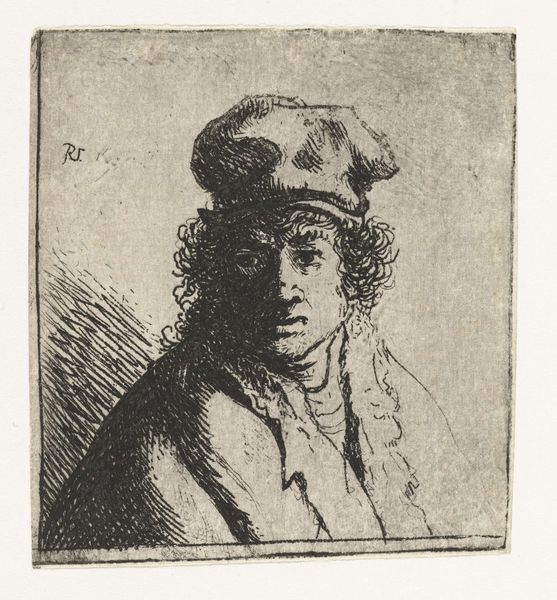
Curatorial notes
Editor: My immediate impression is of lightness and delicacy; the hatching feels so ethereal. Curator: Indeed. This is Jean-Étienne Liotard's self-portrait, circa 1730, currently residing here at the Rijksmuseum. It’s an engraving, and look at the detail achieved solely through line work! Editor: It’s a striking piece. Engraving requires meticulous labour. Can you imagine the intense concentration needed to achieve such a delicate and intricate image on that metal plate? The sheer manual effort speaks volumes. And consider the paper, the history held in these aging fibres, each mark is like a scar earned during its creation. Curator: The formal composition is also compelling; Liotard masterfully balances light and shadow. The lines create depth and volume. The subtle modulation suggests form through variations in the density and direction of these etched lines. Editor: Absolutely. Each stroke made directly affects the surface, a record of force and skill, reflecting both artistic intent and physical constraints. Where was the plate made, the tools sharpened? Every impression leaves traces on the materials used; labour becomes embedded in art. Curator: Looking closely at the face itself, we see a captivating, somewhat elusive expression. Liotard directs his gaze slightly off-center, lending an air of introspection and perhaps, even vulnerability. The lines around the eyes, subtly etched, give life to this moment captured in ink. Editor: One begins to consider not just the aesthetics but the material conditions of artmaking, what would have driven Liotard to create self-portraits, how this portrait captures not just an image, but reveals an historical connection to manual work and tools long since handled. Curator: It prompts me to admire Liotard's technical skill and refined execution of line and form. Editor: And I’m left reflecting on how art binds together skill, intention, materials, and above all the act of labour and how historical materials have become transformed with the making.