About this artwork
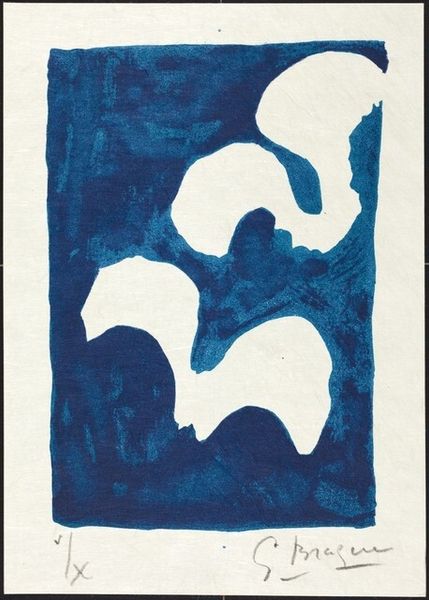
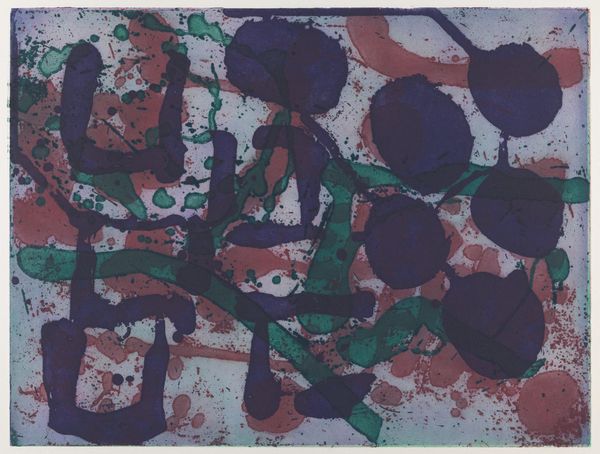
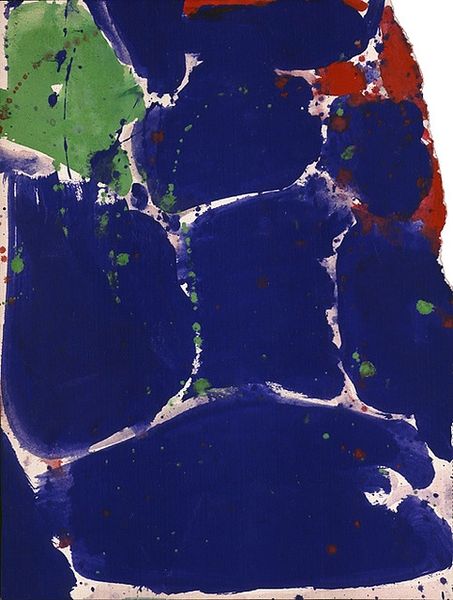
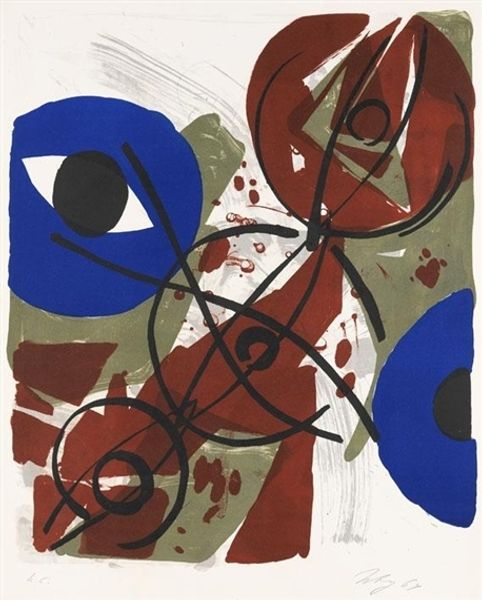
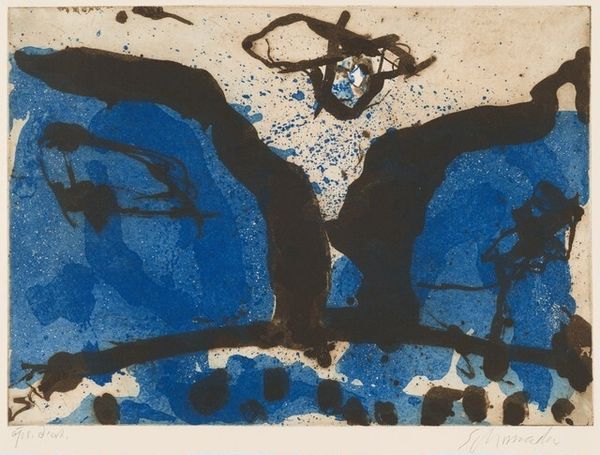
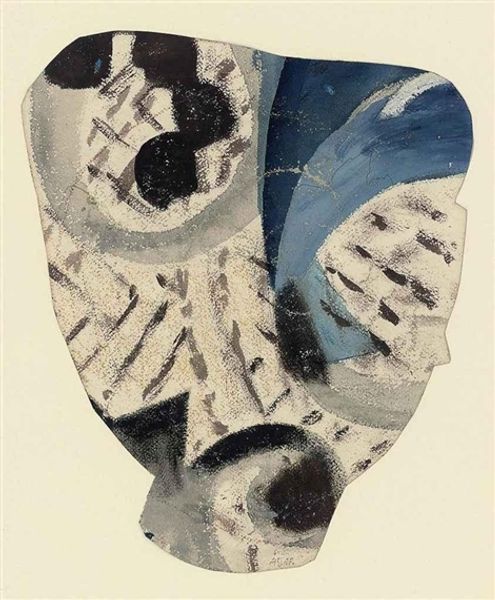
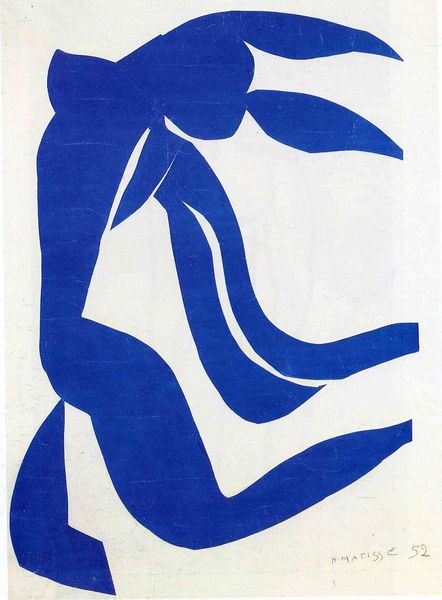
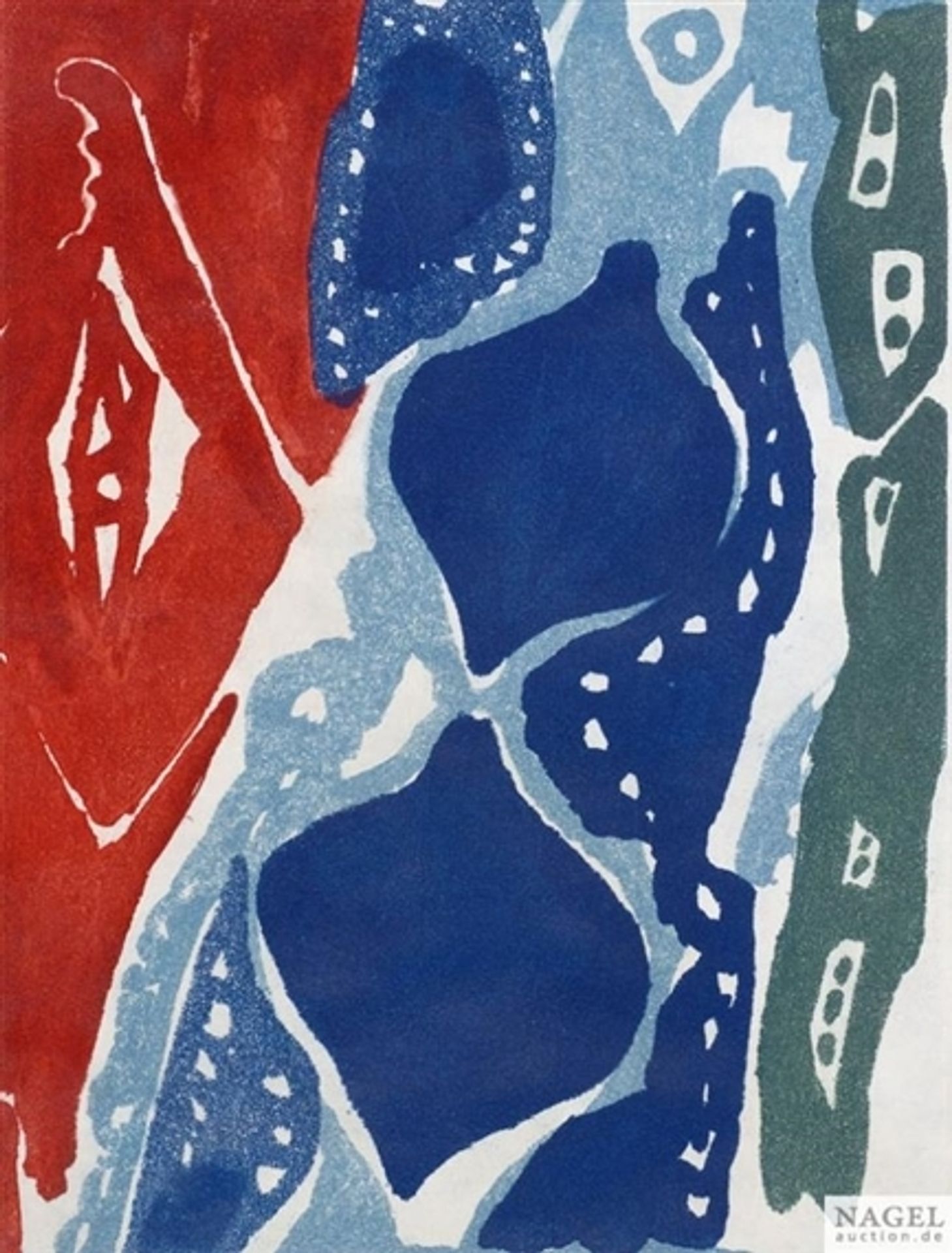
Ernst Wilhelm Nay made this 'Farbaquatinta' between 1965 and 1967, using a printmaking technique that gives a watercolor effect. I love how the colors aren’t trying to be anything but themselves. There’s something deeply satisfying about the simplicity of the marks. The colors are laid down like flat shapes, but they're so full of life. Notice the way the blue pools and gathers in the center, almost like inkblots in a Rorschach test. It’s heavy, and the way it bleeds into the paper, soaks right into it. The white spaces around the colors are just as important. They give the eye a place to rest, but they also push the colors forward. You can imagine how he layered the colors, one after the other, building up the image slowly, like a conversation. It reminds me a little bit of Matisse's cut-outs. They both have this incredible sense of joy and freedom, even though they’re working with really simple forms and colors. It’s art as a kind of ongoing experiment.

Artwork details
- Copyright
- Ernst Wilhelm Nay,Fair Use
Comments
Be the first to share your thoughts about this work.
About this artwork
Ernst Wilhelm Nay made this 'Farbaquatinta' between 1965 and 1967, using a printmaking technique that gives a watercolor effect. I love how the colors aren’t trying to be anything but themselves. There’s something deeply satisfying about the simplicity of the marks. The colors are laid down like flat shapes, but they're so full of life. Notice the way the blue pools and gathers in the center, almost like inkblots in a Rorschach test. It’s heavy, and the way it bleeds into the paper, soaks right into it. The white spaces around the colors are just as important. They give the eye a place to rest, but they also push the colors forward. You can imagine how he layered the colors, one after the other, building up the image slowly, like a conversation. It reminds me a little bit of Matisse's cut-outs. They both have this incredible sense of joy and freedom, even though they’re working with really simple forms and colors. It’s art as a kind of ongoing experiment.
Comments
Be the first to share your thoughts about this work.