About this artwork
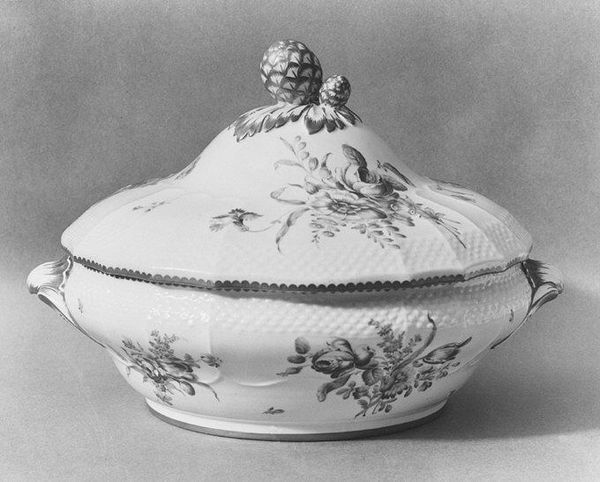
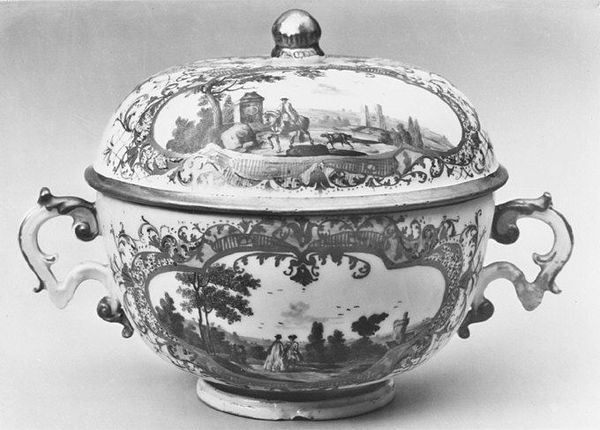
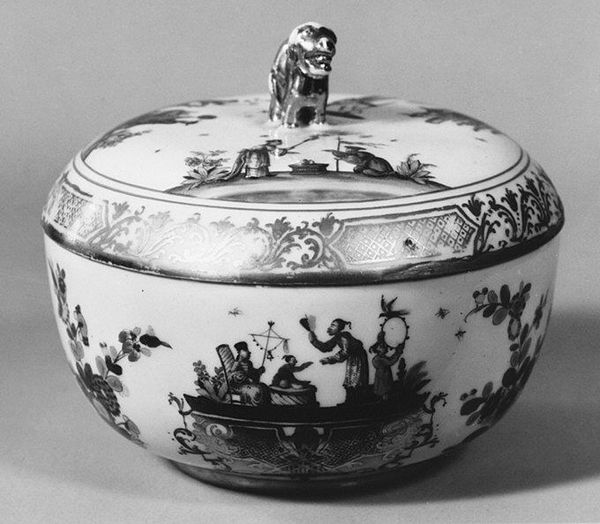
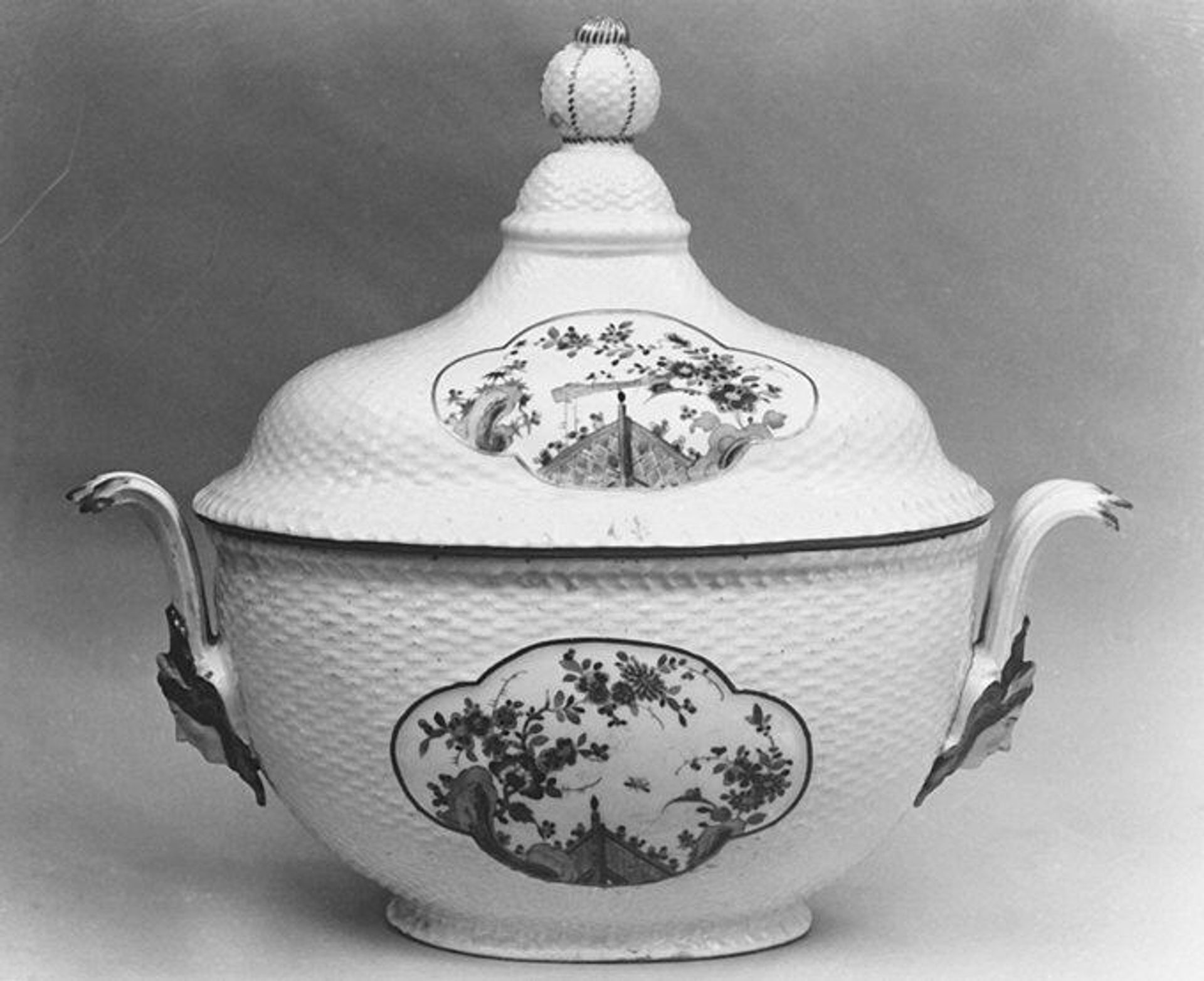
This tureen with cover was created by the Meissen Manufactory. The eye is immediately drawn to its rounded form, a seemingly simple shape enriched by a complex interplay of texture and pictorial elements. The overall surface is articulated with a subtle, repeating pattern, a tactile field that invites closer inspection. Cartouches containing floral and landscape scenes interrupt this texture, introducing a pictorial space that contrasts with the tureen’s tactile presence. These painted scenes, framed by their decorative borders, create windows into idealized, pastoral worlds. The handles, sculpted with leaf-like extensions, further animate the form, adding a layer of organic complexity to the object's geometry. Through its structure, the tureen invites us to consider the relationship between decoration and utility, between the tactile and the visual. It's a reminder that even the most functional of objects can serve as a canvas for artistic expression, challenging fixed meanings and engaging us with new ways of thinking about space and perception.
Tureen with cover 1735 - 1750


Artwork details
- Medium
- ceramic, porcelain, sculpture
- Dimensions
- Overall: 10 1/2 × 7 5/16 × 12 1/2 in. (26.7 × 18.6 × 31.8 cm)
- Location
- Metropolitan Museum of Art, New York, NY
- Copyright
- Public Domain
Tags
ceramic
porcelain
sculpture
decorative-art
rococo
Comments
No comments
About this artwork
This tureen with cover was created by the Meissen Manufactory. The eye is immediately drawn to its rounded form, a seemingly simple shape enriched by a complex interplay of texture and pictorial elements. The overall surface is articulated with a subtle, repeating pattern, a tactile field that invites closer inspection. Cartouches containing floral and landscape scenes interrupt this texture, introducing a pictorial space that contrasts with the tureen’s tactile presence. These painted scenes, framed by their decorative borders, create windows into idealized, pastoral worlds. The handles, sculpted with leaf-like extensions, further animate the form, adding a layer of organic complexity to the object's geometry. Through its structure, the tureen invites us to consider the relationship between decoration and utility, between the tactile and the visual. It's a reminder that even the most functional of objects can serve as a canvas for artistic expression, challenging fixed meanings and engaging us with new ways of thinking about space and perception.
Comments
No comments