About this artwork
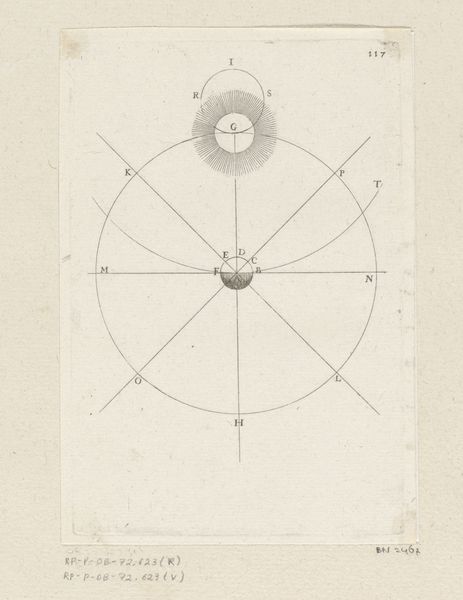
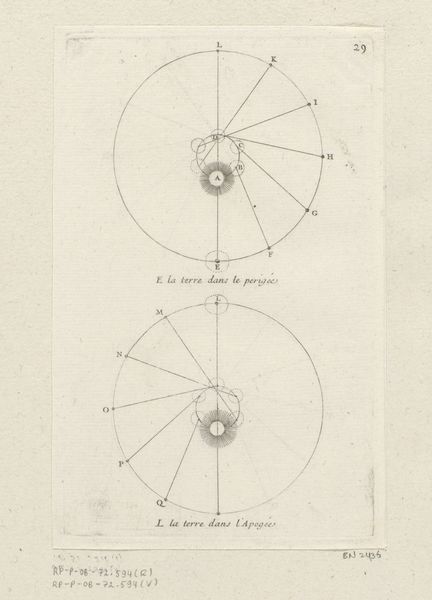
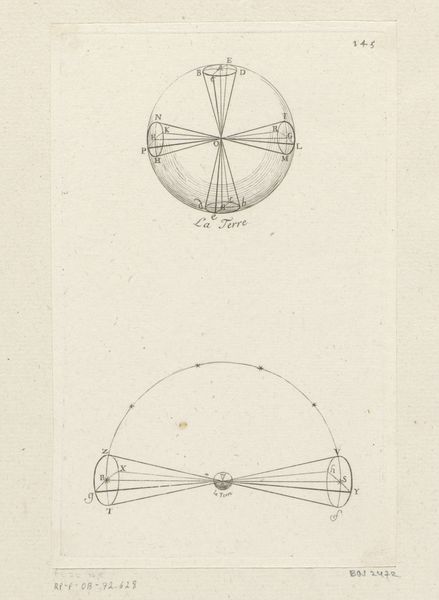
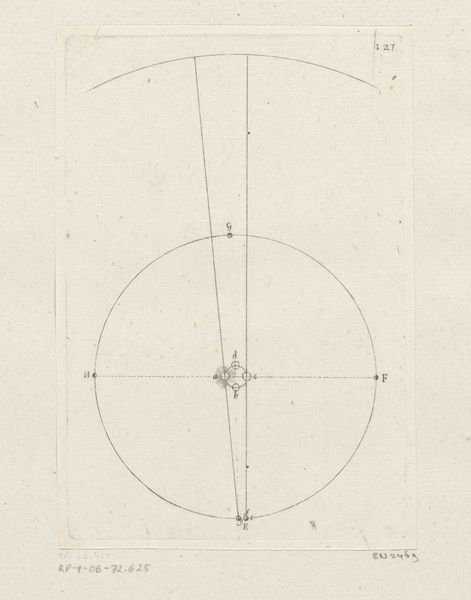
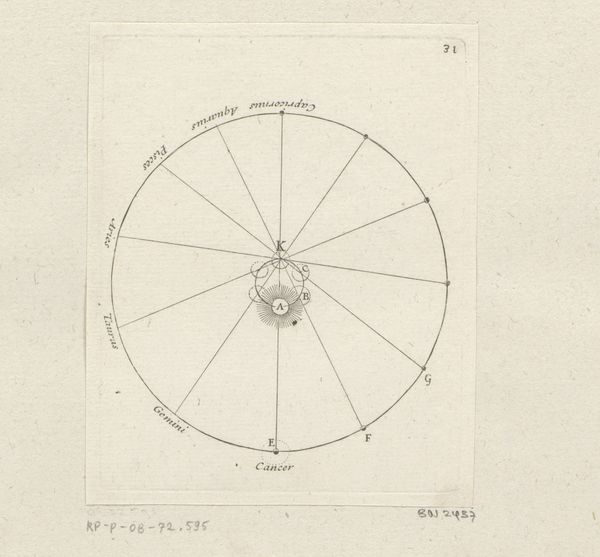
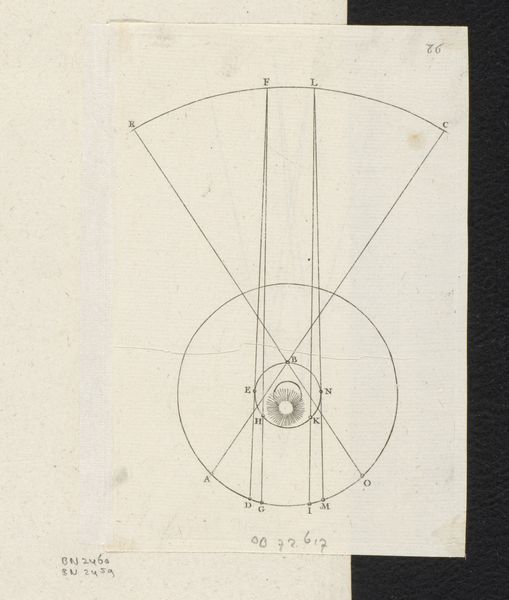
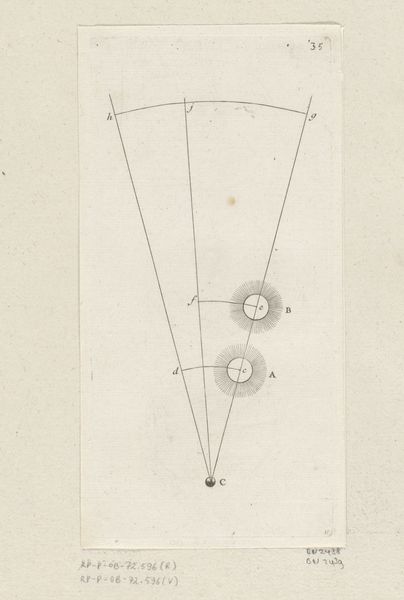
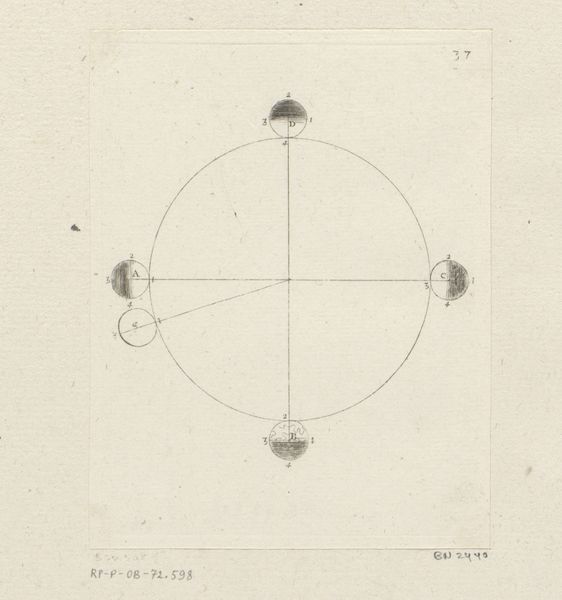
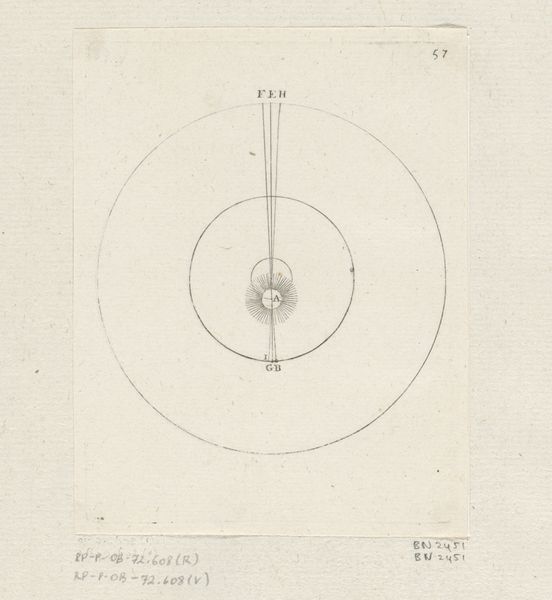
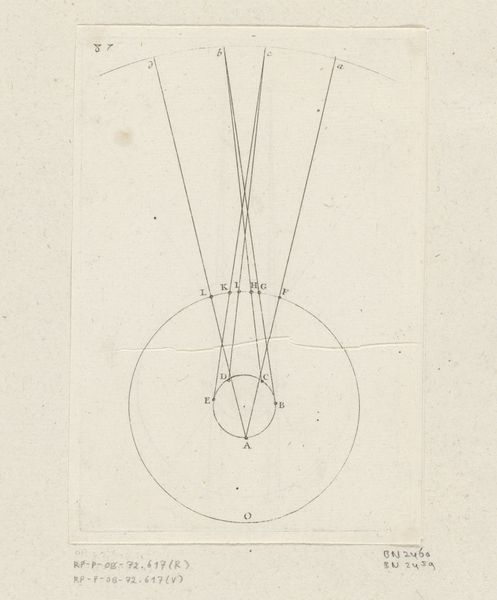
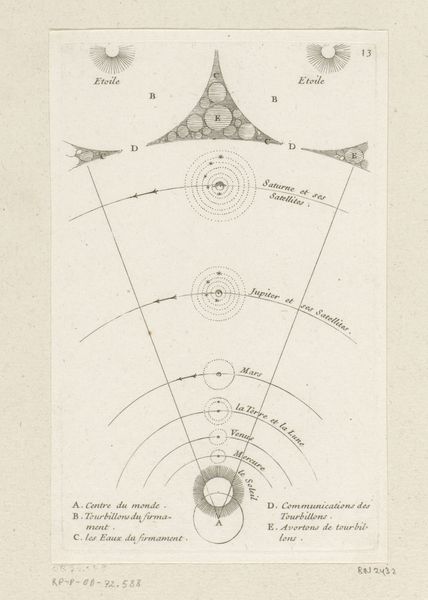
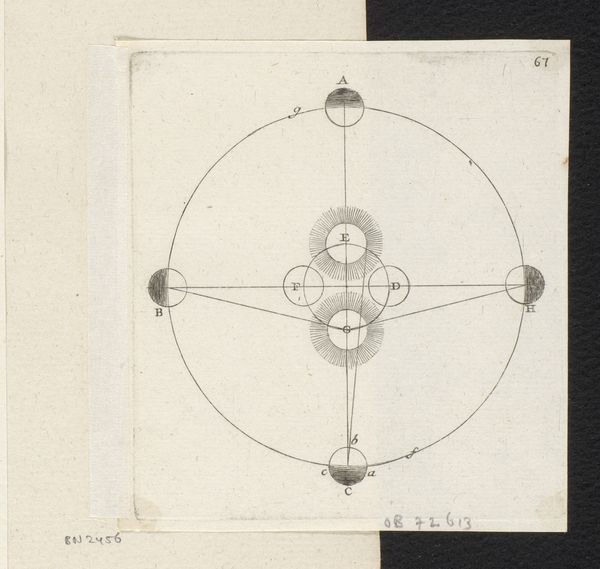
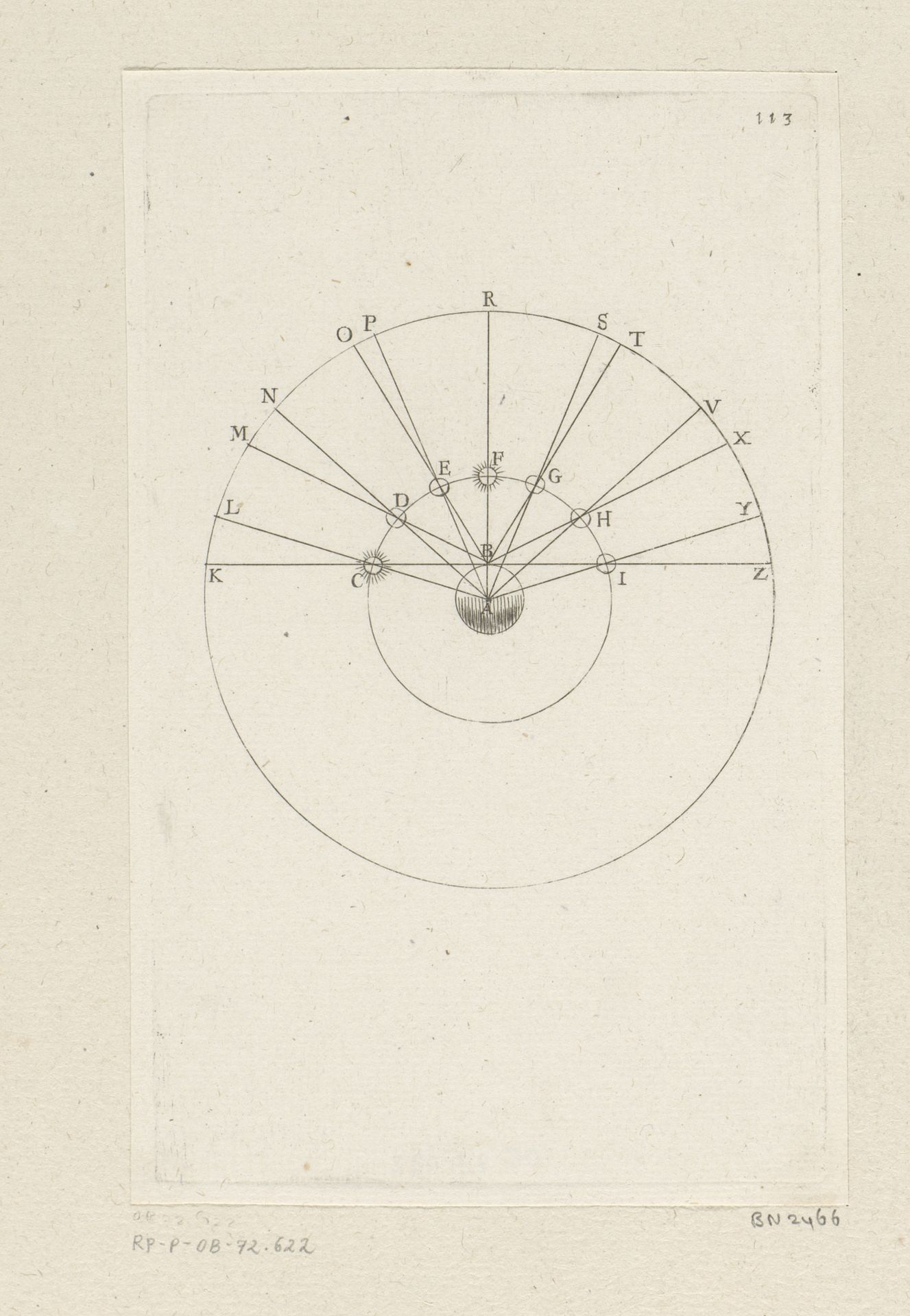
Sébastien Leclerc I created this astronomical diagram, "Positie van de Zon ten opzichte van de dierenriem," sometime between 1637 and 1714. Notice the intricate network of lines and circles, meticulously rendered with the precision of an engraver's tool. The composition is dominated by concentric circles, bisected by radial lines that extend to the outermost ring, each point labeled with letters. This construction offers a symbolic representation of celestial order, mapping the sun's position relative to the zodiac. Leclerc uses line and geometric form to structure what was then understood about the cosmos, creating a visual language rooted in mathematical precision. The engraving invites a semiotic reading. The lines act as signifiers of astronomical relationships. These radial lines, not merely decorative, serve as vectors pointing to a deeper, structural understanding of our place in the universe. The circles and lines aren’t just shapes, but are tools for decoding cosmic arrangements and the philosophical ideas that came along with the science.
Positie van de Zon ten opzichte van de dierenriem 1706

Sébastien Leclerc I
1637 - 1714Location
RijksmuseumArtwork details
- Medium
- print, engraving
- Dimensions
- height 172 mm, width 105 mm
- Location
- Rijksmuseum
- Copyright
- Rijks Museum: Open Domain
Tags
old engraving style
geometric
line
academic-art
engraving
Comments
No comments
About this artwork
Sébastien Leclerc I created this astronomical diagram, "Positie van de Zon ten opzichte van de dierenriem," sometime between 1637 and 1714. Notice the intricate network of lines and circles, meticulously rendered with the precision of an engraver's tool. The composition is dominated by concentric circles, bisected by radial lines that extend to the outermost ring, each point labeled with letters. This construction offers a symbolic representation of celestial order, mapping the sun's position relative to the zodiac. Leclerc uses line and geometric form to structure what was then understood about the cosmos, creating a visual language rooted in mathematical precision. The engraving invites a semiotic reading. The lines act as signifiers of astronomical relationships. These radial lines, not merely decorative, serve as vectors pointing to a deeper, structural understanding of our place in the universe. The circles and lines aren’t just shapes, but are tools for decoding cosmic arrangements and the philosophical ideas that came along with the science.
Comments
No comments