About this artwork
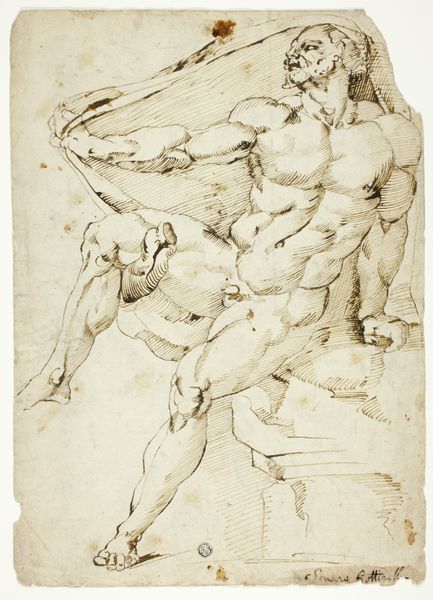
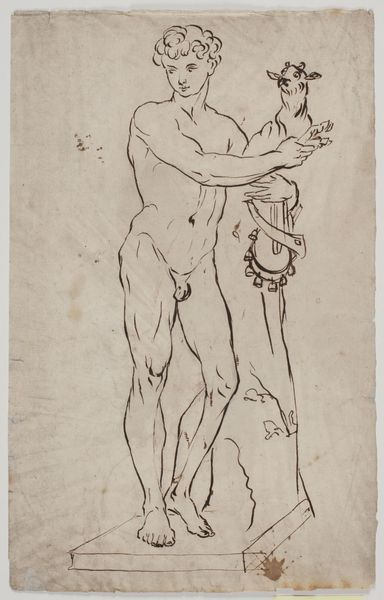
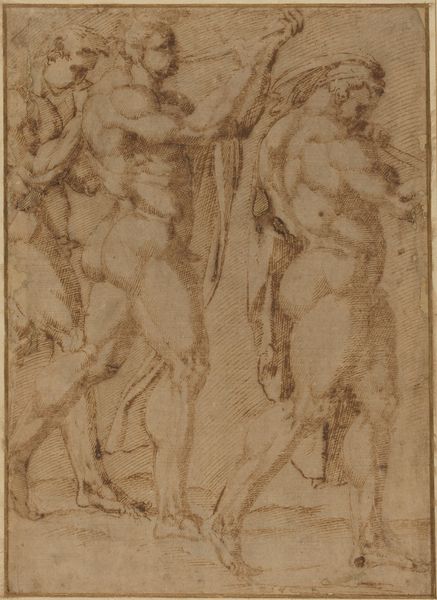
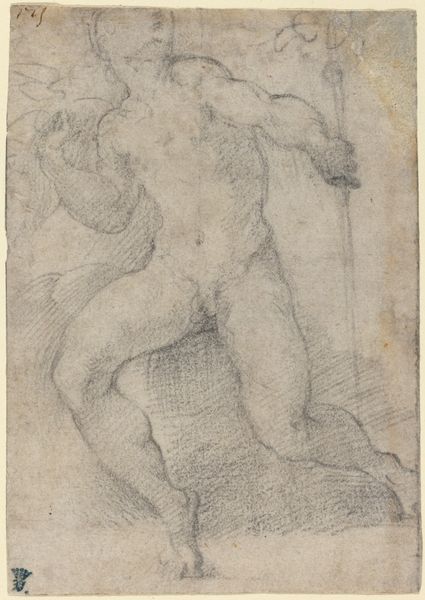
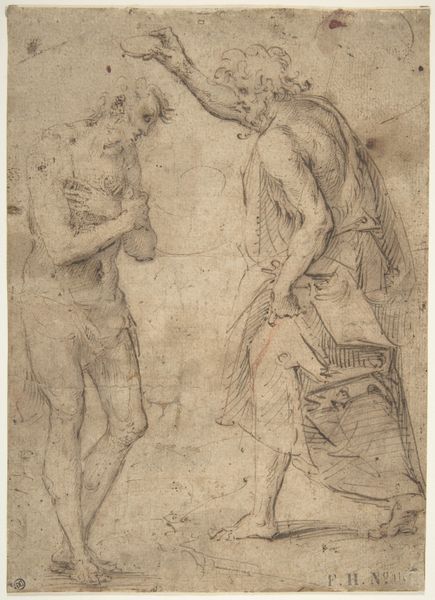
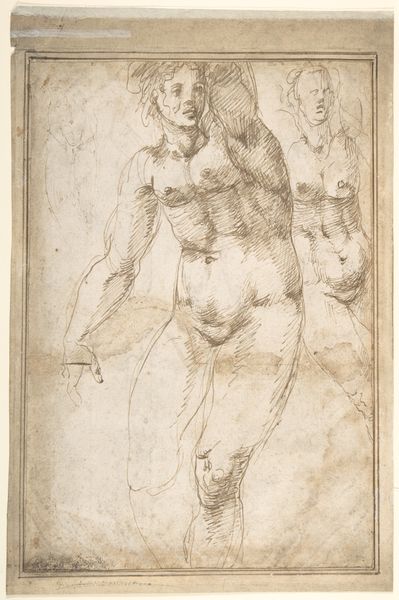
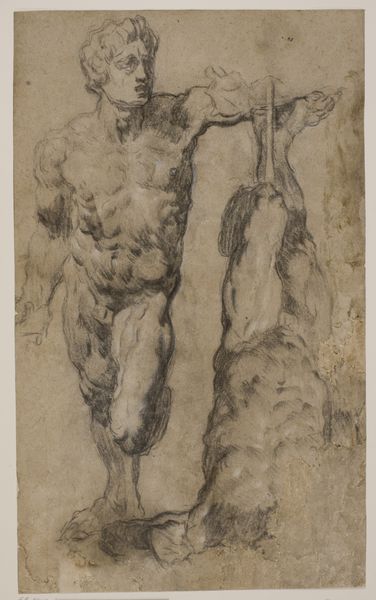
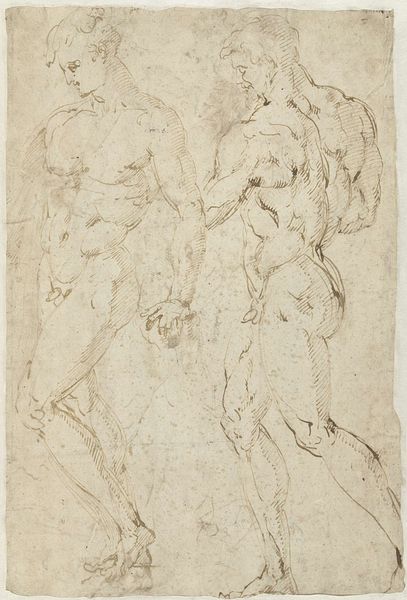
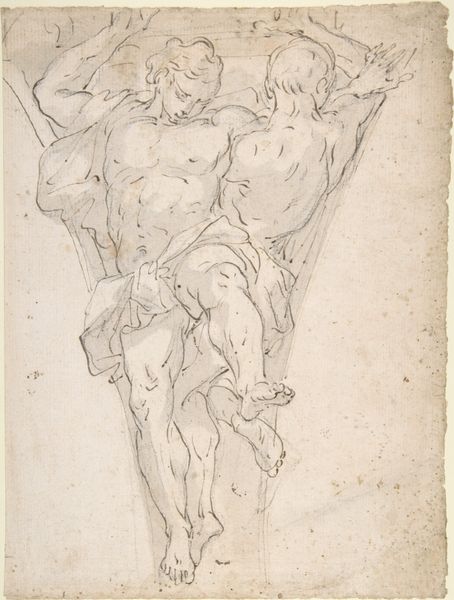
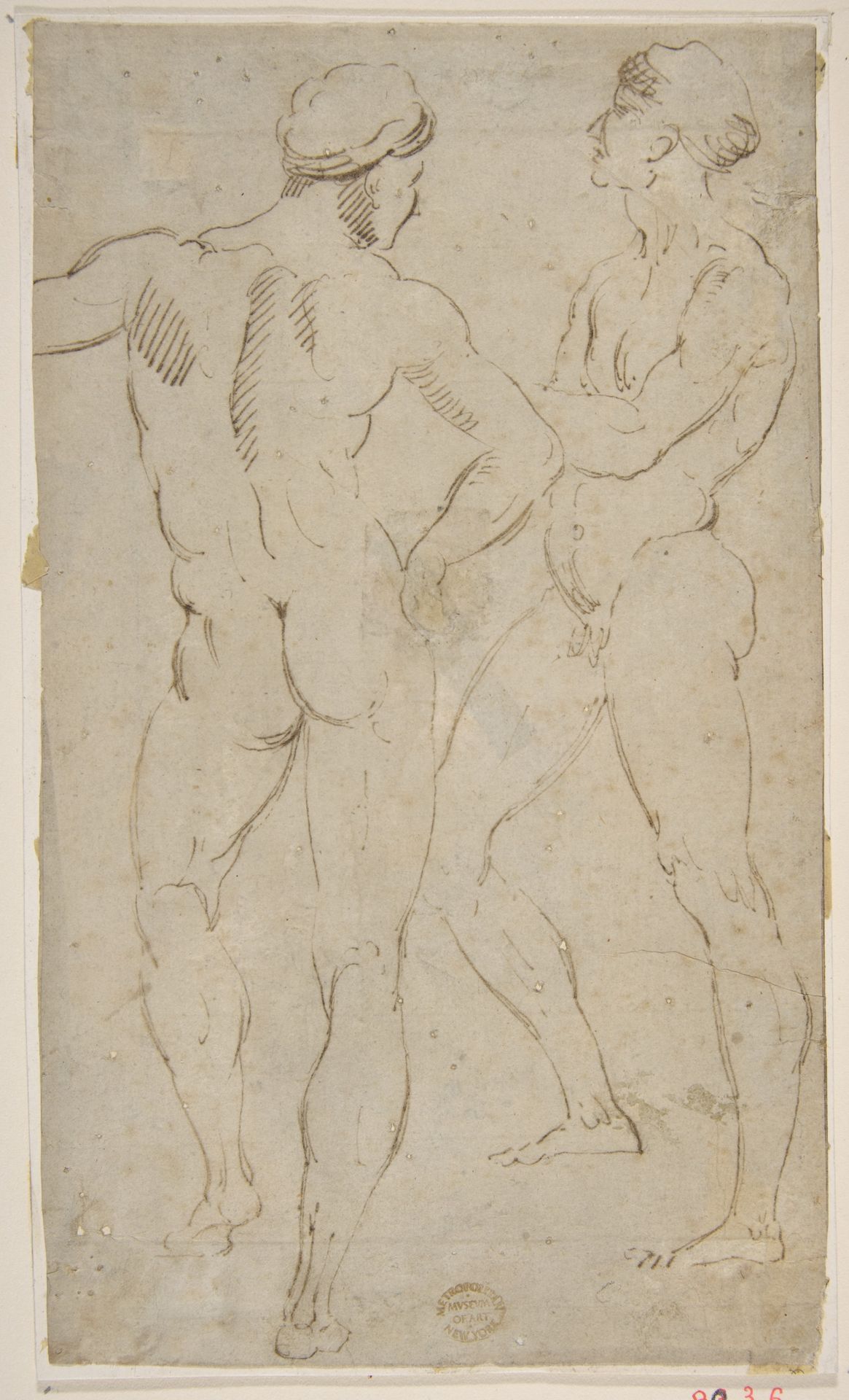
Raphael rendered these two nude figures with pen and brown ink. The male nude, a classical motif revived during the Renaissance, symbolizes human potential, beauty, and the divine spark within. The figures are shown in contrapposto—a stance where the body's weight shifts to one leg—derived from ancient Greek sculpture and embodying balance and harmony. Consider Michelangelo’s figures; the study of anatomy reflects a broader humanist interest in understanding and celebrating the human form. This echoes in Raphael’s sketch, highlighting the body's structural perfection. Observe the careful rendering of muscle and sinew, connecting to the classical past, where idealized forms reflected cultural values and philosophical ideals. The psychological impact of the male nude lies in its ability to evoke feelings of admiration and self-reflection, engaging viewers in a dialogue about beauty, strength, and the human condition. Thus, these echoes ripple through time.
Two nude figures
1500 - 1600


Artwork details
- Medium
- drawing, print, charcoal
- Dimensions
- 8-7/8 x 5-1/8 in. (22.5 x 13 cm)
- Location
- Metropolitan Museum of Art, New York, NY
- Copyright
- Public Domain
Tags
Comments
Share your thoughts
About this artwork
Raphael rendered these two nude figures with pen and brown ink. The male nude, a classical motif revived during the Renaissance, symbolizes human potential, beauty, and the divine spark within. The figures are shown in contrapposto—a stance where the body's weight shifts to one leg—derived from ancient Greek sculpture and embodying balance and harmony. Consider Michelangelo’s figures; the study of anatomy reflects a broader humanist interest in understanding and celebrating the human form. This echoes in Raphael’s sketch, highlighting the body's structural perfection. Observe the careful rendering of muscle and sinew, connecting to the classical past, where idealized forms reflected cultural values and philosophical ideals. The psychological impact of the male nude lies in its ability to evoke feelings of admiration and self-reflection, engaging viewers in a dialogue about beauty, strength, and the human condition. Thus, these echoes ripple through time.
Comments
Share your thoughts