About this artwork
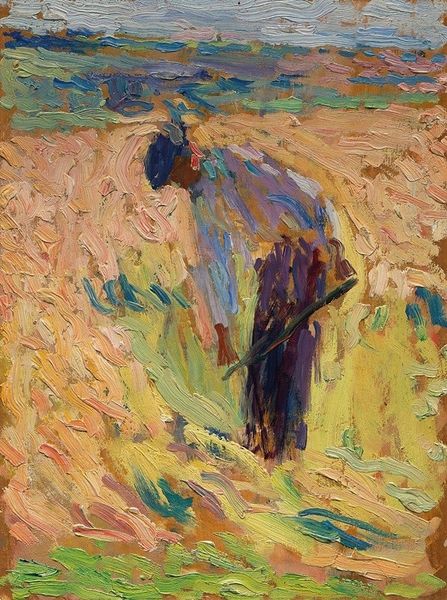
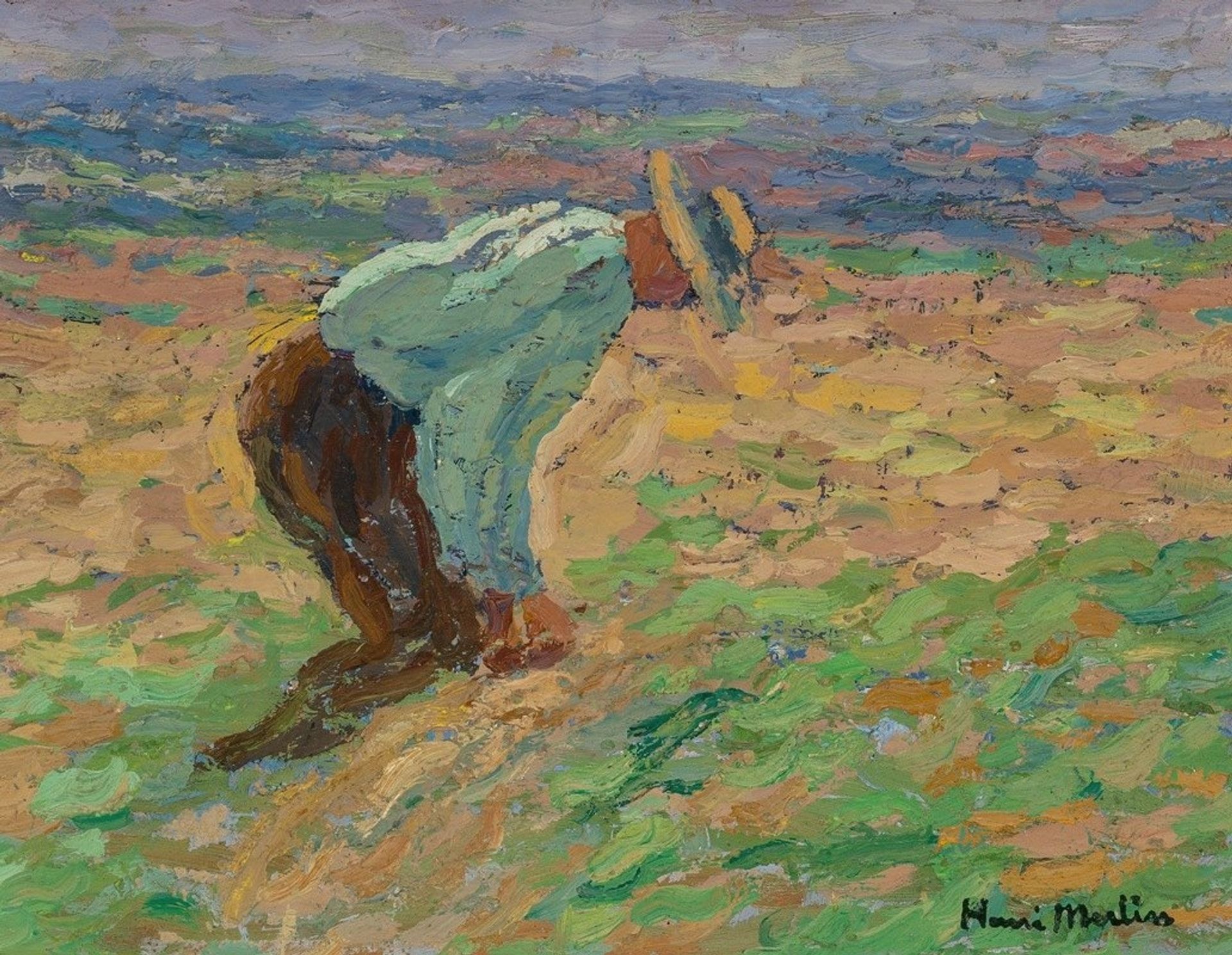
Henri Martin painted "Lieur de gerbe" during a time when France was deeply invested in rural life and traditions. The artwork reflects the cultural values and societal structures of the late 19th and early 20th centuries. This painting depicts a figure, likely a rural worker, bent over in a field, seemingly engaged in the task of binding sheaves of grain. Martin captures the labor and the physical toll it takes on the body. The gender of the worker isn’t immediately clear, which prompts questions about the roles and representations of women and men in agricultural labor during this period. Are we seeing an idealized image of rural life, or is Martin offering a more complex perspective on the realities of labor, class, and identity in the countryside? The artwork makes us consider the individuals who toiled in these fields and the stories of resilience, hardship, and connection to the land that are woven into the very fabric of rural life.
Lieur de gerbe
Étude pour ‘La Moisson,’ l’un des 4 panneaux du grand décor du Conseil d’État, Paris

Artwork details
- Medium
- painting, plein-air, oil-paint
- Copyright
- Public Domain: Artvee
Tags
Comments
Share your thoughts
About this artwork
Henri Martin painted "Lieur de gerbe" during a time when France was deeply invested in rural life and traditions. The artwork reflects the cultural values and societal structures of the late 19th and early 20th centuries. This painting depicts a figure, likely a rural worker, bent over in a field, seemingly engaged in the task of binding sheaves of grain. Martin captures the labor and the physical toll it takes on the body. The gender of the worker isn’t immediately clear, which prompts questions about the roles and representations of women and men in agricultural labor during this period. Are we seeing an idealized image of rural life, or is Martin offering a more complex perspective on the realities of labor, class, and identity in the countryside? The artwork makes us consider the individuals who toiled in these fields and the stories of resilience, hardship, and connection to the land that are woven into the very fabric of rural life.
Comments
Share your thoughts