About this artwork
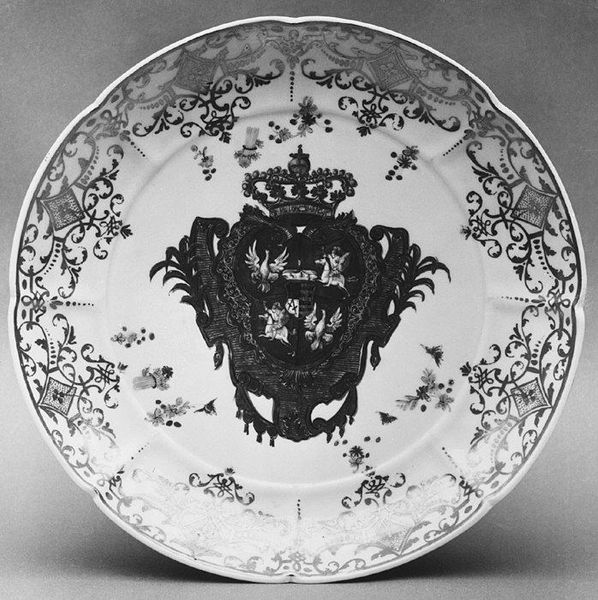
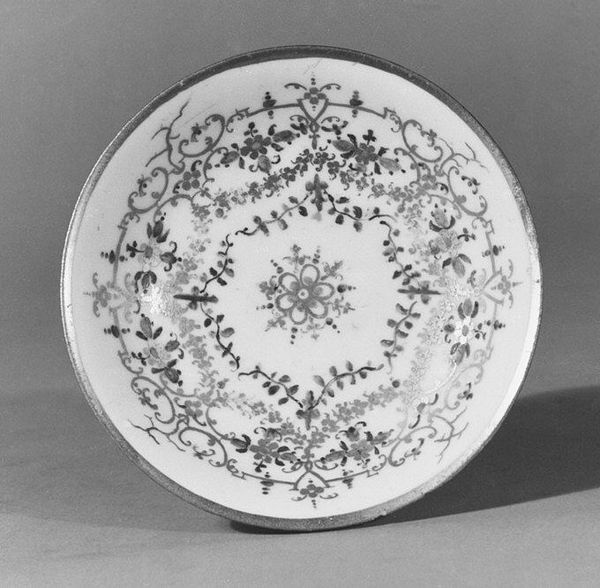
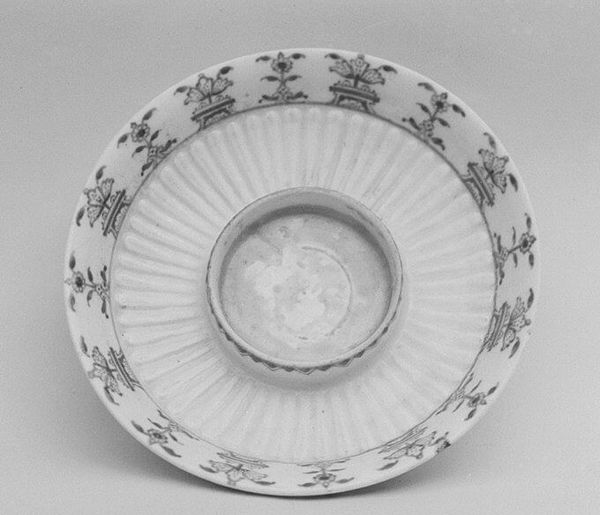
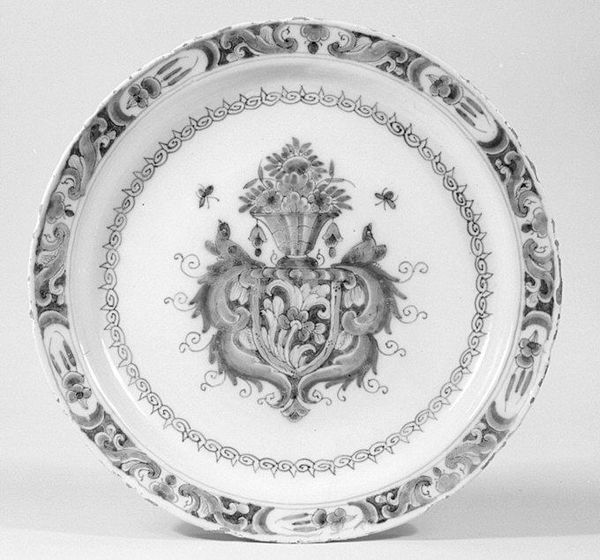
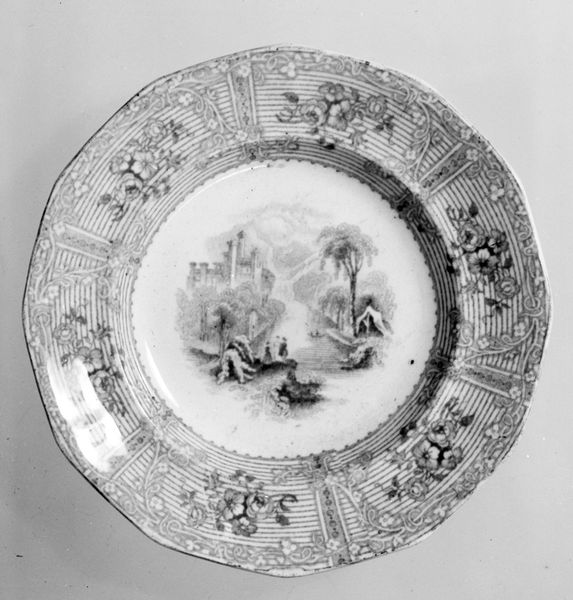
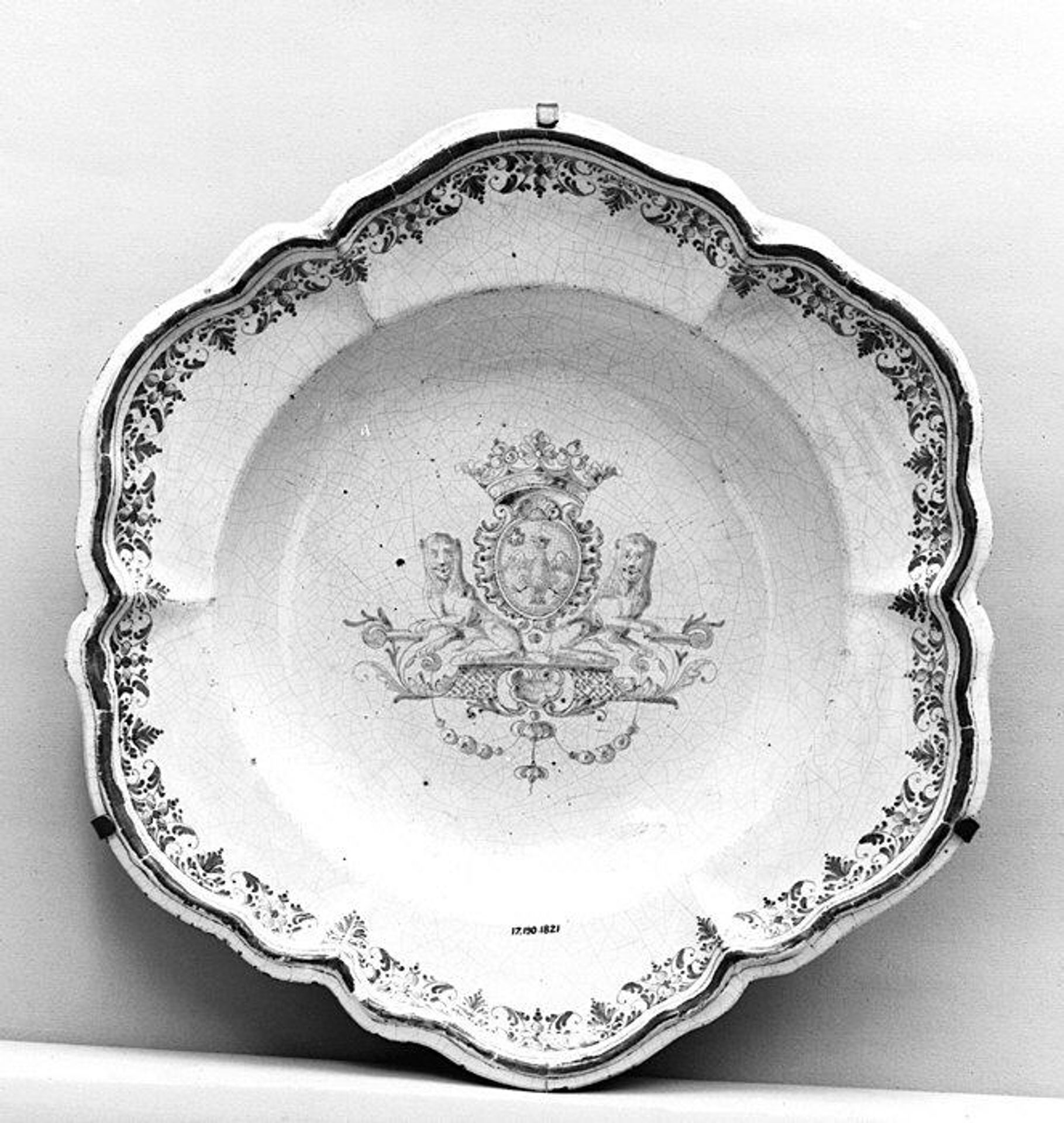
Editor: This porcelain Platter, created around 1700-1715, is a standout piece in the Decorative Arts collection. I’m particularly drawn to its symmetry and ornate design. What symbolic significance might be embedded in its imagery? Curator: The central image is dominated by heraldic symbols: a crown, shield, and flanking lions. Consider these not merely as decorations, but as deliberate statements of power, lineage, and cultural values. The crown speaks of authority, the shield of protection and family honor, and the lions denote courage. Editor: So, the platter isn't just a dish; it's a proclamation of identity? Curator: Precisely. Think of how visual culture reinforces narratives. The choice of porcelain, a highly prized material at the time, underscores the affluence and status of the owner. How does this object speak to memory? Editor: It makes me think about how objects can carry stories, representing people and moments across generations. Do you think these images can change meaning over time? Curator: Absolutely! Symbols evolve and accrue new layers of interpretation based on changing cultural contexts. An image lauded as courageous might be re-evaluated as aggressive depending on the viewer and history. I think the tension lies in discerning the original intent, while acknowledging how an object generates meaning through its ongoing relationship with the audience. Editor: It’s amazing how much history is encoded into a single object. I see so much more now. Thank you! Curator: A pleasure. It’s in these layers of meaning where cultural memory truly resides.
Platter
1700 - 1715


Artwork details
- Medium
- ceramic, porcelain, sculpture
- Dimensions
- Diam. 14-1/2 in. (36.8 cm)
- Location
- Metropolitan Museum of Art, New York, NY
- Copyright
- Public Domain
Tags
baroque
ceramic
porcelain
sculpture
decorative-art
Comments
Be the first to share your thoughts about this work.
About this artwork
Editor: This porcelain Platter, created around 1700-1715, is a standout piece in the Decorative Arts collection. I’m particularly drawn to its symmetry and ornate design. What symbolic significance might be embedded in its imagery? Curator: The central image is dominated by heraldic symbols: a crown, shield, and flanking lions. Consider these not merely as decorations, but as deliberate statements of power, lineage, and cultural values. The crown speaks of authority, the shield of protection and family honor, and the lions denote courage. Editor: So, the platter isn't just a dish; it's a proclamation of identity? Curator: Precisely. Think of how visual culture reinforces narratives. The choice of porcelain, a highly prized material at the time, underscores the affluence and status of the owner. How does this object speak to memory? Editor: It makes me think about how objects can carry stories, representing people and moments across generations. Do you think these images can change meaning over time? Curator: Absolutely! Symbols evolve and accrue new layers of interpretation based on changing cultural contexts. An image lauded as courageous might be re-evaluated as aggressive depending on the viewer and history. I think the tension lies in discerning the original intent, while acknowledging how an object generates meaning through its ongoing relationship with the audience. Editor: It’s amazing how much history is encoded into a single object. I see so much more now. Thank you! Curator: A pleasure. It’s in these layers of meaning where cultural memory truly resides.
Comments
Be the first to share your thoughts about this work.