About this artwork
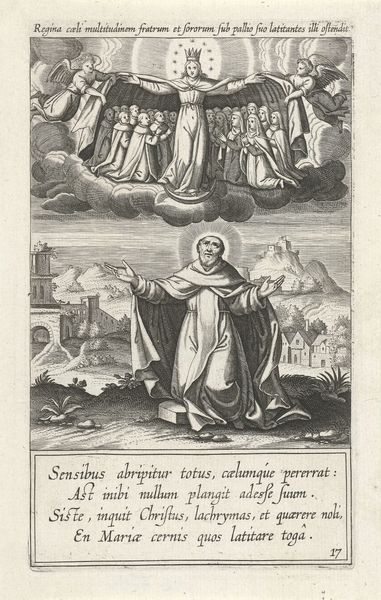
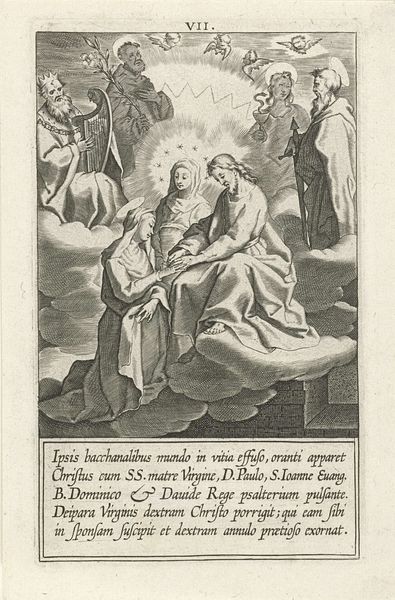
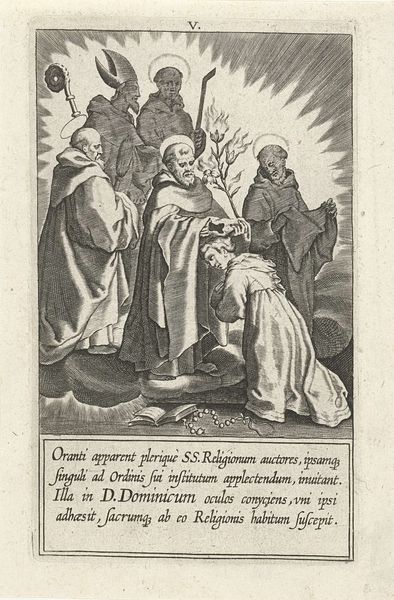
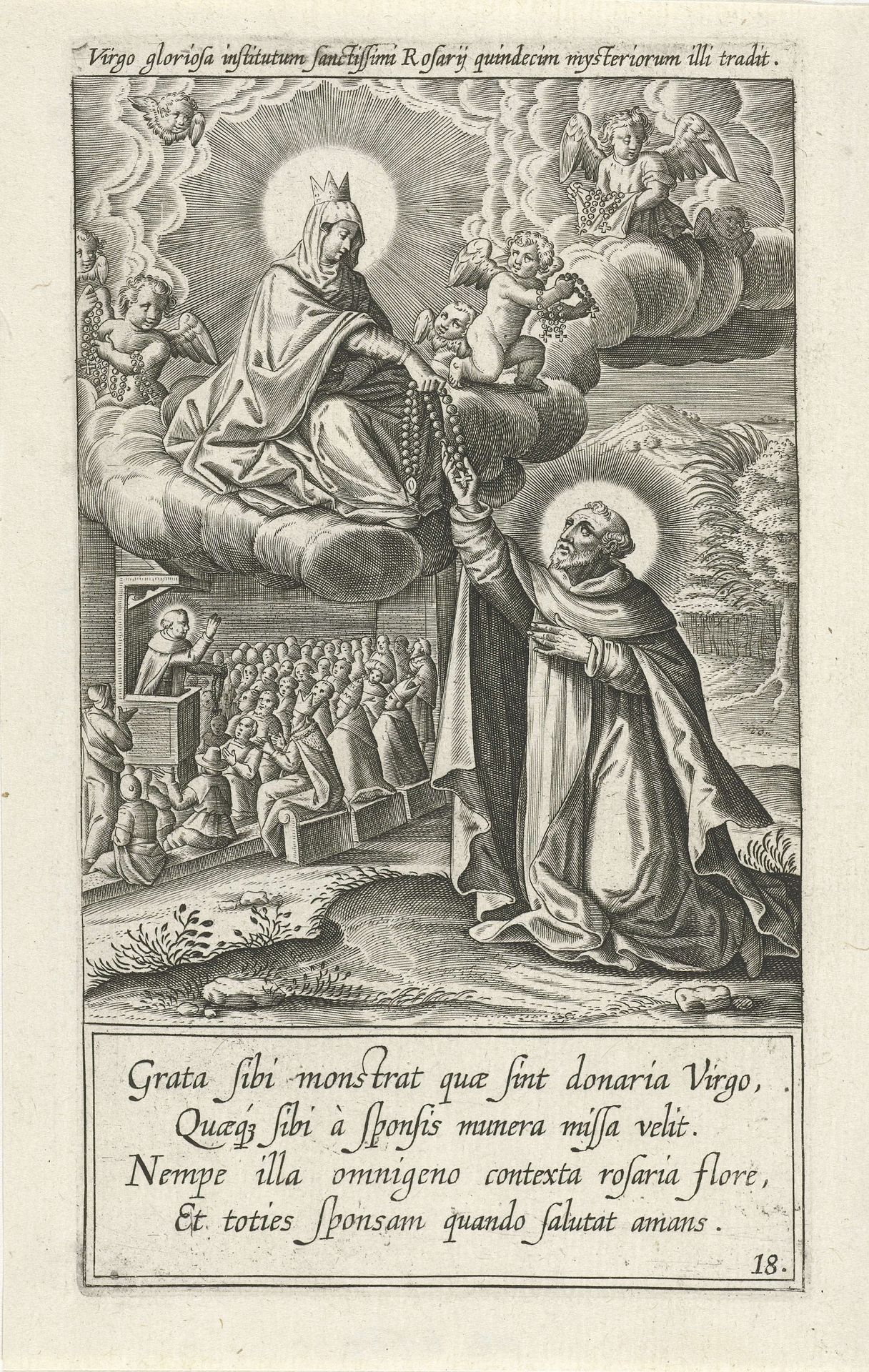
This engraving, now at the Rijksmuseum, was created by Theodoor Galle, who lived from 1571 to 1633. At first glance, the composition, divided into celestial and earthly realms, draws us into a world of religious vision. Note the radiant halos and billowing clouds contrasting with the structured lines of the gathering crowd below. Galle masterfully uses contrasting visual elements to create a distinct hierarchy and meaning. The Virgin Mary, positioned above, bestows a rosary upon Saint Dominic, linking divine grace to earthly devotion. The rosary itself acts as a semiotic bridge, its circular form suggesting infinity and continuous prayer. This work also reflects the period’s emphasis on religious iconography as a means of instruction and spiritual contemplation. The lines and shapes invite us to decode the layers of theological symbolism embedded within, offering a glimpse into the intricate interplay of faith, art, and cultural values of the time.
Visioen van de maagd Maria die de heilige Dominicus een rozenkrans overhandigt
1611

Theodoor Galle
1571 - 1633Location
RijksmuseumArtwork details
- Medium
- print, engraving
- Dimensions
- width 90 mm, height 150 mm
- Location
- Rijksmuseum
- Copyright
- Rijks Museum: Open Domain
Tags
Comments
Share your thoughts
About this artwork
This engraving, now at the Rijksmuseum, was created by Theodoor Galle, who lived from 1571 to 1633. At first glance, the composition, divided into celestial and earthly realms, draws us into a world of religious vision. Note the radiant halos and billowing clouds contrasting with the structured lines of the gathering crowd below. Galle masterfully uses contrasting visual elements to create a distinct hierarchy and meaning. The Virgin Mary, positioned above, bestows a rosary upon Saint Dominic, linking divine grace to earthly devotion. The rosary itself acts as a semiotic bridge, its circular form suggesting infinity and continuous prayer. This work also reflects the period’s emphasis on religious iconography as a means of instruction and spiritual contemplation. The lines and shapes invite us to decode the layers of theological symbolism embedded within, offering a glimpse into the intricate interplay of faith, art, and cultural values of the time.
Comments
Share your thoughts