1697
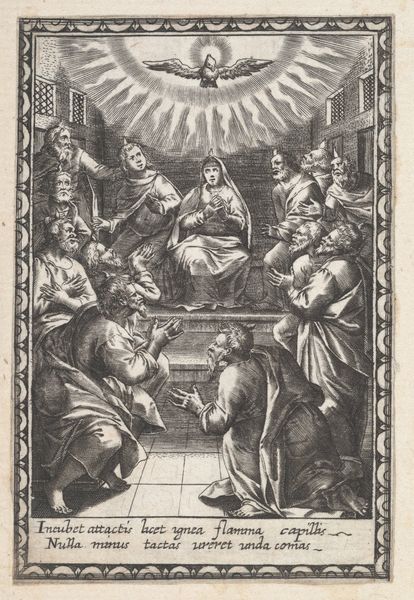
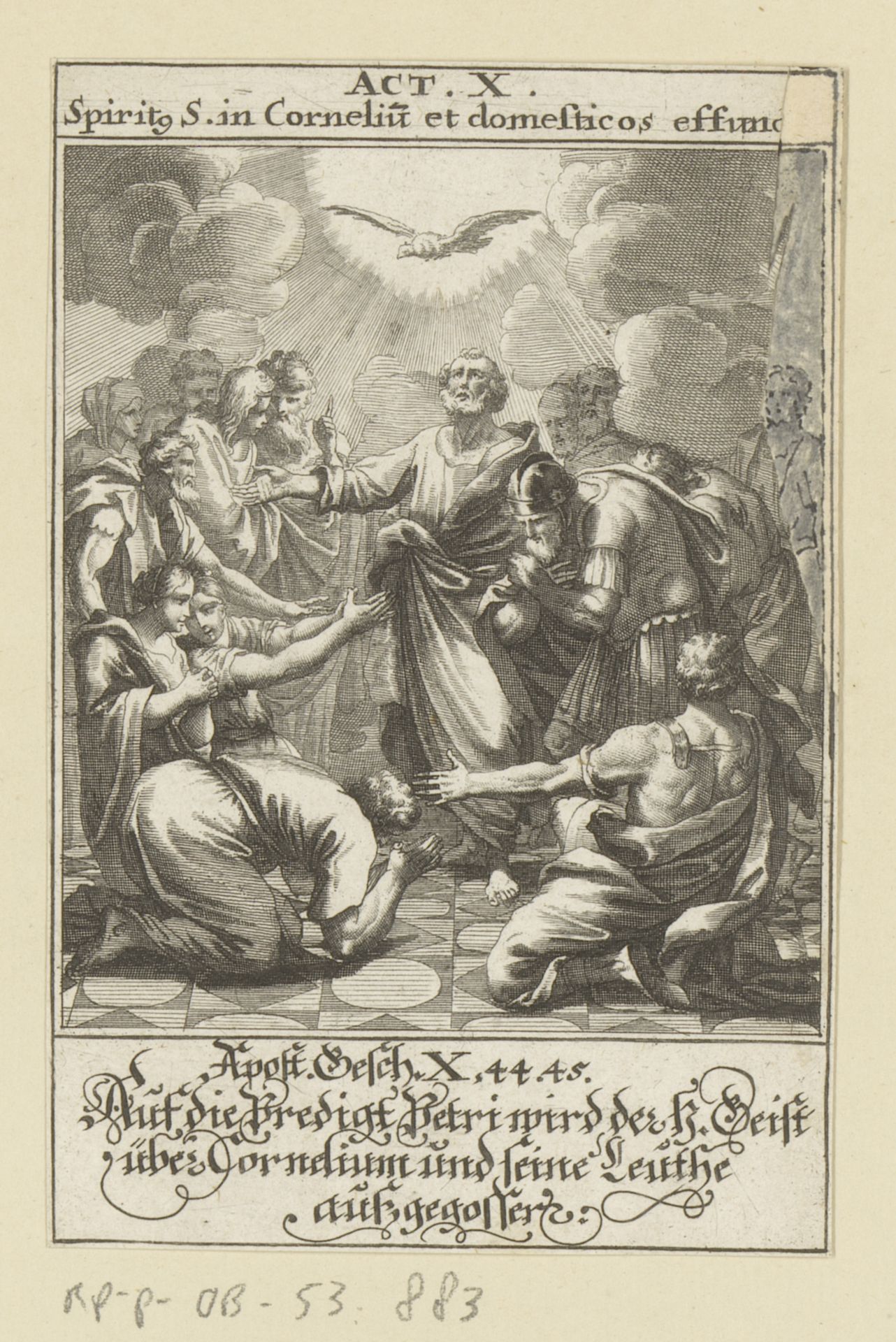
Heilige Geest verschijnt aan hoofdman Cornelius en de zijnen

Anonymous
@anonymousLocation
RijksmuseumListen to curator's interpretation
Curatorial notes
Editor: We're looking at "Heilige Geest verschijnt aan hoofdman Cornelius en de zijnen," from 1697. It’s currently held in the Rijksmuseum. What strikes me is the rigid composition – everyone seems so carefully placed, almost staged. How do you interpret this work? Curator: What strikes me first is not the rigidity but the raw display of power dynamics within this illustration. It portrays a pivotal moment, the Holy Spirit descending upon Cornelius, a gentile. Consider the historical implications. Christianity, initially a marginalized Jewish sect, is now expanding to include non-Jews. How might this imagery be perceived by different groups? Who is centered, and who is marginalized, even within this "holy" moment? Editor: That's interesting. I hadn’t considered it in terms of power. So, you see the positioning of Cornelius as a political statement rather than just an artistic choice? Curator: Absolutely. The act of a divine spirit 'appearing' and influencing Cornelius holds immense socio-political weight. This wasn’t just a religious experience; it was a shift in societal norms, legitimizing the inclusion of gentiles and challenging existing hierarchies. We must look at art as documents of social change. Editor: That’s given me a totally new way of seeing this piece! It's not just a biblical scene, but a visual representation of a power shift and evolving social structure. Curator: Precisely. By engaging with these layers, we move beyond the surface and delve into the complex interplay between art, faith, and societal transformation. Analyzing the artwork is to actively examine social changes.