1669
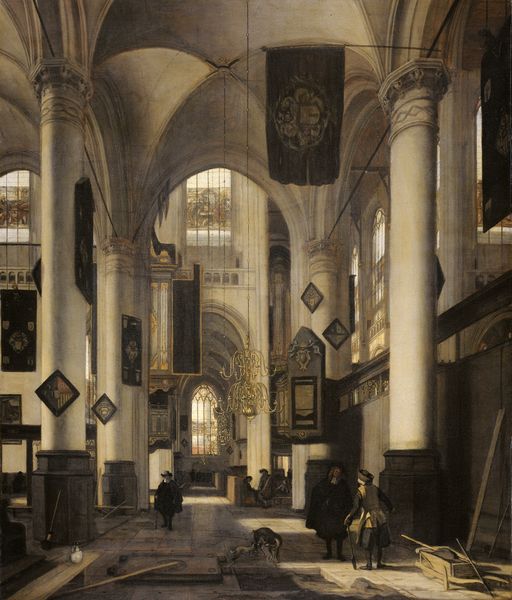
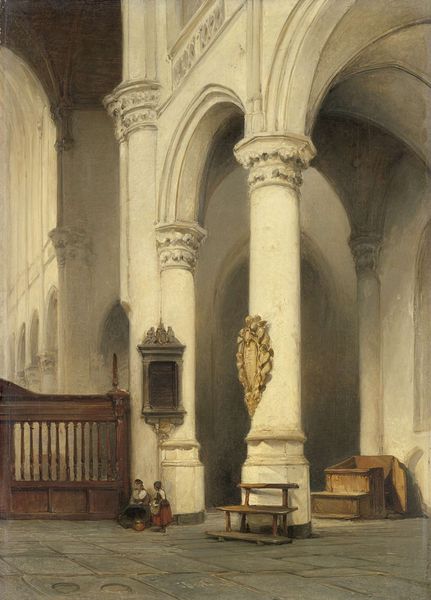
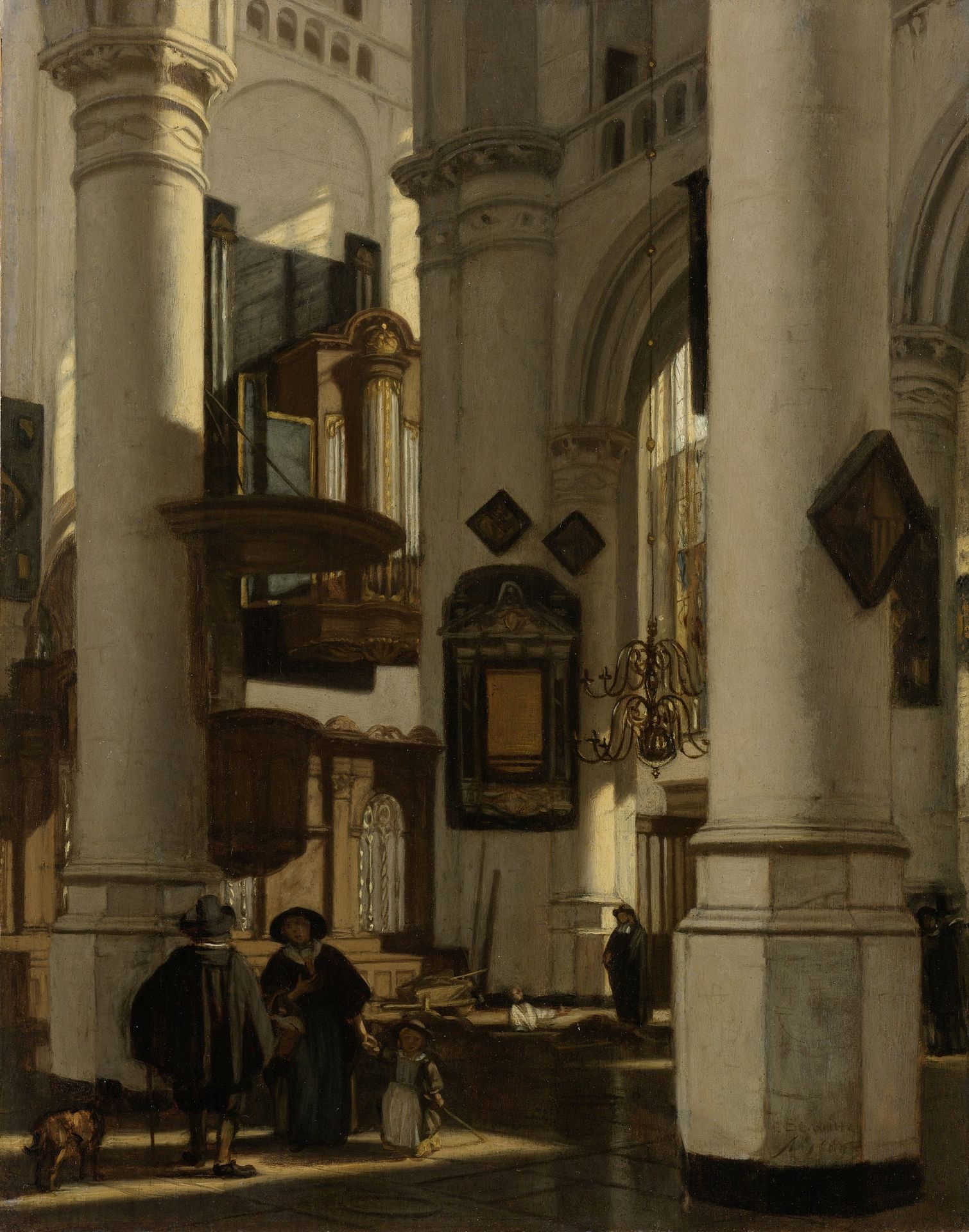
Interior of a Protestant, Gothic Church, with a Gravedigger in the Choir

Listen to curator's interpretation
Curatorial notes
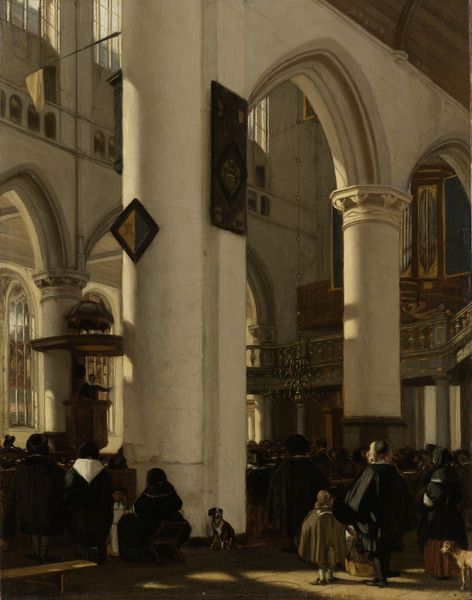
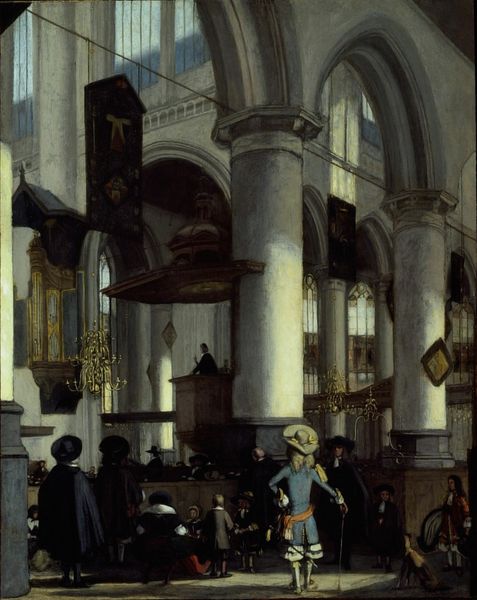
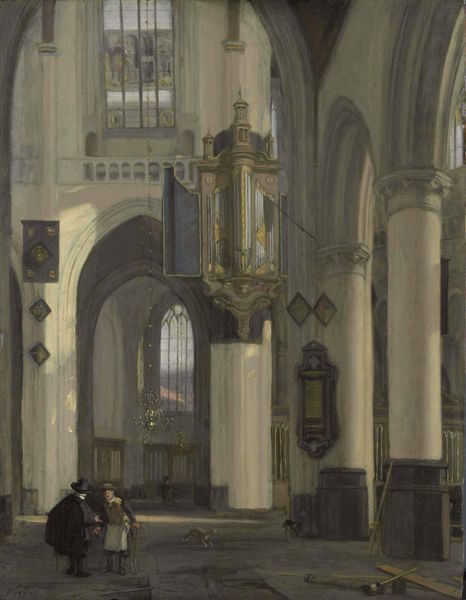
Editor: Here we have Emanuel de Witte's oil on panel, "Interior of a Protestant, Gothic Church, with a Gravedigger in the Choir" painted in 1669. It has such a somber and peaceful quality. What do you see when you look at this piece? Curator: The overwhelming verticality is striking. Notice how de Witte masterfully manipulates the architectural space, creating a dialogue between the massive, pale columns and the more intricate details, such as the figures. Observe also the interplay between light and shadow that sculpts the scene. Do you see how that defines not only the physical space but also directs the eye? Editor: I hadn't noticed the contrast of light on the pillars so distinctly before. It creates such depth! It's almost like the light is a character in the painting. But why focus on an interior? What's significant about it? Curator: It is precisely this that provides meaning. The subject is of course secondary to the arrangement of elements on the panel. The linear arrangement draws the viewers eyes, framing and re-framing elements. Observe the lines within lines that appear in the painting; could it be that they give structure and in doing so meaning to the artwork? Editor: I guess I was trying to understand *what* was there instead of *how* it was rendered, like the texture, form, space and how it makes me feel, instead of finding "hidden" or extra meaning. The architecture seems to amplify the stillness, if that makes sense. Curator: Indeed. By reducing it to its formal elements and examining it's construction of reality we gain a deeper sense of the painting. Editor: Thanks! I now understand how this perspective opens up the language of the composition and perspective, as well as the mood of this work!