About this artwork
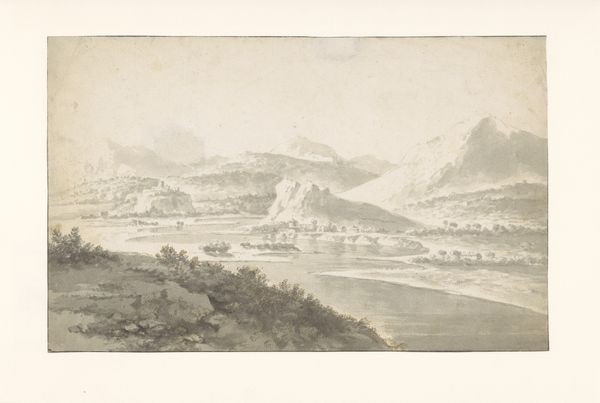
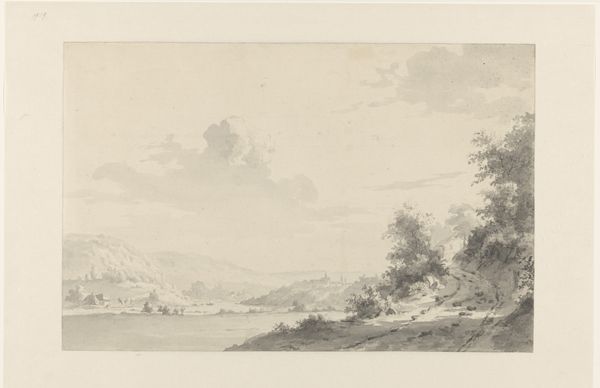
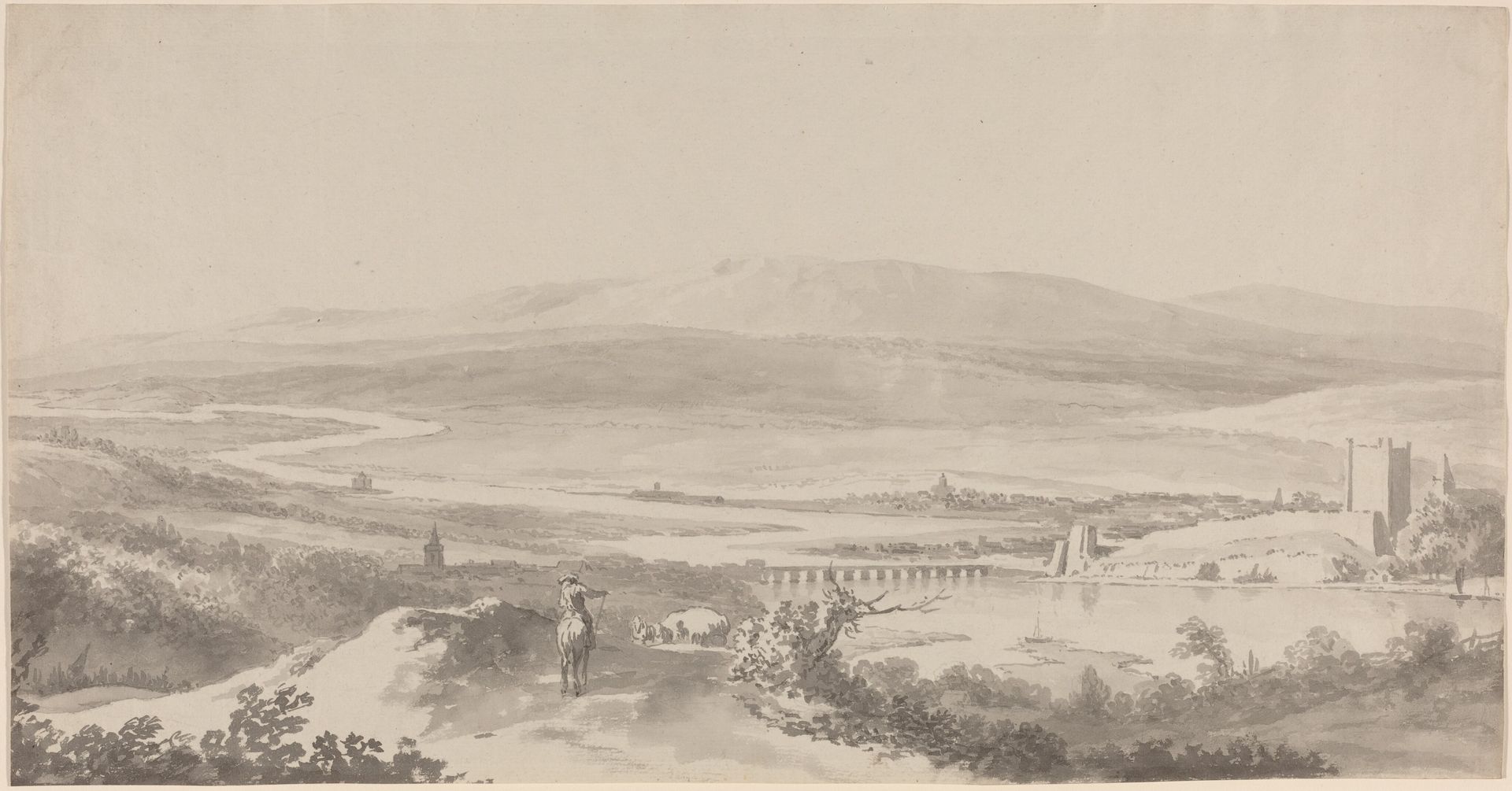
Martin von Molitor rendered this panorama of the Danube near Grinzing in pencil and gray wash. The artist’s vantage point is from the hills overlooking Vienna. Molitor worked during a time of aristocratic patronage and the emergence of landscape painting as a distinct genre. As you look at the image, consider the relationship between the solitary rider and the vast landscape. The representation is a formal articulation of the Romantic era's fascination with nature. Yet this fascination often came at the expense of understanding nature's power. While nature is represented as a site of reflection, it is carefully composed and viewed from a safe distance. The sublime is thus transformed into a picturesque scene. Although the painting appears to be about the Danube landscape, it subtly reveals the artist's and the patrons’ relationship to the land. It emphasizes control and aesthetic appreciation over genuine engagement or ecological awareness. Despite its beauty, the work prompts us to reflect on our complex and often detached relationship with the environment.
Panorama of the Danube near Grinzing
Possibly 1790


Artwork details
- Medium
- drawing, pencil
- Dimensions
- overall: 25.9 x 49.7 cm (10 3/16 x 19 9/16 in.)
- Copyright
- National Gallery of Art: CC0 1.0
Tags
Comments
Share your thoughts
About this artwork
Martin von Molitor rendered this panorama of the Danube near Grinzing in pencil and gray wash. The artist’s vantage point is from the hills overlooking Vienna. Molitor worked during a time of aristocratic patronage and the emergence of landscape painting as a distinct genre. As you look at the image, consider the relationship between the solitary rider and the vast landscape. The representation is a formal articulation of the Romantic era's fascination with nature. Yet this fascination often came at the expense of understanding nature's power. While nature is represented as a site of reflection, it is carefully composed and viewed from a safe distance. The sublime is thus transformed into a picturesque scene. Although the painting appears to be about the Danube landscape, it subtly reveals the artist's and the patrons’ relationship to the land. It emphasizes control and aesthetic appreciation over genuine engagement or ecological awareness. Despite its beauty, the work prompts us to reflect on our complex and often detached relationship with the environment.
Comments
Share your thoughts