About this artwork
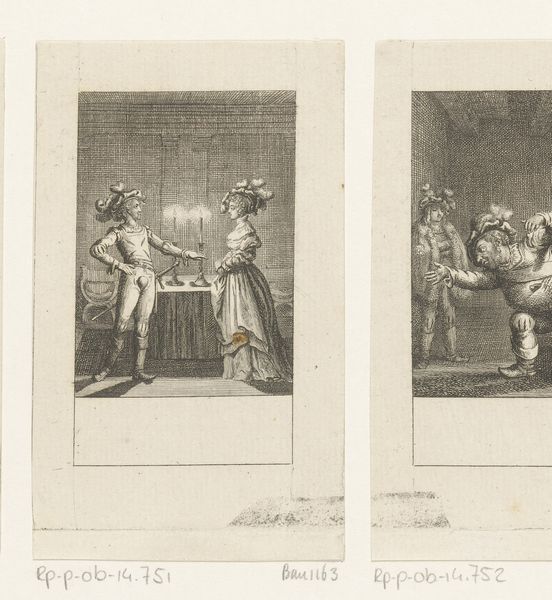
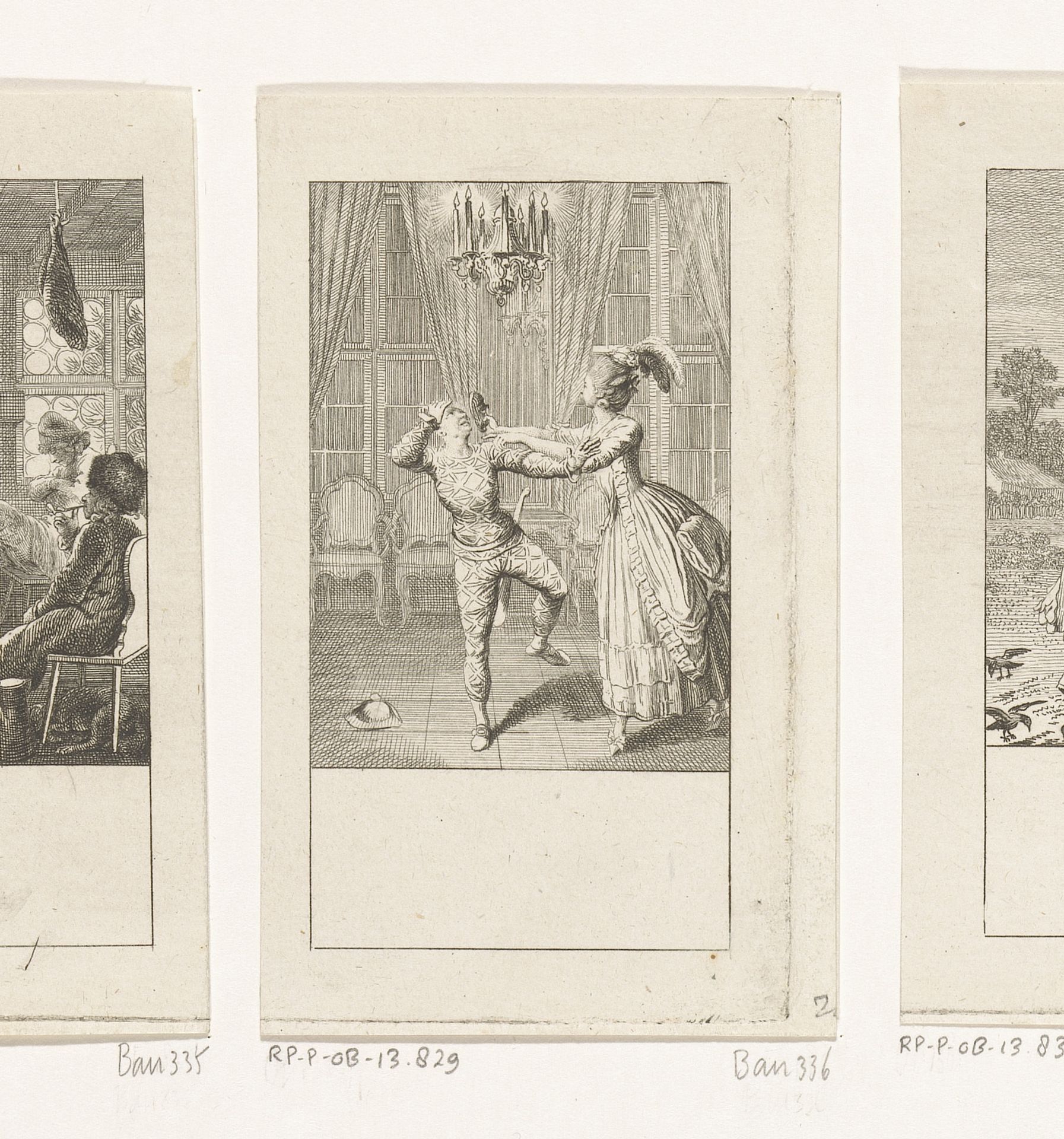
Daniel Nikolaus Chodowiecki created this print titled "Februari," using etching techniques, but the year it was made is unknown. The image shows a scene of a domestic interior in which a well-dressed woman playfully knocks the hat off a man dressed in a Harlequin costume. It was made in Germany, likely in the late 18th century, a period when the Enlightenment was prompting new ideas about personal freedom and expression but social hierarchies remained rigid. The Harlequin figure, traditionally a character of Italian Commedia dell'arte, suggests a performance or masquerade. This, combined with the opulent interior, implies a critique of the aristocracy, who were often portrayed engaging in frivolous and performative social rituals. The work could also be seen as a commentary on gender roles, with the woman taking a dominant role in the interaction. To fully appreciate this work, one might delve into studies of 18th-century social customs, particularly the role of theater and masquerades in aristocratic society. The meaning of art is always enmeshed in its social and institutional context.

Artwork details
- Dimensions
- height 107 mm, width 66 mm
- Location
- Rijksmuseum
- Copyright
- Rijks Museum: Open Domain
Comments
No comments
About this artwork
Daniel Nikolaus Chodowiecki created this print titled "Februari," using etching techniques, but the year it was made is unknown. The image shows a scene of a domestic interior in which a well-dressed woman playfully knocks the hat off a man dressed in a Harlequin costume. It was made in Germany, likely in the late 18th century, a period when the Enlightenment was prompting new ideas about personal freedom and expression but social hierarchies remained rigid. The Harlequin figure, traditionally a character of Italian Commedia dell'arte, suggests a performance or masquerade. This, combined with the opulent interior, implies a critique of the aristocracy, who were often portrayed engaging in frivolous and performative social rituals. The work could also be seen as a commentary on gender roles, with the woman taking a dominant role in the interaction. To fully appreciate this work, one might delve into studies of 18th-century social customs, particularly the role of theater and masquerades in aristocratic society. The meaning of art is always enmeshed in its social and institutional context.
Comments
No comments