1895 - 1920
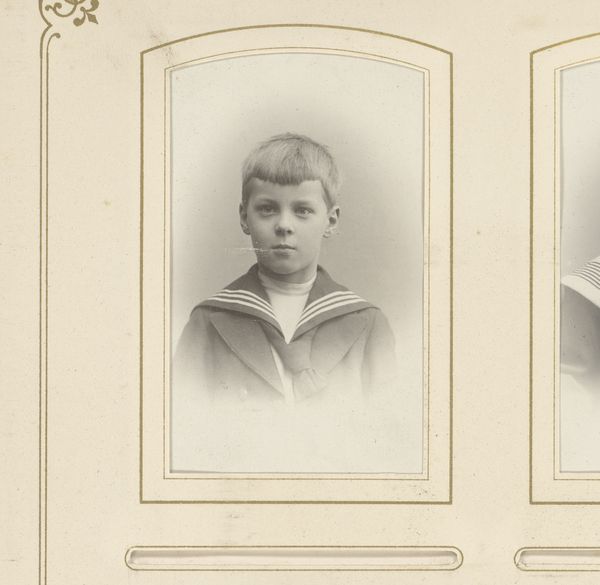
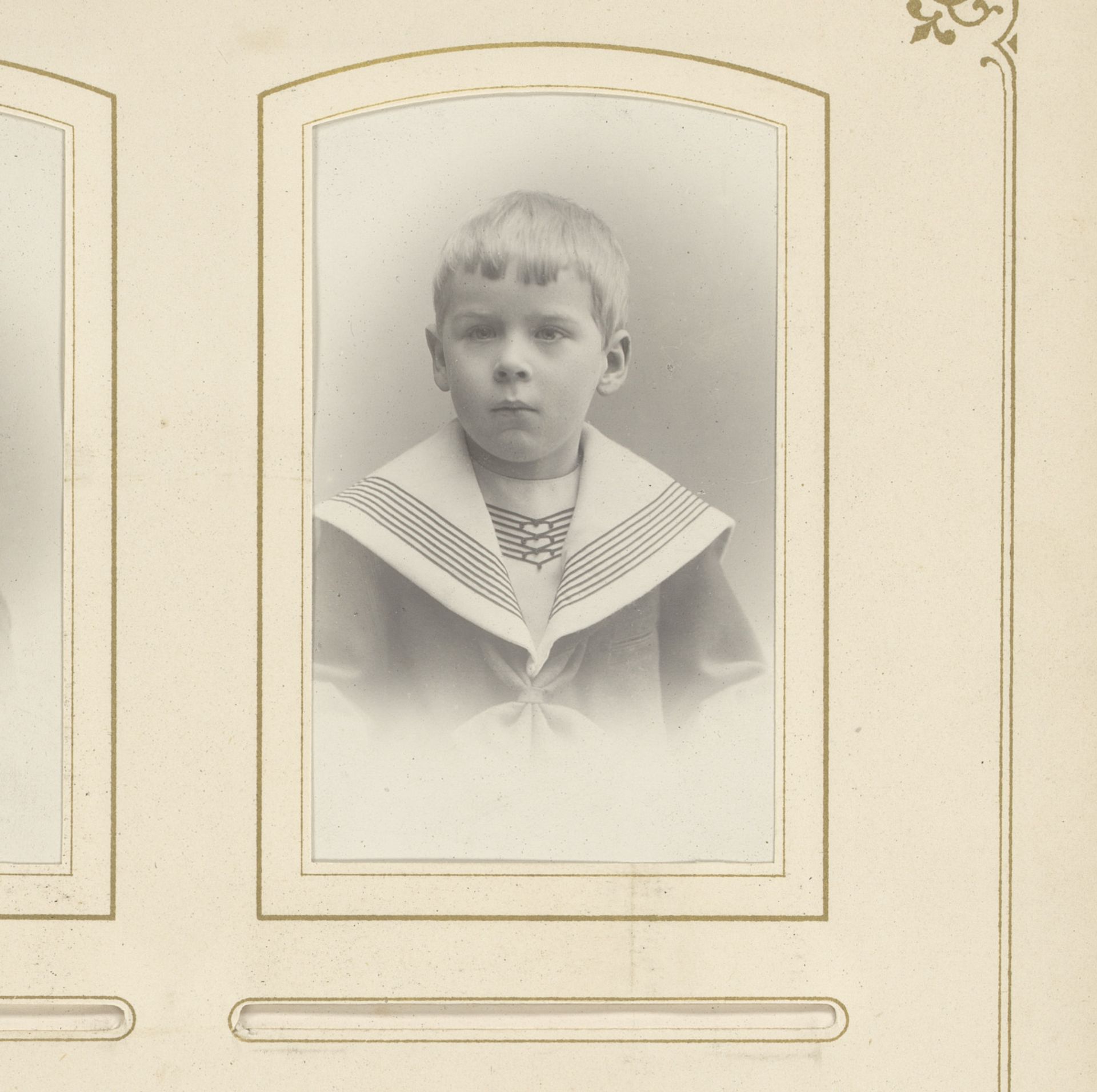
Portret van een jongen

Samson & Co.
@samsoncoLocation
RijksmuseumListen to curator's interpretation
Curatorial notes
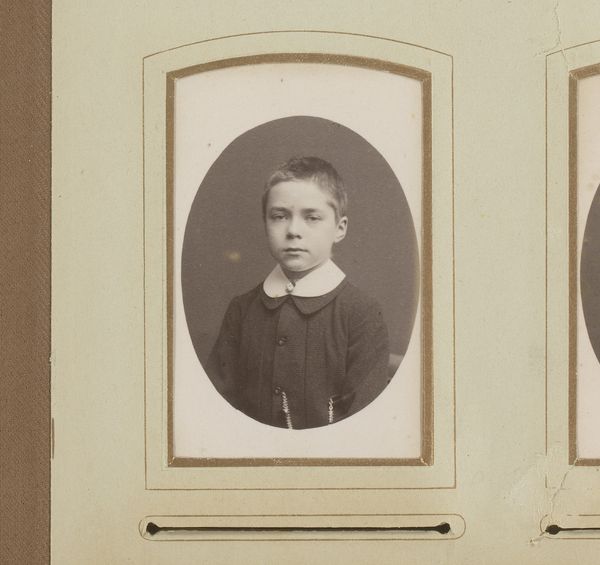
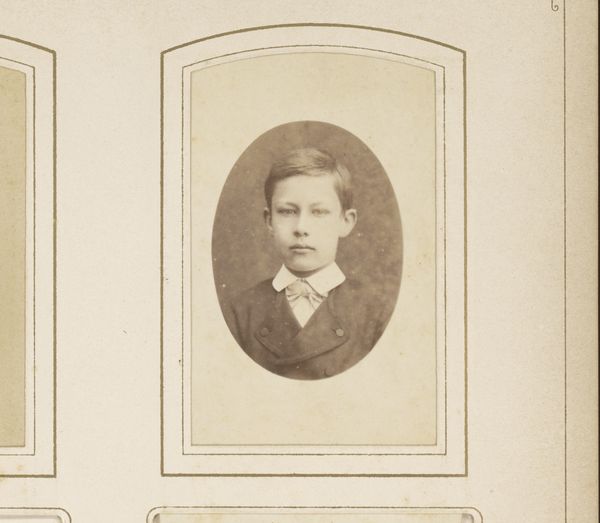
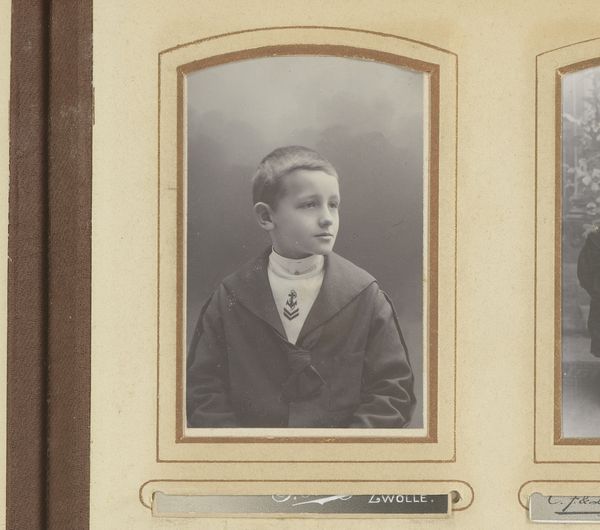
Curator: Welcome. We’re looking at "Portret van een jongen," or "Portrait of a Boy," a gelatin-silver print from circa 1895-1920, attributed to Samson & Co. Editor: Immediately, there's a somber, almost unsettling stillness to this child's gaze. He seems burdened. Curator: Observe the composition. The boy is centrally framed, his severe expression highlighted against the soft focus background. It is formally quite rigid, reinforcing a sense of control and containment. The geometric structure is echoed by the decorative frame around the print itself, emphasizing the subject's isolation. Editor: His sailor suit becomes symbolic, not of youthful freedom, but of constraint. In this period, such attire would have marked class and belonging. Who determined the image’s aesthetic? Is it a negotiation of identity between sitter and photographer? Does this uniform serve as an exercise in shaping social roles? Curator: Consider the interplay of light and shadow. It's carefully calibrated to reveal form. Look how the light defines the planes of his face, drawing our attention to his eyes—the focal point. Editor: That very focal point unsettles me further. It raises the question: What future awaits this child? How might historical constructs like empire-building or patriarchal traditions influence this child’s life trajectory? We should also recognize our own positions as viewers as we assess a boy fixed in the past, mediated by the colonial gaze of photography itself. Curator: True. Still, by concentrating on the formal components, like the limited tonal range, we detect a specific elegance, that removes it, sets it apart, and helps express an artistic ideal of the time. Editor: Agreed. Examining this photograph beyond pure aesthetics reveals a complex portrait of power, societal expectation, and, most intriguingly, suppressed youth. It invites us to think about the larger historical forces shaping individual destinies, then and now. Curator: Indeed, the work is a good reminder of the value of detailed structural observations and analysis that allow us a path into grasping wider understandings of artistic representations.