1895 - 1920
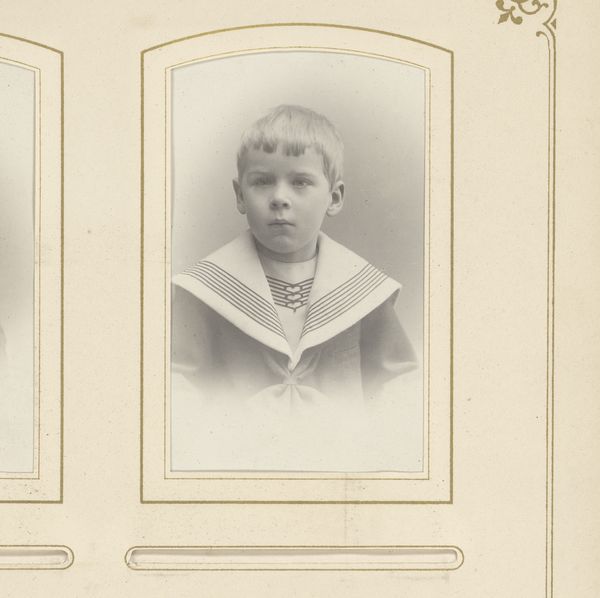
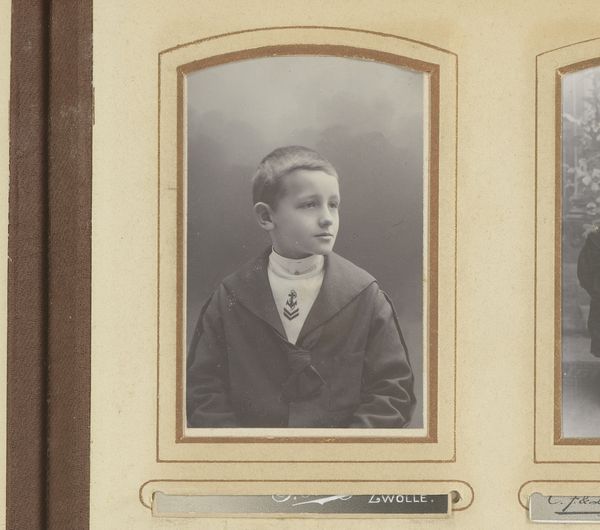
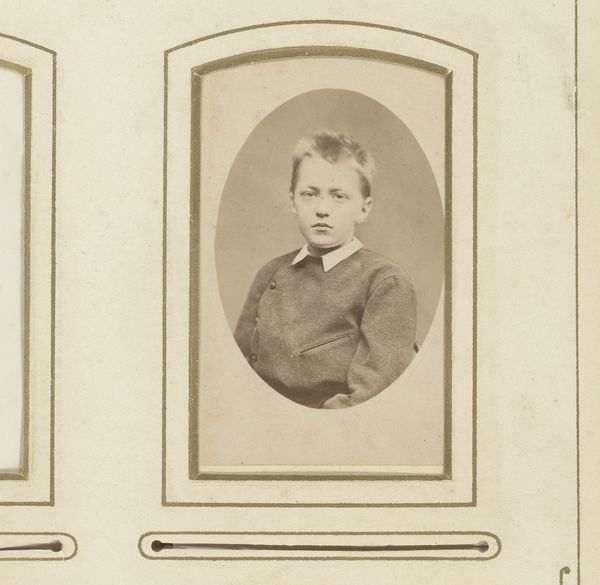
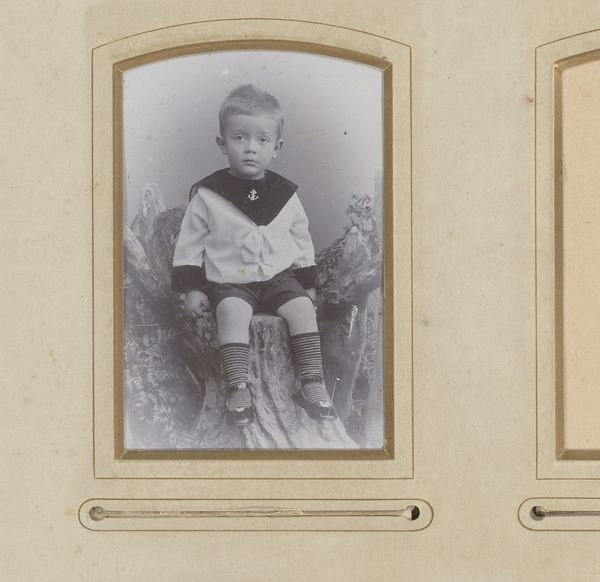
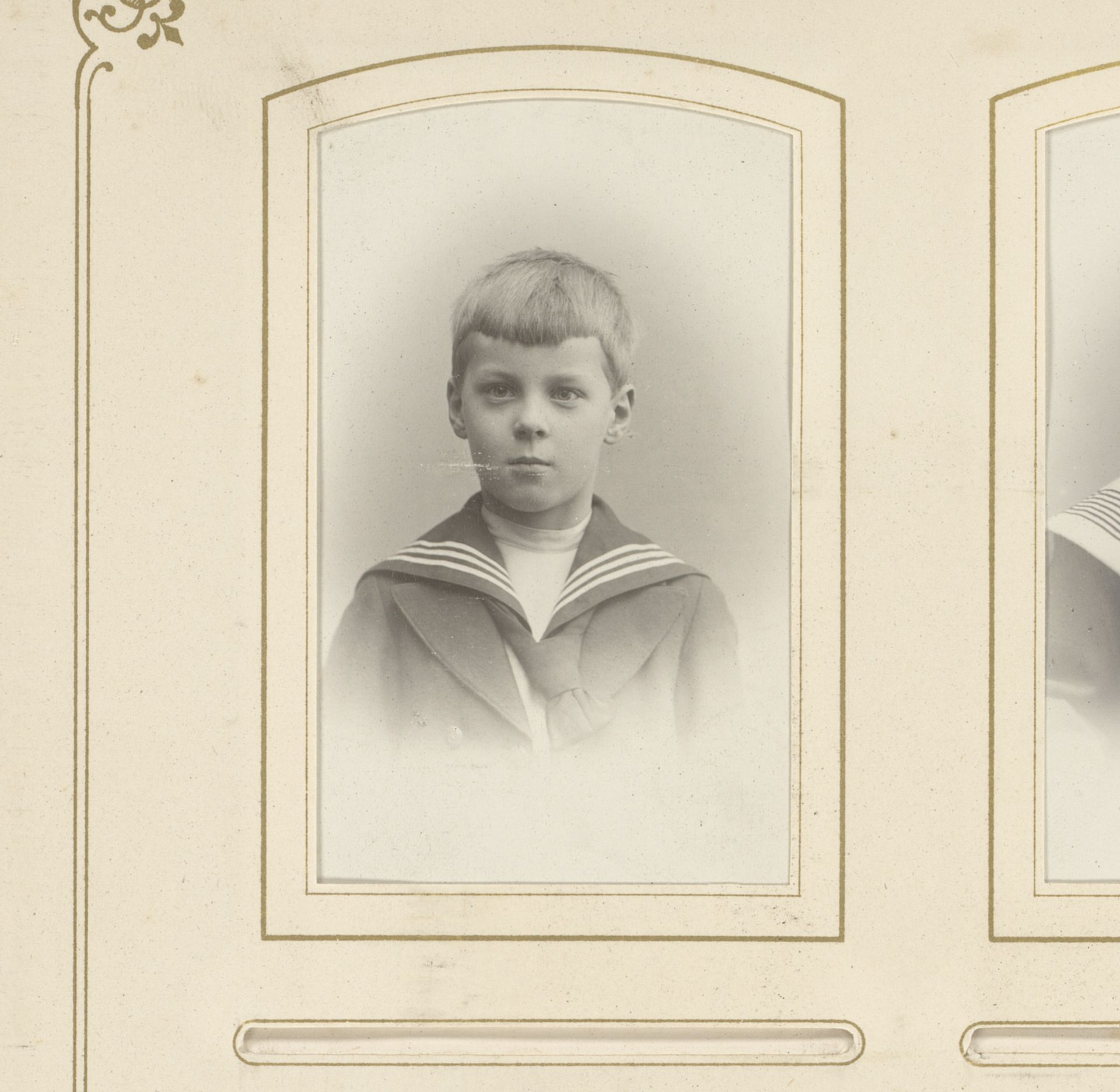
Portret van een jongen

Samson & Co.
@samsoncoLocation
RijksmuseumListen to curator's interpretation
Curatorial notes
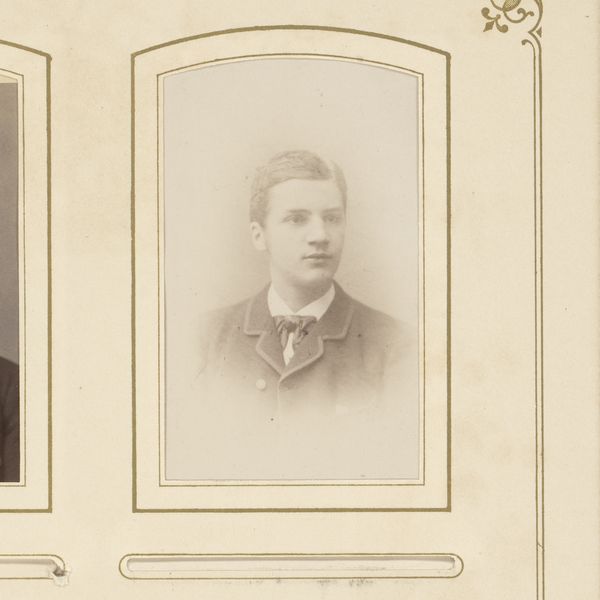
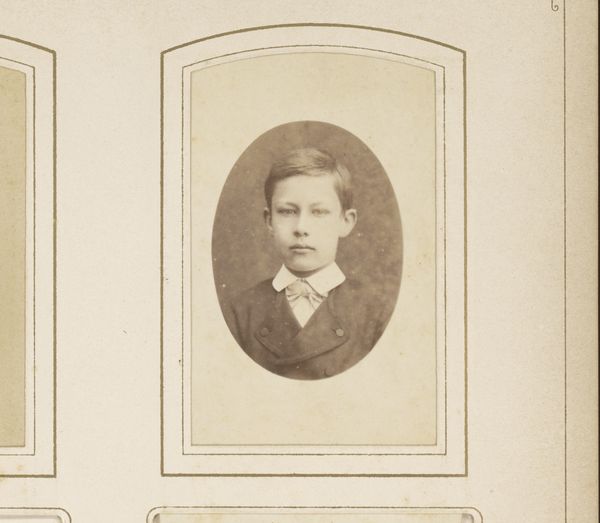
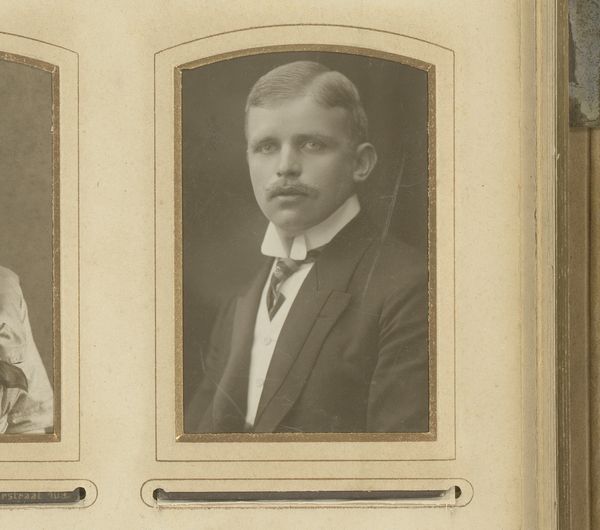
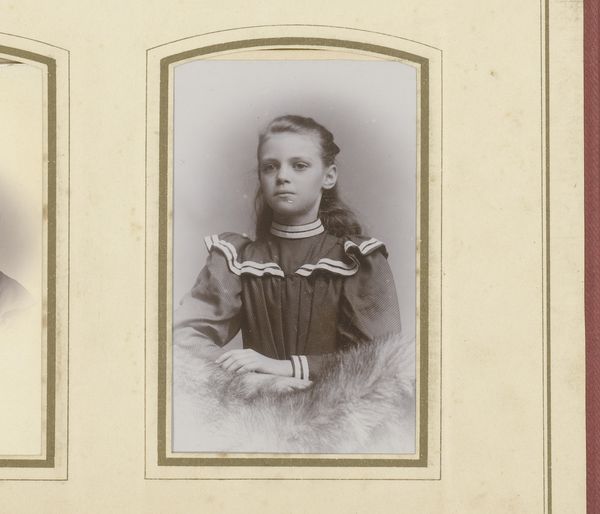
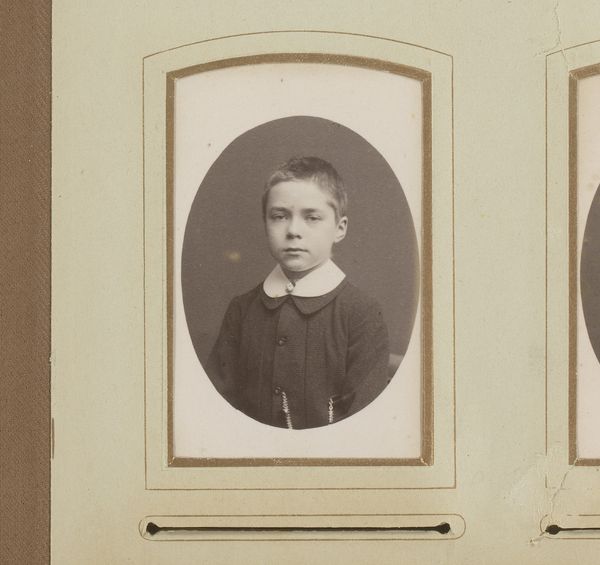
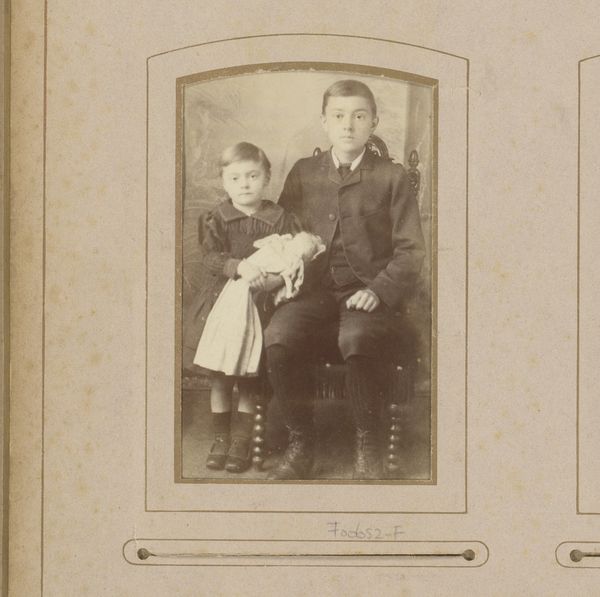
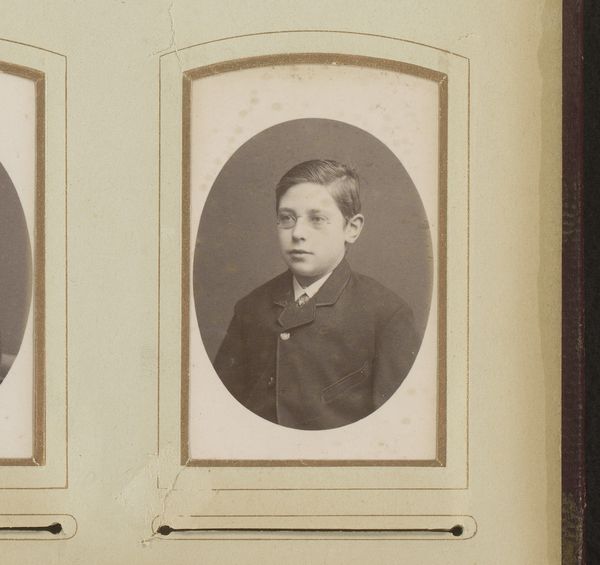
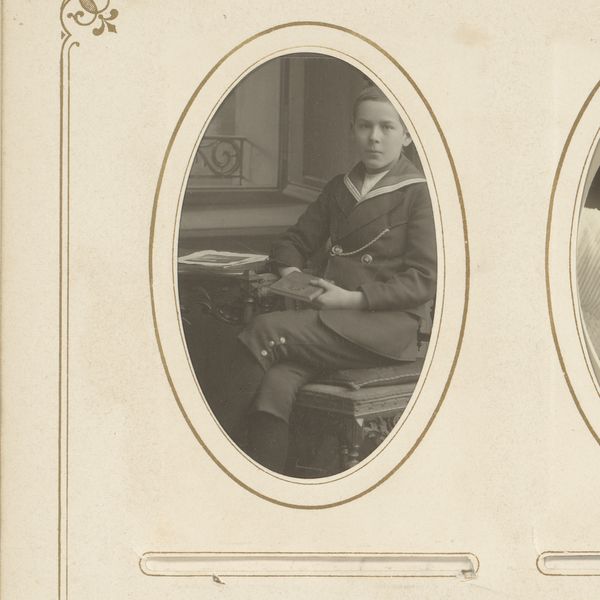
Curator: Welcome. Before us, we see an evocative portrait, "Portret van een jongen," captured between 1895 and 1920. It is a gelatin-silver print from Samson & Co., held here at the Rijksmuseum. Editor: It strikes me as simultaneously innocent and intensely serious. That gaze… and the way he’s posed so formally, contained within that decorative border, adds to a certain gravity, despite his age. Curator: Absolutely. The materiality here is significant. A gelatin-silver print implies a standardized industrial process. Yet, the photographic portraits held enormous social weight. They served as precious keepsakes for loved ones or tools of social mobility. Editor: It is more than that. That sailor suit is so interesting. It's not merely clothing; it represents a whole aspirational class identity tied up with maritime power. These became symbolic garments, representing journeys, even potential destinies and the symbolism surrounding these outfits resonated strongly within society. Curator: Fascinating. Consider too, the implicit labor involved. The photographer’s studio was a site of both artistic expression and commercial activity. There’s the process of selecting backdrops and props to communicate certain ideas of prosperity. Editor: Speaking of symbols, that almost ethereal background wash feels calculated. It serves to soften and perhaps idealize, giving this photo a more sentimental impact beyond documentation. The pose reminds me of traditional stately portraits from earlier eras. Curator: I appreciate how you’re framing this. For me, examining such studio settings encourages questions about cultural value, class, and the distribution of these images. To understand the material and technical elements is critical to consider all related economic exchanges. Editor: I suppose it is just like history and time encapsulated in the imagery and the production style. Curator: Well said, seeing this through a lens that reveals not just what we see in the picture but also, how and why we look at the image, is a reminder of art history's complex nature. Editor: Indeed, examining his garments, pose, and photographic treatment as elements working together to form how memory can immortalize certain narratives reveals just how rich a single photograph can be.