About this artwork
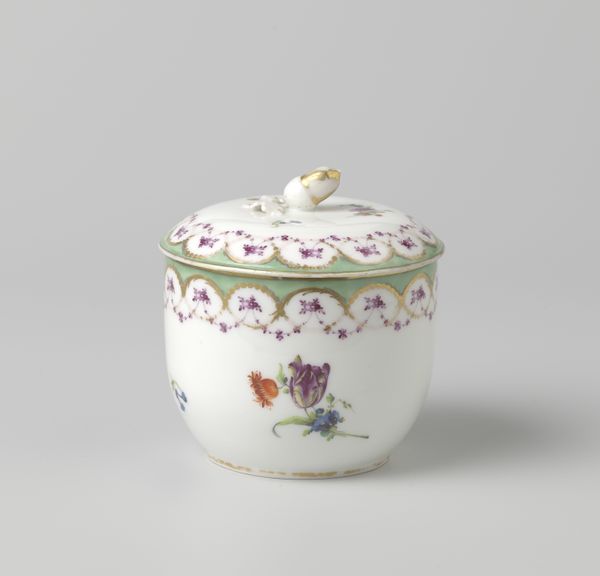
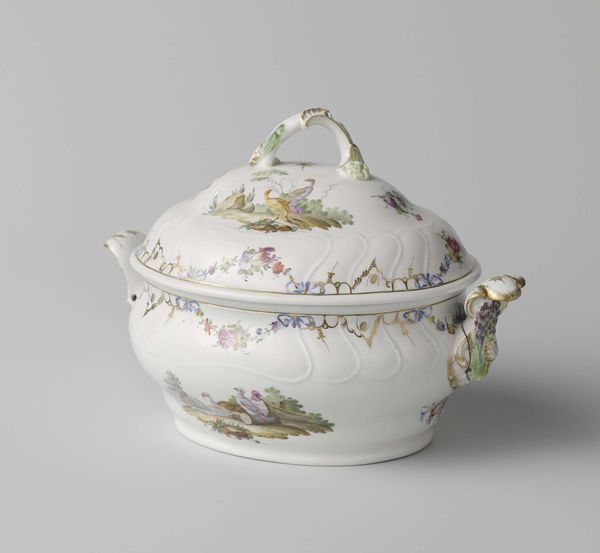
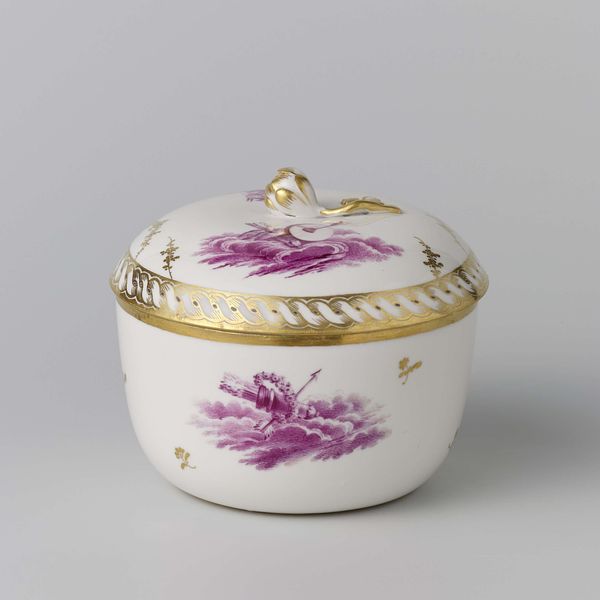
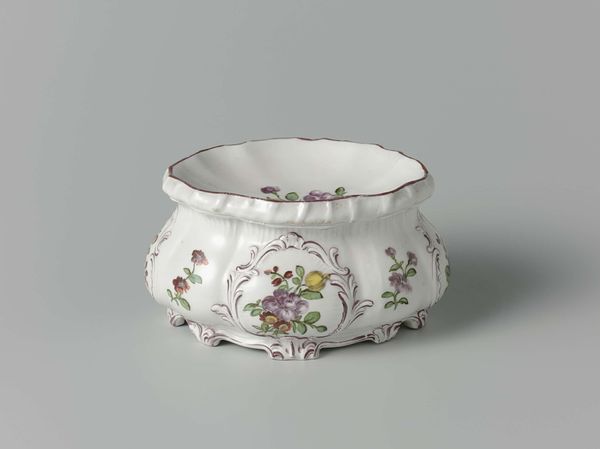
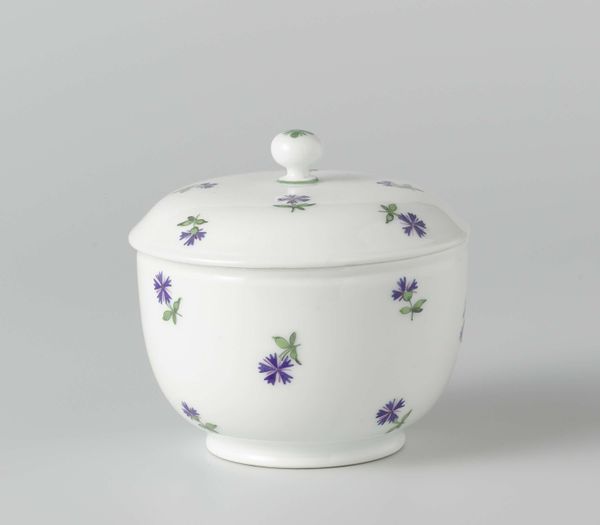
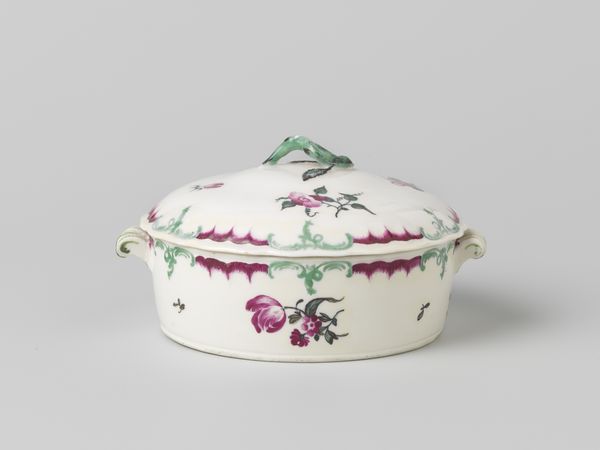
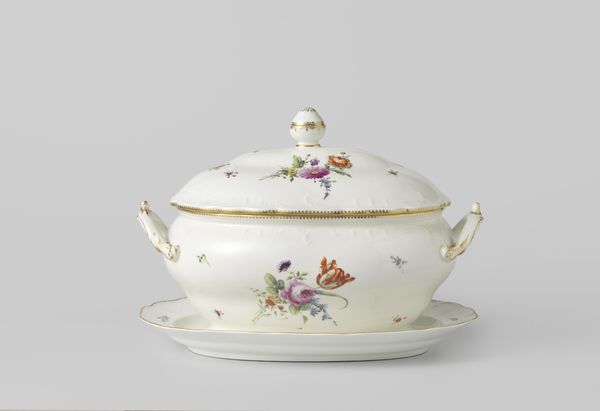
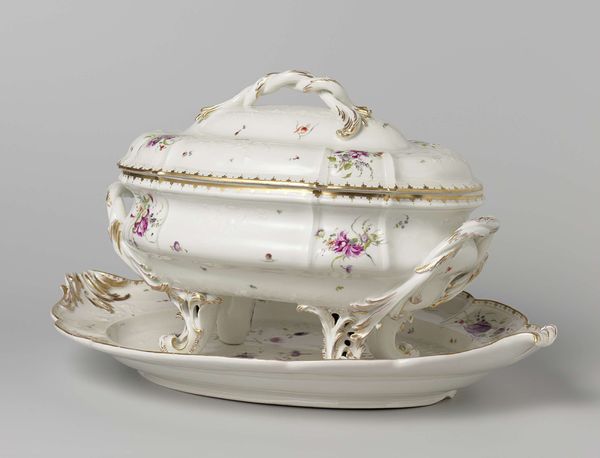
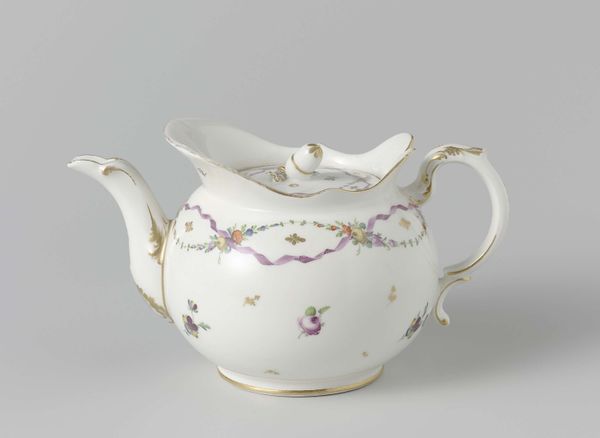
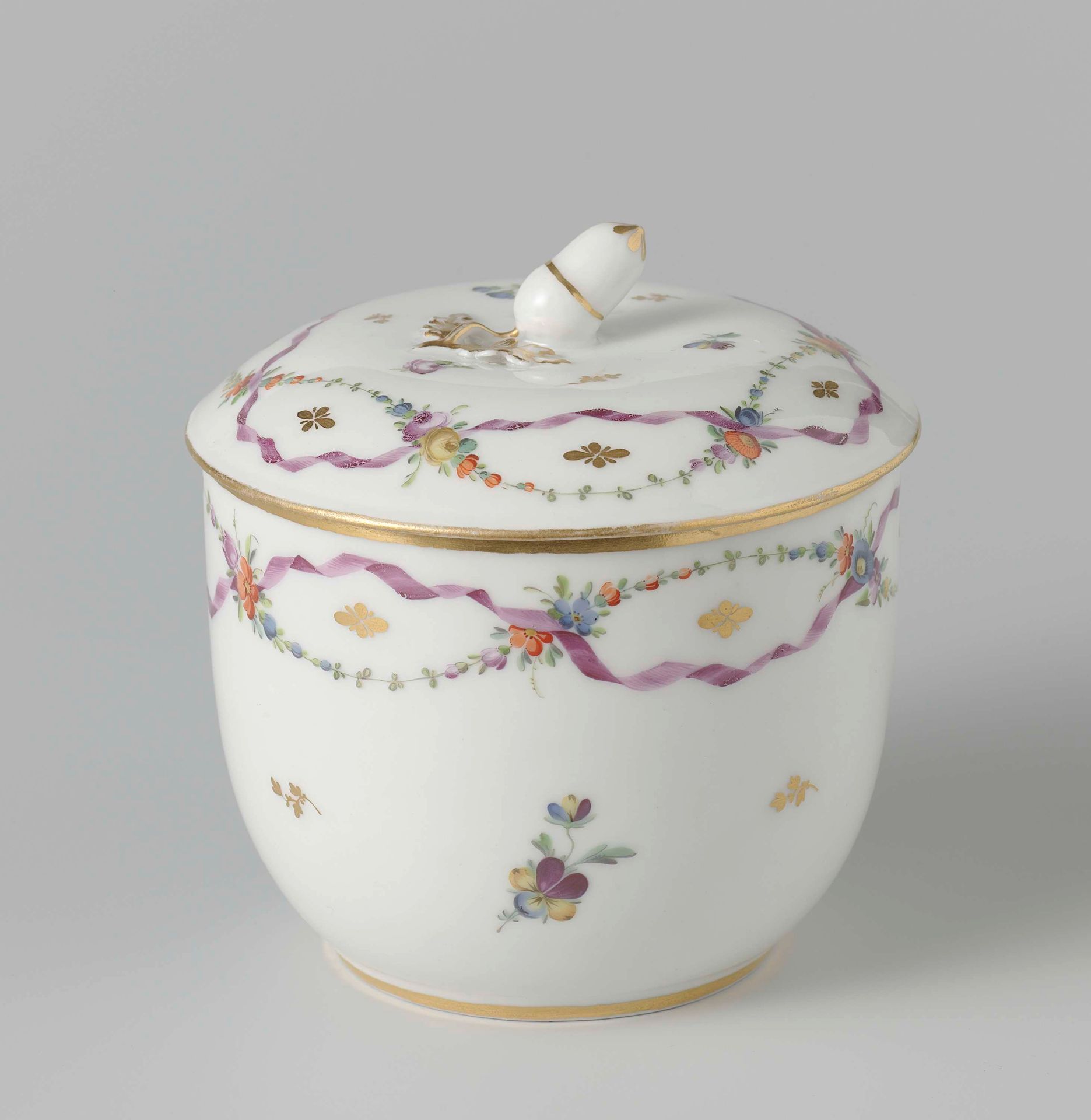
This is a sugar bowl, delicately crafted from porcelain by the Koninklijke Porseleinfabriek Dommer & Co. Observe how the vessel's pristine white surface serves as a canvas for the rhythmic dance of floral motifs and gilded accents. A garland of pastel-colored flowers intertwines with a sinuous purple ribbon, creating a visual harmony that is both charming and refined. The carefully placed golden lozenges punctuate the composition, adding a touch of opulence to the otherwise understated design. The porcelain’s smooth, tactile quality invites a haptic experience, while the symmetrical arrangement of the ornamentation suggests a classical sensibility. However, the loose, painterly application of the floral designs hints at a subtle departure from strict formalism, injecting a sense of organic vitality into the piece. This interplay between structure and spontaneity is characteristic of a period grappling with new modes of expression, where traditional forms are reinterpreted through a lens of burgeoning individualism. Consider how the piece destabilizes established meanings by integrating traditional symmetry with looser, more naturalistic painterly designs. The sugar bowl is a perfect example of how art can reflect broader shifts in cultural values and aesthetic sensibilities.
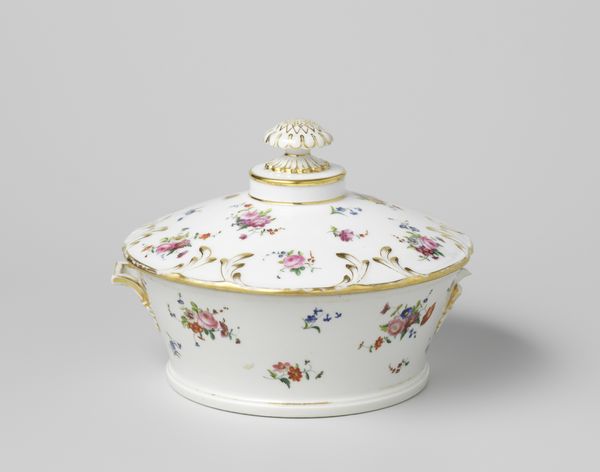
Suikerpot, beschilderd met strooibloemen en gouden lovertjes
c. 1809 - 1814

Artwork details
- Medium
- ceramic, earthenware
- Dimensions
- height 7.9 cm, diameter 10 cm, height 3.4 , diameter 10.4 , height 11
- Location
- Rijksmuseum
- Copyright
- Rijks Museum: Open Domain
Tags
Comments
Share your thoughts
About this artwork
This is a sugar bowl, delicately crafted from porcelain by the Koninklijke Porseleinfabriek Dommer & Co. Observe how the vessel's pristine white surface serves as a canvas for the rhythmic dance of floral motifs and gilded accents. A garland of pastel-colored flowers intertwines with a sinuous purple ribbon, creating a visual harmony that is both charming and refined. The carefully placed golden lozenges punctuate the composition, adding a touch of opulence to the otherwise understated design. The porcelain’s smooth, tactile quality invites a haptic experience, while the symmetrical arrangement of the ornamentation suggests a classical sensibility. However, the loose, painterly application of the floral designs hints at a subtle departure from strict formalism, injecting a sense of organic vitality into the piece. This interplay between structure and spontaneity is characteristic of a period grappling with new modes of expression, where traditional forms are reinterpreted through a lens of burgeoning individualism. Consider how the piece destabilizes established meanings by integrating traditional symmetry with looser, more naturalistic painterly designs. The sugar bowl is a perfect example of how art can reflect broader shifts in cultural values and aesthetic sensibilities.
Comments
Share your thoughts