About this artwork
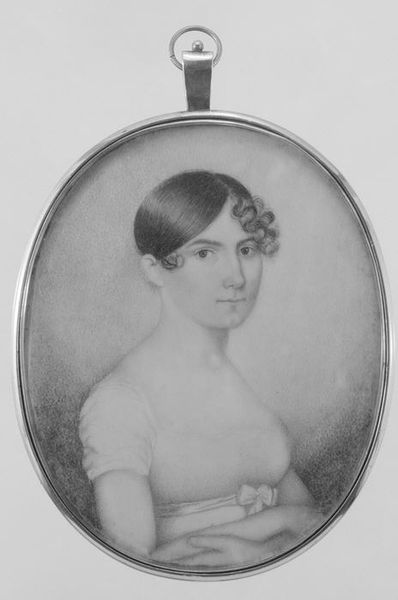
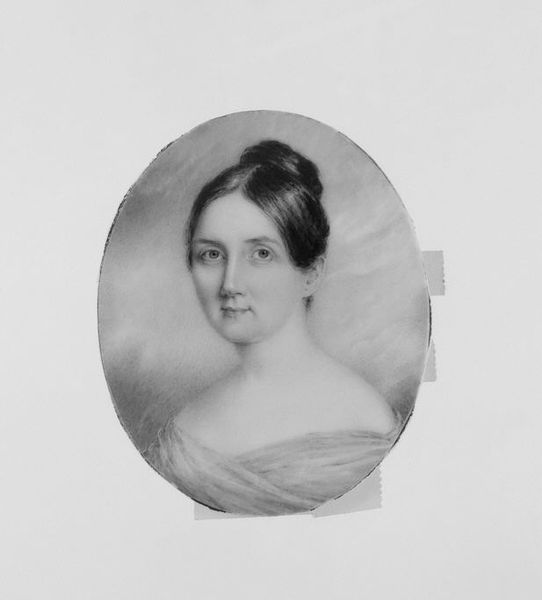
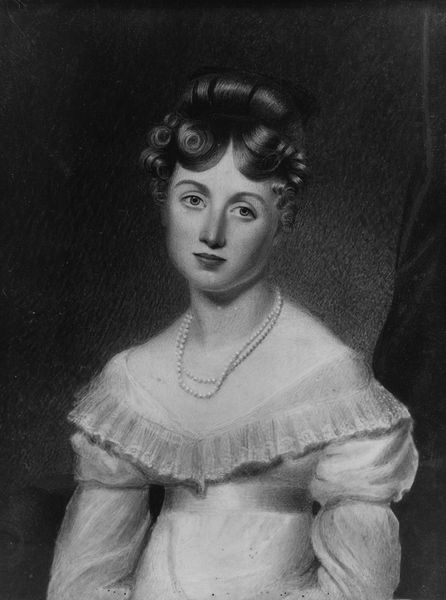
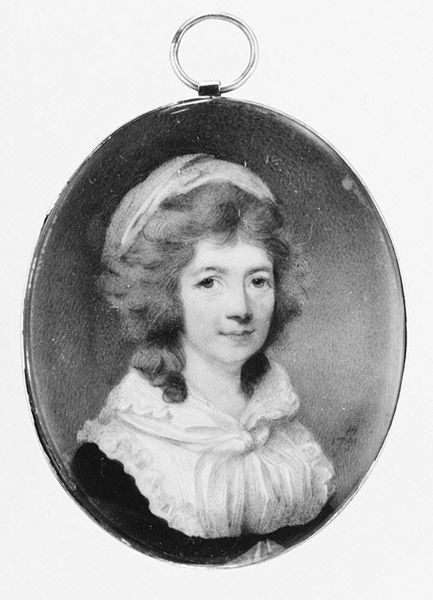
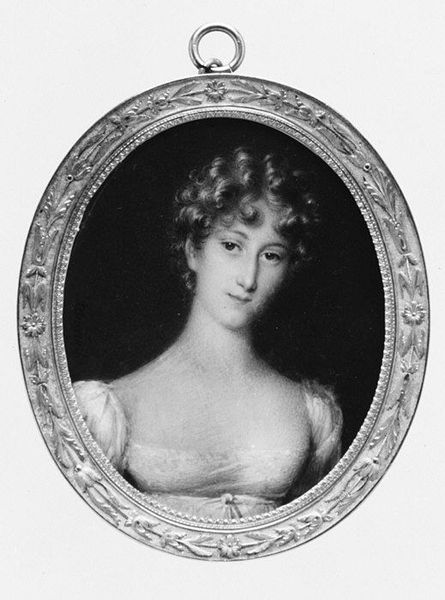
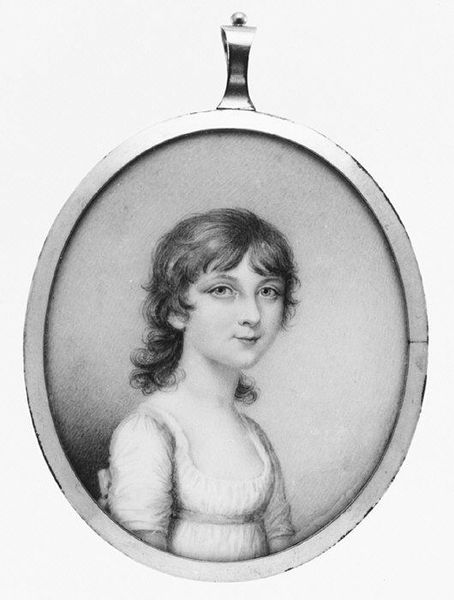
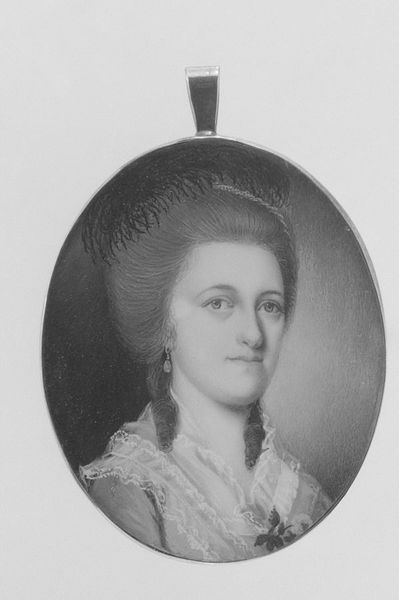
Thomas Hazlehurst created this miniature portrait of Agnes Sewell with watercolor on ivory. The monochromatic palette immediately draws the eye, its subdued tones enhancing the sitter’s serene expression. The oval format, dictated by the conventions of portrait miniatures, encloses the subject in a soft, continuous line. Hazlehurst masterfully uses light and shadow to model Sewell’s features. Notice how the subtle gradations around her face create depth, while the highlights on her forehead, nose, and chest subtly brings her forward. This delicate handling of tone is key to conveying a sense of idealized beauty, consistent with the aesthetic values of the period. The composition, framed by the dark background, directs our focus to the subject's face, inviting contemplation of her character and status. The structural and formal elements of the portrait serve not only as aesthetic devices but also as signs of the sitter’s place within the social structures of her time. It invites ongoing interpretation, reflecting how perceptions of beauty and identity evolve over time.
Agnes Sewell
1795 - 1805


Artwork details
- Medium
- drawing, paper, pencil
- Dimensions
- Oval, 3 x 2 3/8 in. (75 x 60 mm)
- Location
- Metropolitan Museum of Art, New York, NY
- Copyright
- Public Domain
Tags
Comments
Share your thoughts
About this artwork
Thomas Hazlehurst created this miniature portrait of Agnes Sewell with watercolor on ivory. The monochromatic palette immediately draws the eye, its subdued tones enhancing the sitter’s serene expression. The oval format, dictated by the conventions of portrait miniatures, encloses the subject in a soft, continuous line. Hazlehurst masterfully uses light and shadow to model Sewell’s features. Notice how the subtle gradations around her face create depth, while the highlights on her forehead, nose, and chest subtly brings her forward. This delicate handling of tone is key to conveying a sense of idealized beauty, consistent with the aesthetic values of the period. The composition, framed by the dark background, directs our focus to the subject's face, inviting contemplation of her character and status. The structural and formal elements of the portrait serve not only as aesthetic devices but also as signs of the sitter’s place within the social structures of her time. It invites ongoing interpretation, reflecting how perceptions of beauty and identity evolve over time.
Comments
Share your thoughts