About this artwork
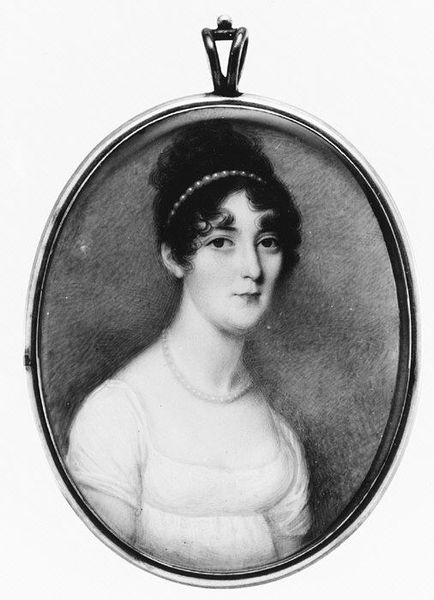
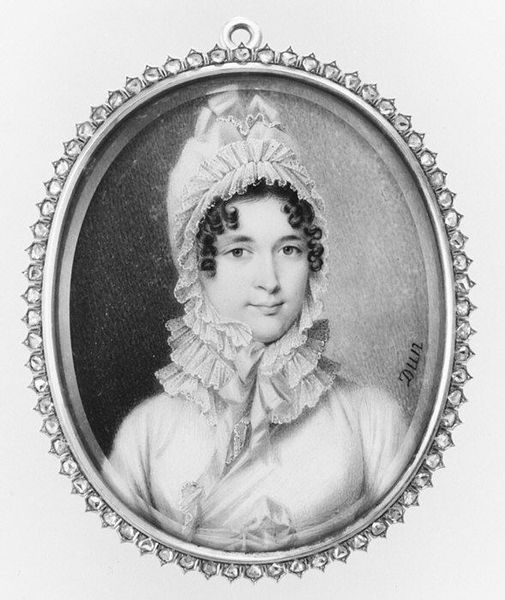
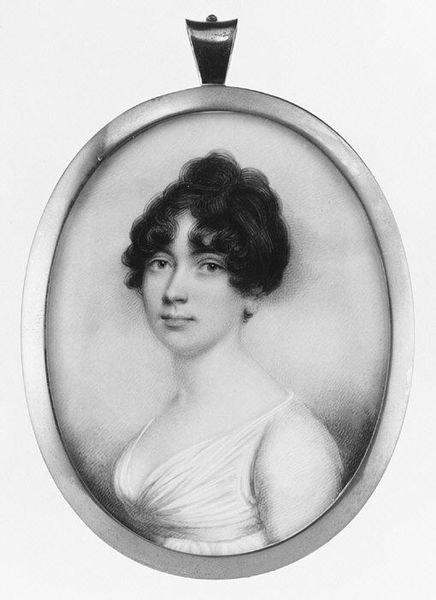
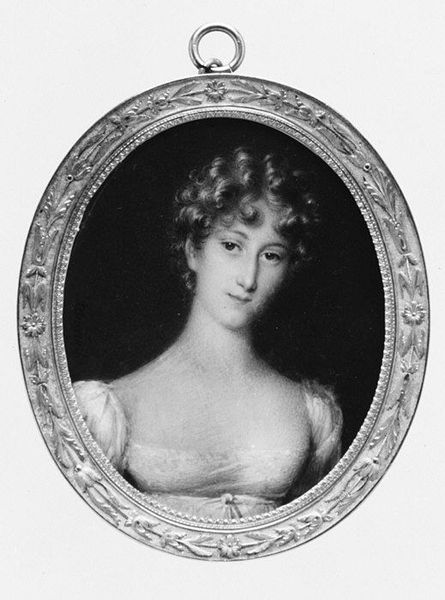
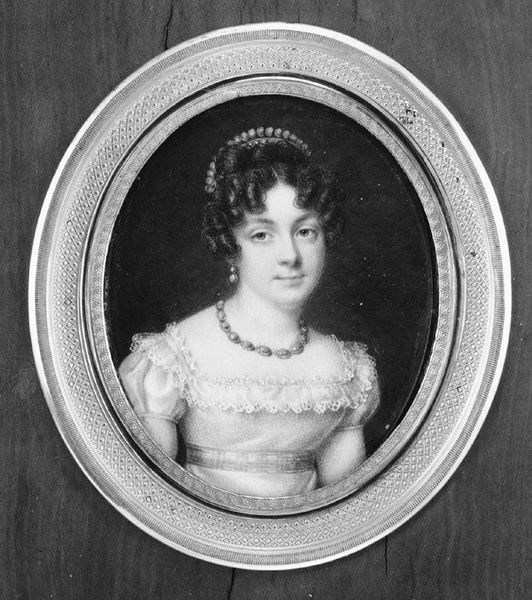
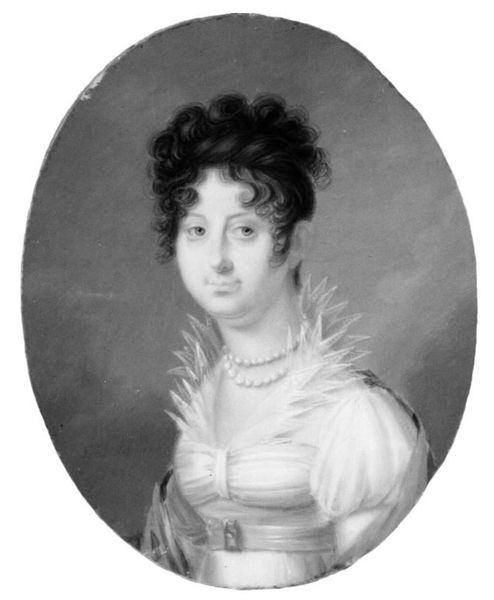
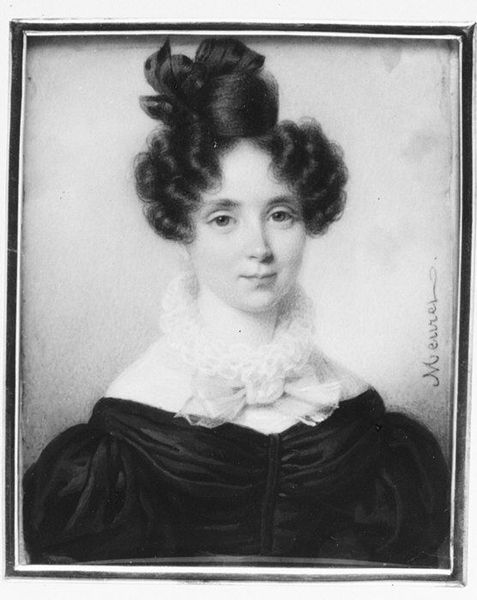
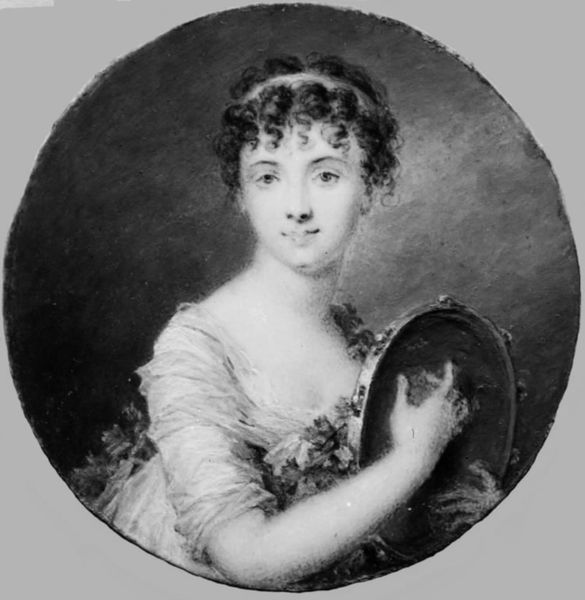
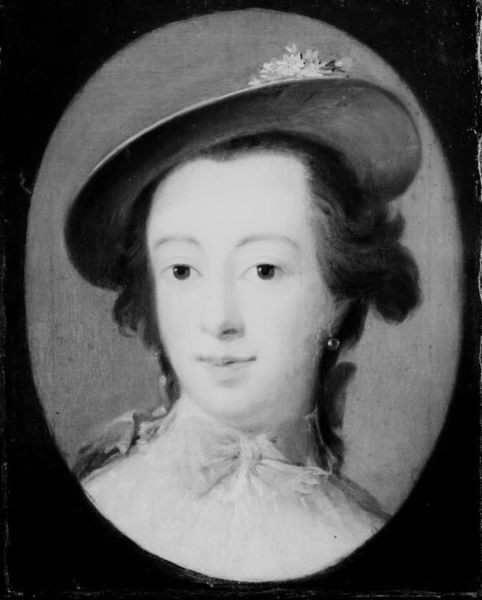
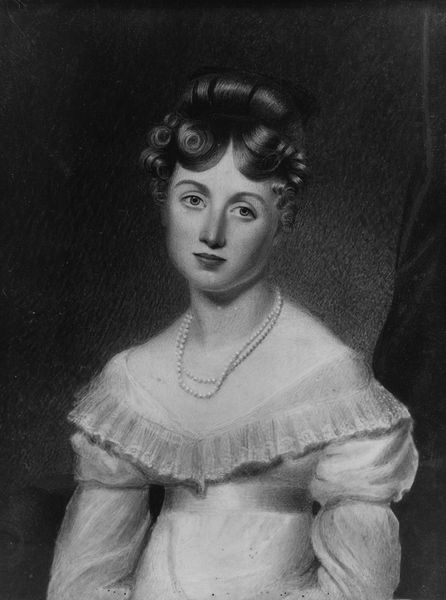
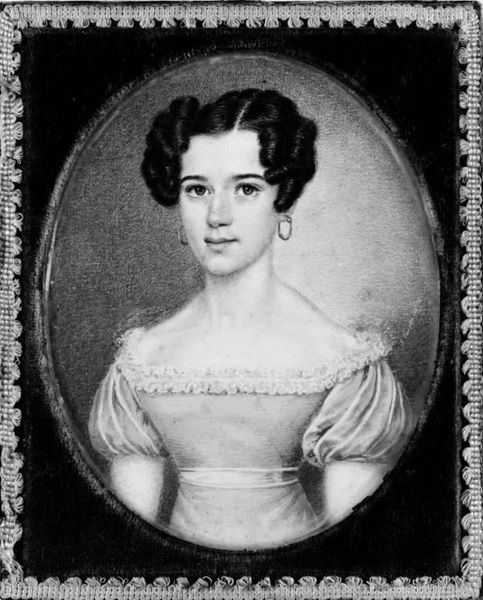
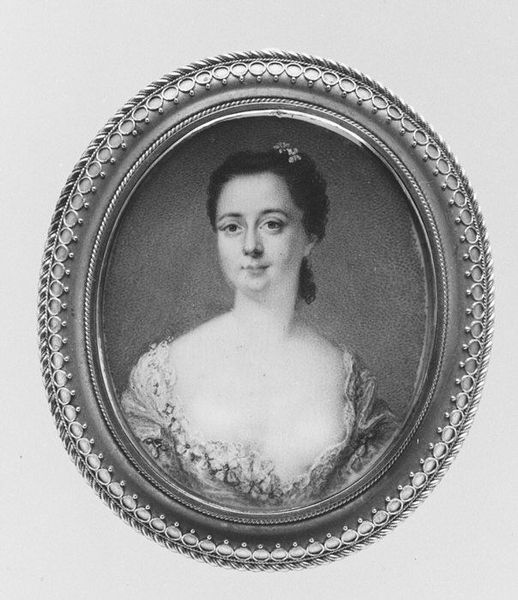
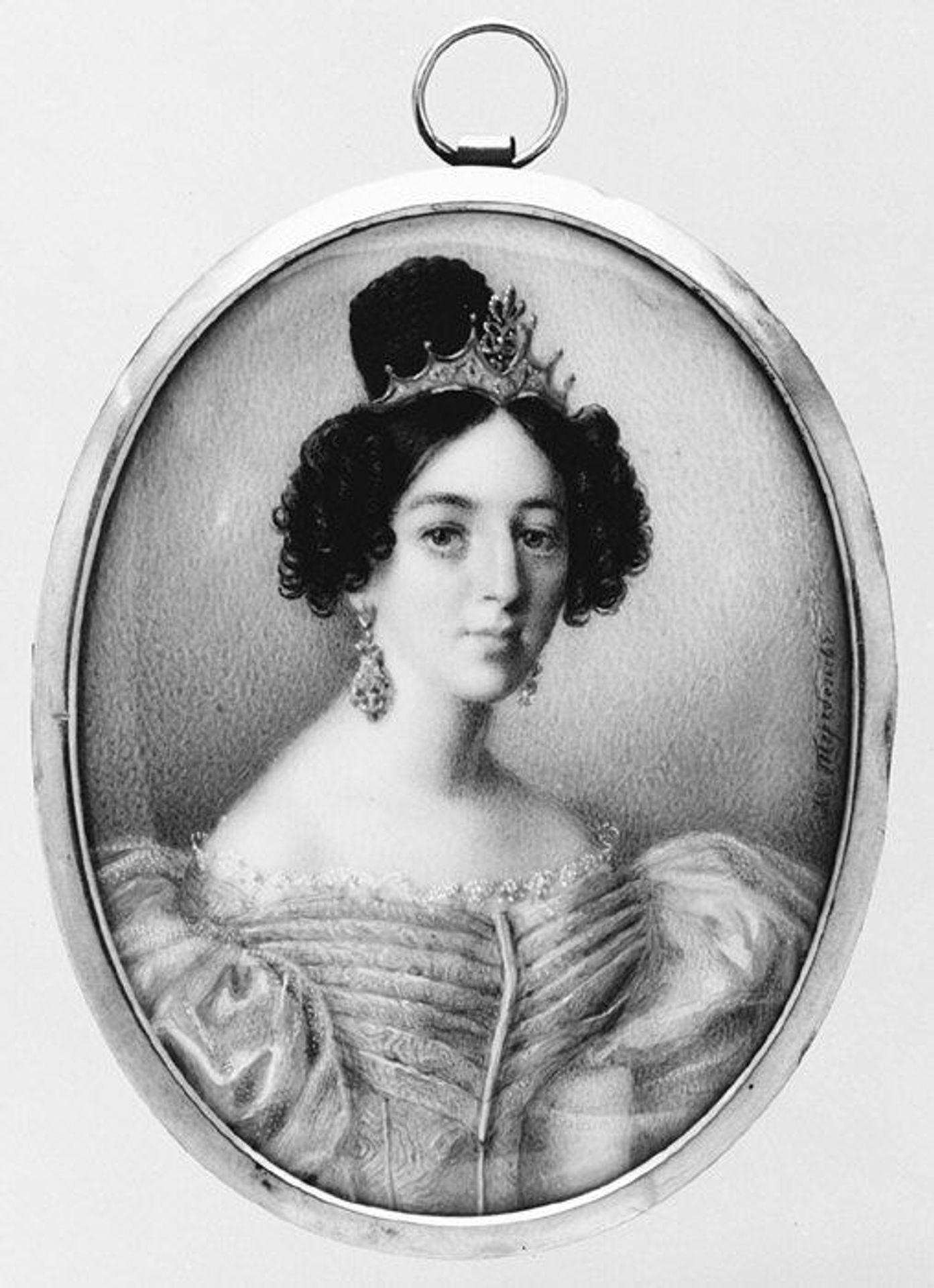
Curator: "Portrait of a Woman", made between 1825 and 1835 by Mikail Ivanovich Terebenev, is a striking example of Romantic-era portraiture. I am really drawn to how incredibly detailed the clothing and jewelry are in the miniature. What captures your attention first about this work? Editor: Well, I immediately noticed the size and detail. It’s quite a small painting but seems so luxurious. How did the artist manage to include so much intricate detail in such a small piece? Curator: That's the question! Think about the conditions under which it was made, the materials accessible to the artist. This would have involved meticulous hand-grinding of pigments, perhaps using rare minerals to achieve such nuanced tones even in a black and white portrait. Then consider the brushstrokes - likely using brushes with only a few hairs! Each tiny, deliberate action emphasizes the luxury of portraiture as a commodity for the wealthy, produced by skilled but often unsung artisan labor. Editor: That’s fascinating. So, the value wasn’t just in the likeness but also in the sheer amount of work put into creating the image? Curator: Precisely. Think about the social statement conveyed through commissioning such a portrait: it wasn't simply about memorializing a likeness; it signified the wealth and taste of the sitter. Can you imagine the resources consumed and the artist's labor just for this miniature? It becomes a powerful indicator of social hierarchy. Editor: I never thought about it that way before. The effort and resources now give a different layer to how I view the woman portrayed. Thanks so much for your insight! Curator: And I found a new appreciation for the materials employed and the labour necessary for these pieces of art, highlighting how materiality conveys societal status in Romantic portraiture.
Portrait of a Woman
1825 - 1835

Mikail Ivanovich Terebenev
1795 - 1866
The Metropolitan Museum of Art
Metropolitan Museum of Art, New York, NYArtwork details
- Medium
- painting
- Dimensions
- Oval, 2 7/8 x 2 1/4 in. (72 x 57 mm)
- Location
- Metropolitan Museum of Art, New York, NY
- Copyright
- Public Domain
Tags
Comments
Share your thoughts
About this artwork
Curator: "Portrait of a Woman", made between 1825 and 1835 by Mikail Ivanovich Terebenev, is a striking example of Romantic-era portraiture. I am really drawn to how incredibly detailed the clothing and jewelry are in the miniature. What captures your attention first about this work? Editor: Well, I immediately noticed the size and detail. It’s quite a small painting but seems so luxurious. How did the artist manage to include so much intricate detail in such a small piece? Curator: That's the question! Think about the conditions under which it was made, the materials accessible to the artist. This would have involved meticulous hand-grinding of pigments, perhaps using rare minerals to achieve such nuanced tones even in a black and white portrait. Then consider the brushstrokes - likely using brushes with only a few hairs! Each tiny, deliberate action emphasizes the luxury of portraiture as a commodity for the wealthy, produced by skilled but often unsung artisan labor. Editor: That’s fascinating. So, the value wasn’t just in the likeness but also in the sheer amount of work put into creating the image? Curator: Precisely. Think about the social statement conveyed through commissioning such a portrait: it wasn't simply about memorializing a likeness; it signified the wealth and taste of the sitter. Can you imagine the resources consumed and the artist's labor just for this miniature? It becomes a powerful indicator of social hierarchy. Editor: I never thought about it that way before. The effort and resources now give a different layer to how I view the woman portrayed. Thanks so much for your insight! Curator: And I found a new appreciation for the materials employed and the labour necessary for these pieces of art, highlighting how materiality conveys societal status in Romantic portraiture.
Comments
Share your thoughts