About this artwork
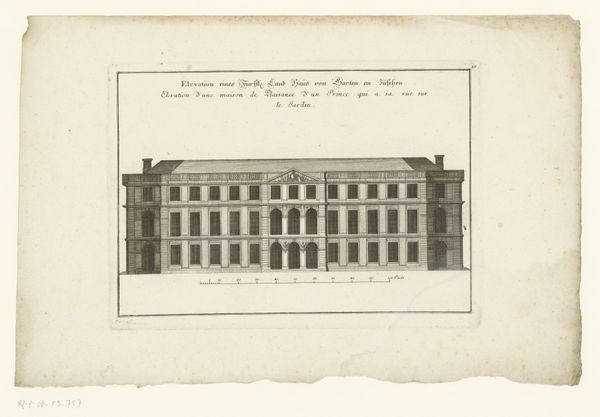
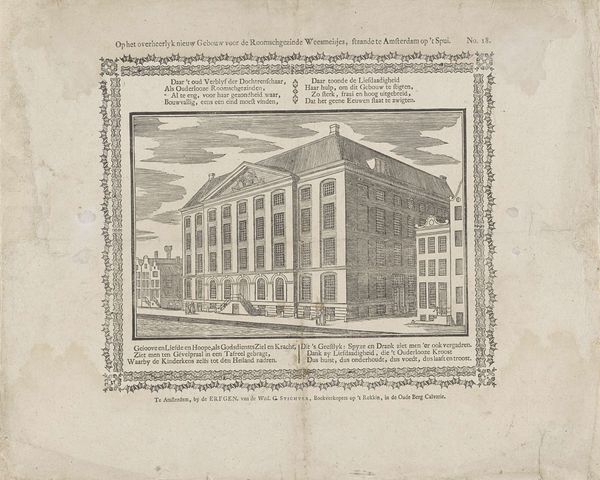
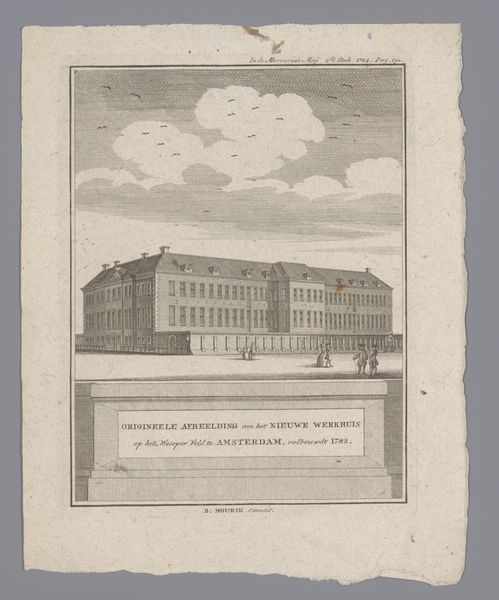
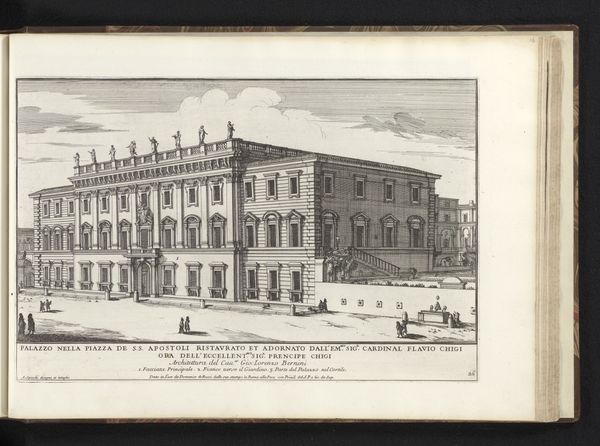
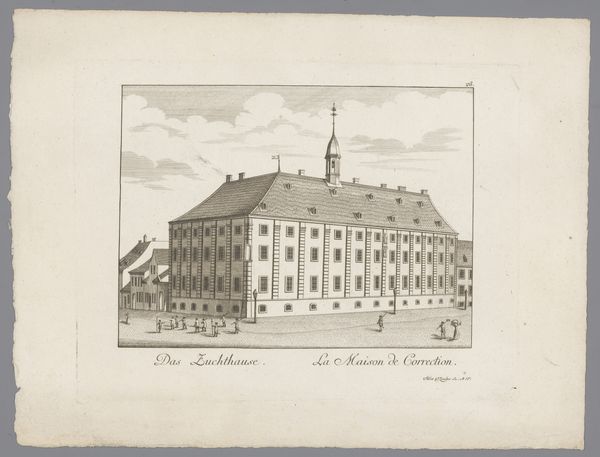
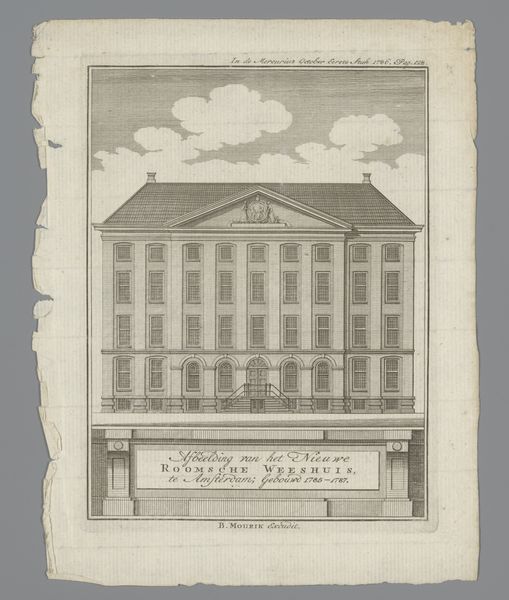
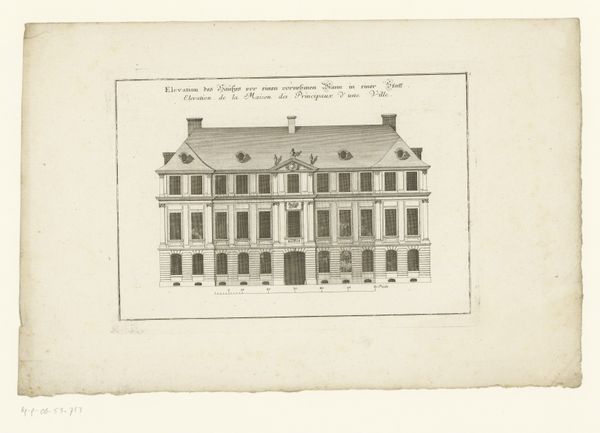
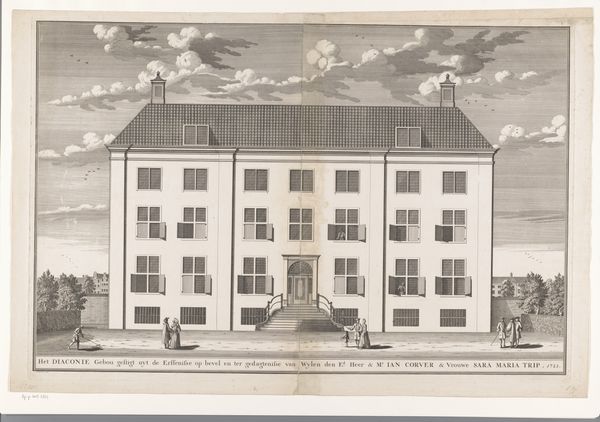
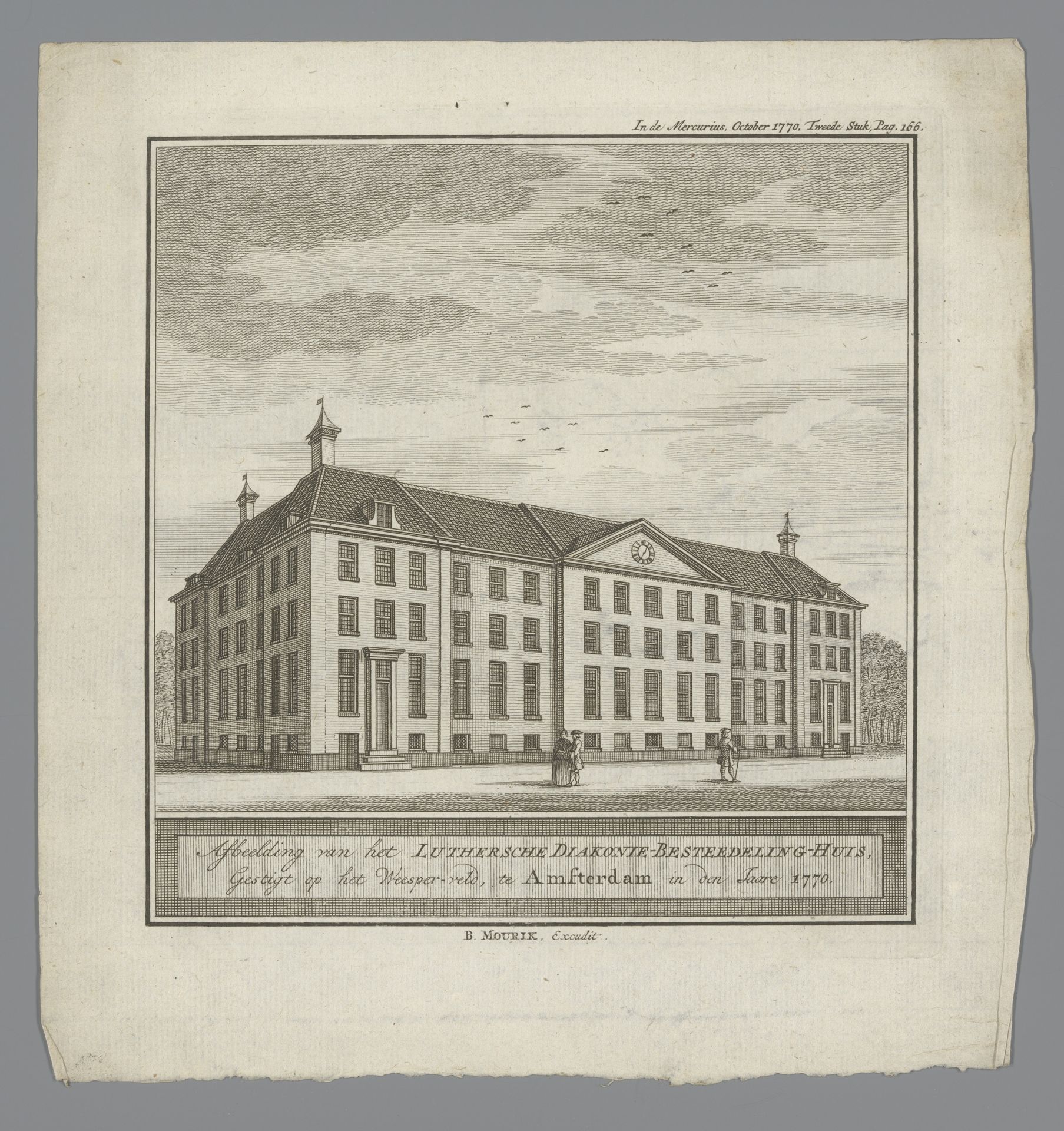
Curator: Here we have an engraving from 1770, "View of the Lutheran Diaconal Orphanage in Amsterdam." The lines are remarkably clean and precise, aren’t they? Editor: They really are. I find it interesting how such rigid geometry, in the orphanage's facade especially, can still feel so calm. What do you see in its structure? Curator: Note the unrelenting symmetry, a hallmark of Neoclassical architecture, as is this building. Observe how the artist meticulously renders the façade, emphasizing its planar surfaces and repetitive elements: windows, string courses, and cornice. It almost reduces the architecture to pure form. How does this repetition affect your perception? Editor: Well, it does give the piece a very ordered feel, almost…clinical, in a way. Curator: Precisely. Consider the negative space, those meticulously defined intervals between architectural elements. What structural relationship can we determine from analyzing these forms? Editor: I hadn’t thought of it that way. It’s like the artist is controlling how we experience space through this calculated arrangement of light and shadow. Curator: Exactly. Form dictates function, but also emotion. The lack of ornamentation, the stark geometry…it evokes a sense of rational order and perhaps even institutional authority. Did that come through for you initially? Editor: I definitely got that, although I wasn’t sure if it was intentional. Seeing how you break it down, though, really brings out the formal choices at play. I understand how impactful each part really is. Curator: By observing formal patterns of composition and the language of architecture, we may find that the image offers an emotional window to Amsterdam in 1770.
Gezicht op het Lutherse Diaconiehuis te Amsterdam 1770

Anonymous
@anonymousLocation
RijksmuseumArtwork details
- Medium
- print, engraving, architecture
- Dimensions
- height 172 mm, width 168 mm
- Location
- Rijksmuseum
- Copyright
- Rijks Museum: Open Domain
Tags
neoclacissism
cityscape
engraving
architecture
Comments
No comments
About this artwork
Curator: Here we have an engraving from 1770, "View of the Lutheran Diaconal Orphanage in Amsterdam." The lines are remarkably clean and precise, aren’t they? Editor: They really are. I find it interesting how such rigid geometry, in the orphanage's facade especially, can still feel so calm. What do you see in its structure? Curator: Note the unrelenting symmetry, a hallmark of Neoclassical architecture, as is this building. Observe how the artist meticulously renders the façade, emphasizing its planar surfaces and repetitive elements: windows, string courses, and cornice. It almost reduces the architecture to pure form. How does this repetition affect your perception? Editor: Well, it does give the piece a very ordered feel, almost…clinical, in a way. Curator: Precisely. Consider the negative space, those meticulously defined intervals between architectural elements. What structural relationship can we determine from analyzing these forms? Editor: I hadn’t thought of it that way. It’s like the artist is controlling how we experience space through this calculated arrangement of light and shadow. Curator: Exactly. Form dictates function, but also emotion. The lack of ornamentation, the stark geometry…it evokes a sense of rational order and perhaps even institutional authority. Did that come through for you initially? Editor: I definitely got that, although I wasn’t sure if it was intentional. Seeing how you break it down, though, really brings out the formal choices at play. I understand how impactful each part really is. Curator: By observing formal patterns of composition and the language of architecture, we may find that the image offers an emotional window to Amsterdam in 1770.
Comments
No comments