1920
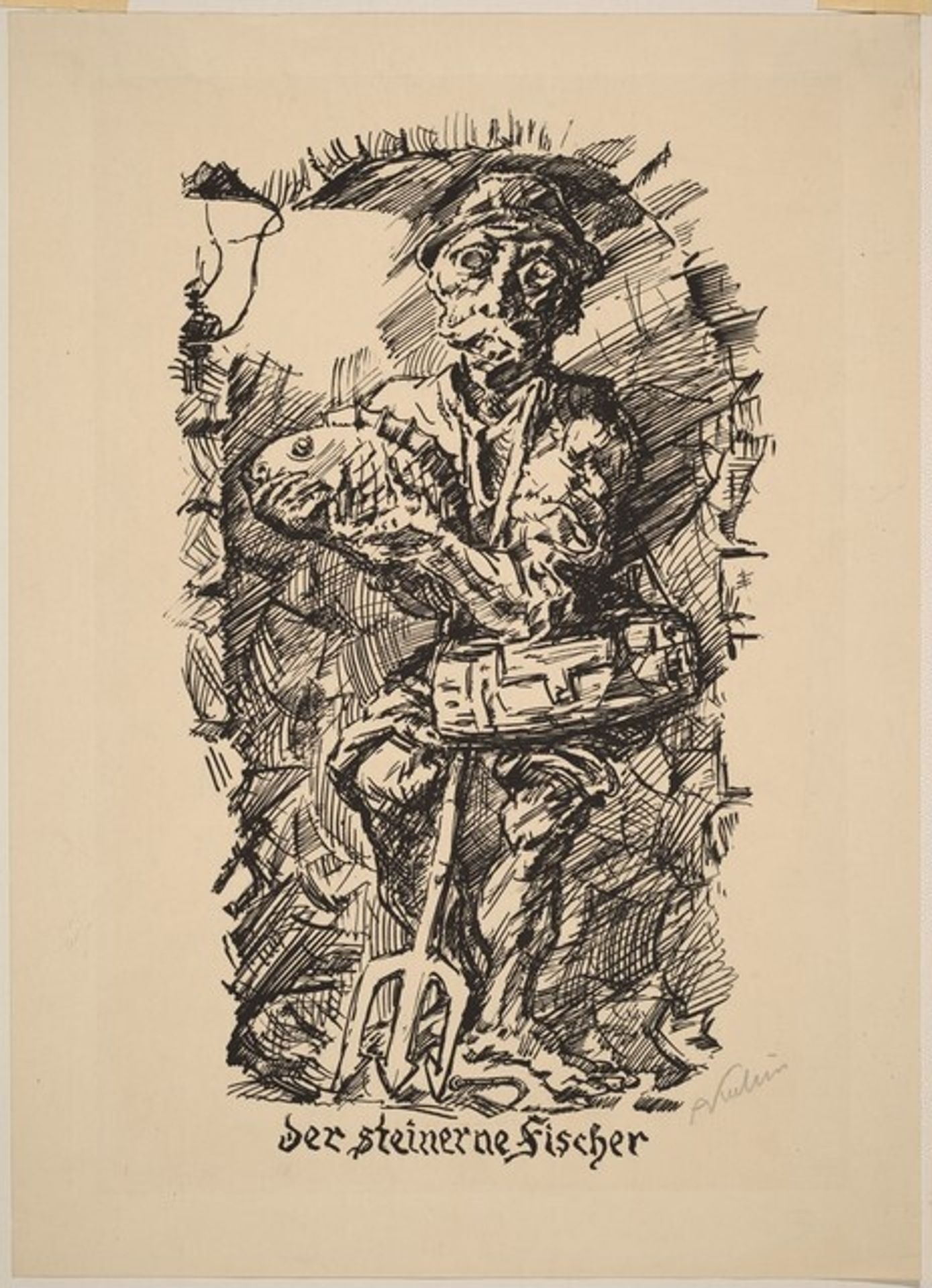
Der Steinerne Fischer (Stone Fisherman)


Listen to curator's interpretation
Curatorial notes
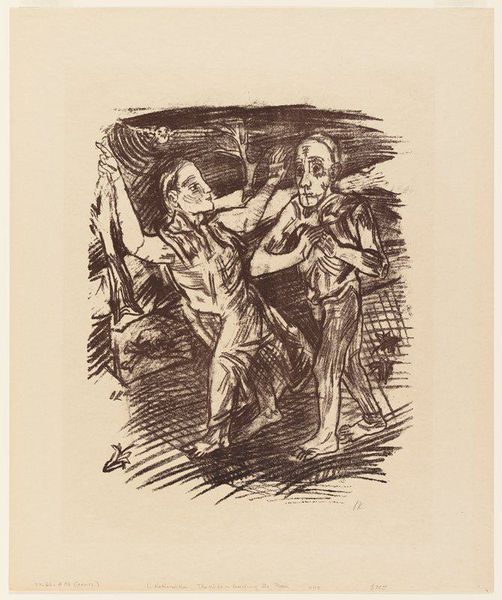
Alfred Kubin made "The Stone Fisherman" using pen and ink on paper. Kubin’s fantastic and often macabre imagery reflected the anxieties of early 20th-century Europe. He saw society’s structures as crumbling, its institutions as dehumanizing. Made in Austria, this piece invokes folklore and myth to critique modernity. The fisherman is rendered as a grotesque figure, seemingly made of stone, trapped within a claustrophobic, crumbling enclosure. He’s holding a fish that looks equally lifeless. The meager catch and the fisherman’s petrified state suggest a world where nature and humanity are being drained of life. Consider the social context: rapid industrialization, urbanization, and a growing sense of alienation were common themes in the art and literature of the time. Kubin's work can be seen as a protest against these forces. He uses stark, distorted imagery to create a sense of unease. To understand Kubin better, look at the broader Symbolist movement and the rise of Expressionism, particularly in German-speaking countries. These sources will reveal how artists responded to the anxieties of a rapidly changing world.