1719 - 1780
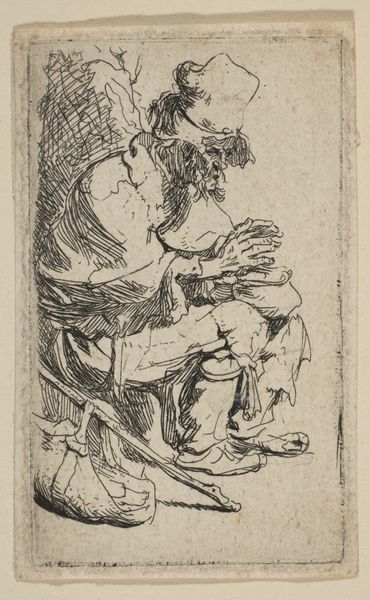
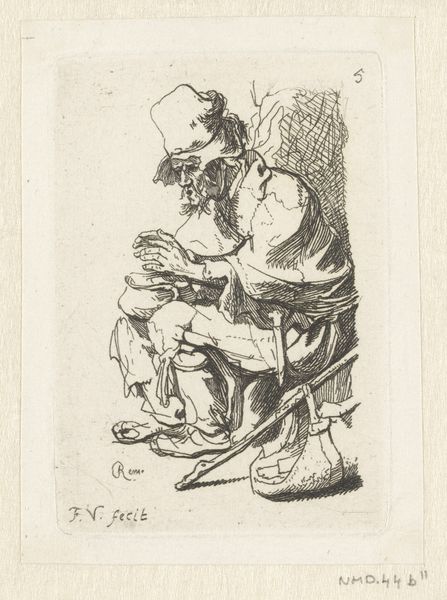
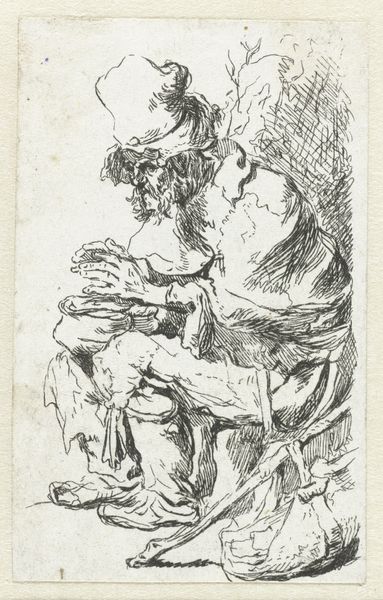
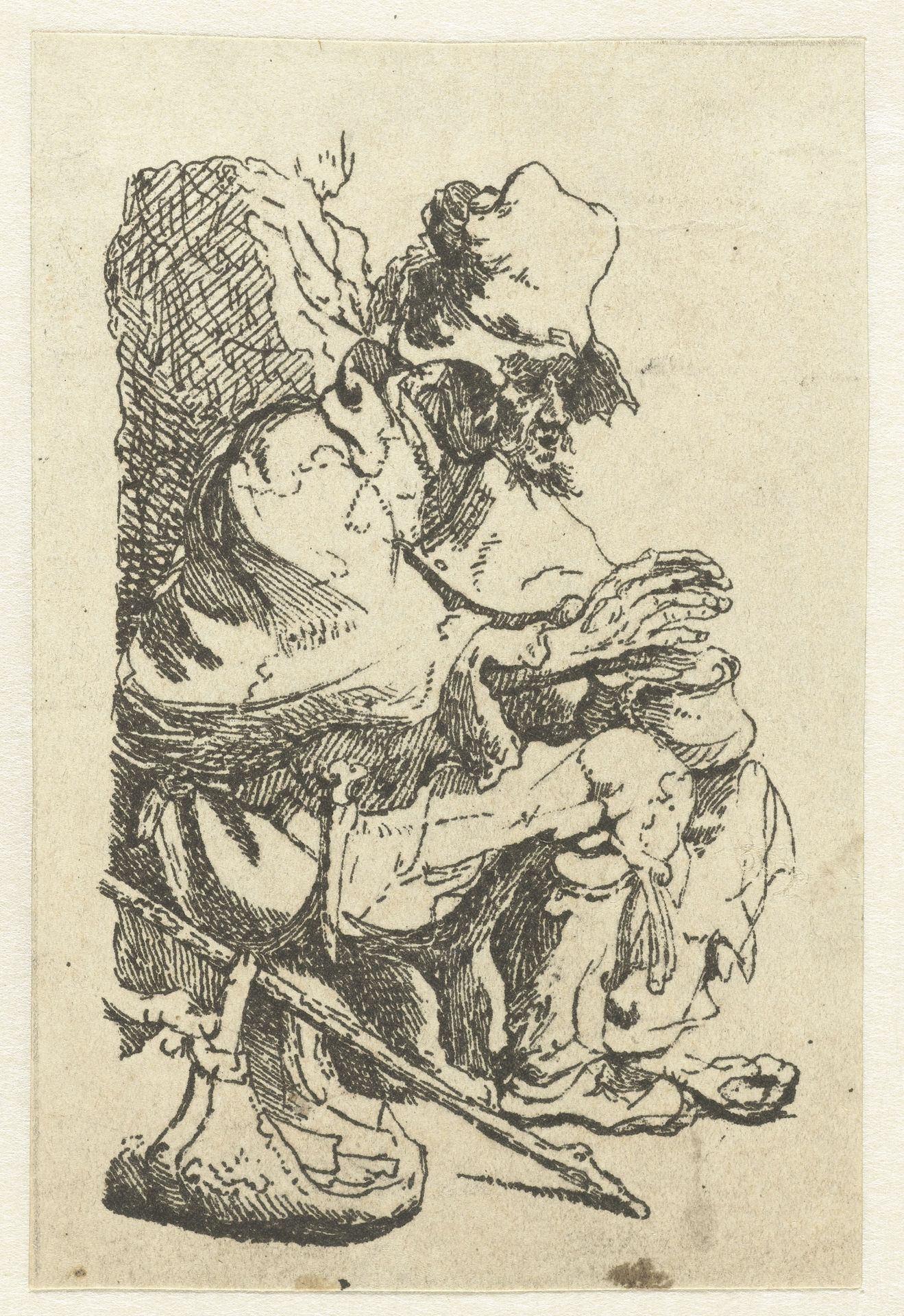
Beggar seated warming his hands at a chafing dish

Anonymous
@anonymousLocation
RijksmuseumListen to curator's interpretation
Curatorial notes
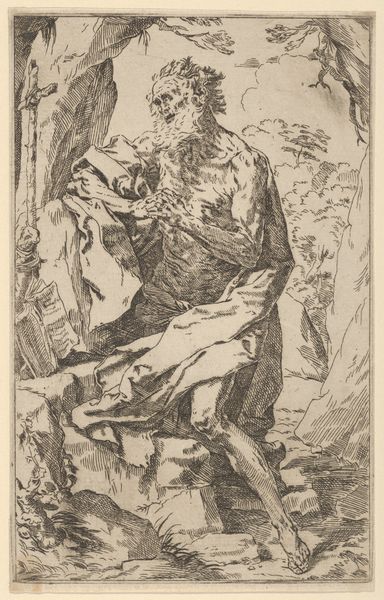
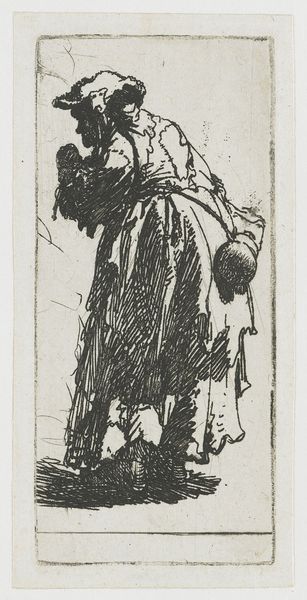
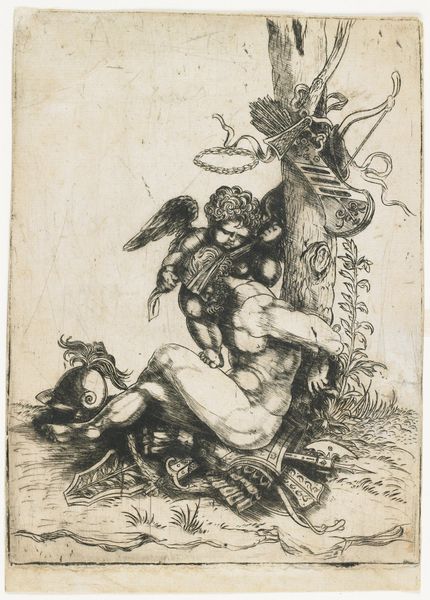
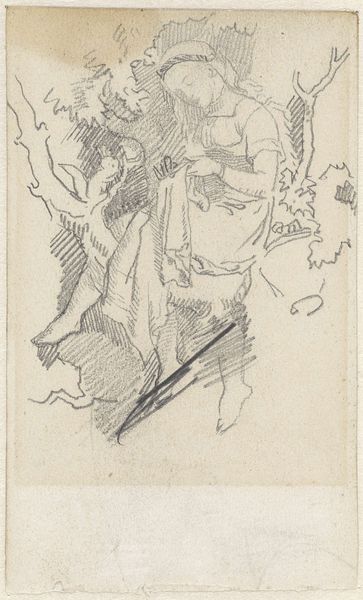
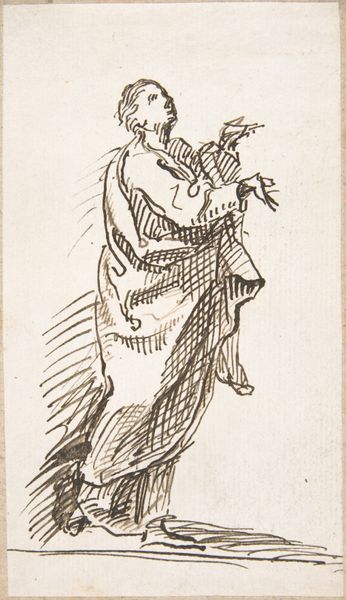
Curator: Here we have an ink drawing entitled "Beggar seated warming his hands at a chafing dish," created anonymously sometime between 1719 and 1780. It is currently held in the collection of the Rijksmuseum. Editor: Immediately, I notice the powerful use of line, dense and frantic in some areas, lighter and more suggestive in others. It evokes a palpable sense of cold and vulnerability. Curator: Indeed. The artist has skillfully manipulated line weight and hatching to model form and suggest texture, giving a sense of the beggar's ragged clothing and weathered features. Editor: I can’t help but see this figure within a larger social framework. Who were the poor during this era, and how were they viewed? Was this drawing intended as a sympathetic portrayal or something else? The sketch is made by an anonymous hand, whose social sphere and gaze can’t be known for sure. Curator: One could argue that the emphasis on anatomical detail serves to depersonalize the subject, reducing him to a mere study of form. Observe, for example, the exaggeration of the hands. Editor: That hyper-focus on the hands and the worn clothes feels so intimate, though, to me, not depersonalizing. The slumped posture and inward gaze contribute to a sense of isolation. This resonates powerfully, I think, as we consider the continuing struggles faced by those living on the margins. There’s a quiet power in this drawing—almost defiance of our contemporary assumptions of “art.” It encourages us to engage with uncomfortable truths. Curator: Ultimately, this piece stands as a testament to the artist’s skill in manipulating the formal elements of line and tone to create a compelling visual narrative, whether socially conscious or otherwise. Editor: Agreed. By reflecting on the piece’s emotional impact in the 18th century, we might reconsider the ethical responsibilities of representation today. Thank you!