Possibly 1776
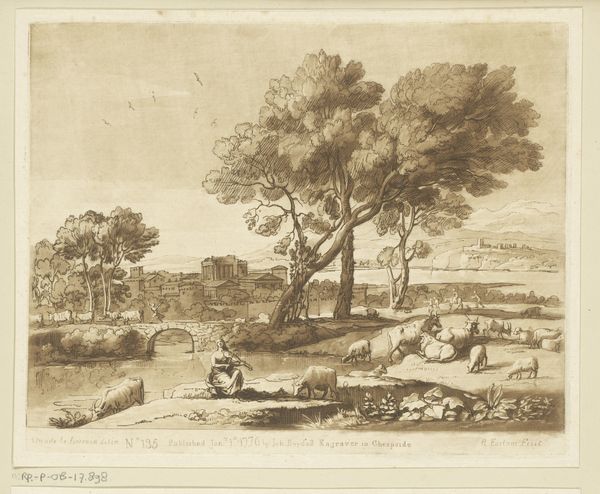
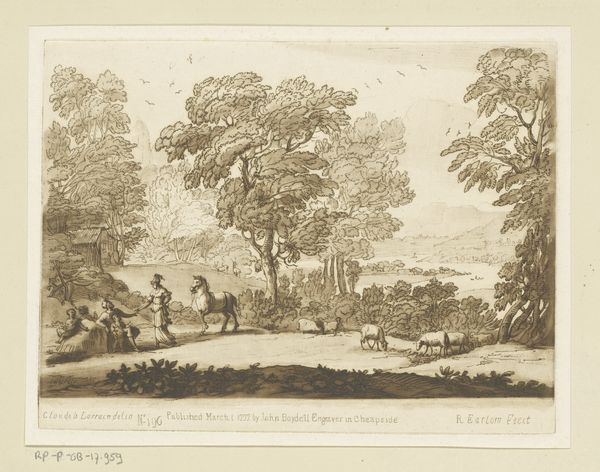
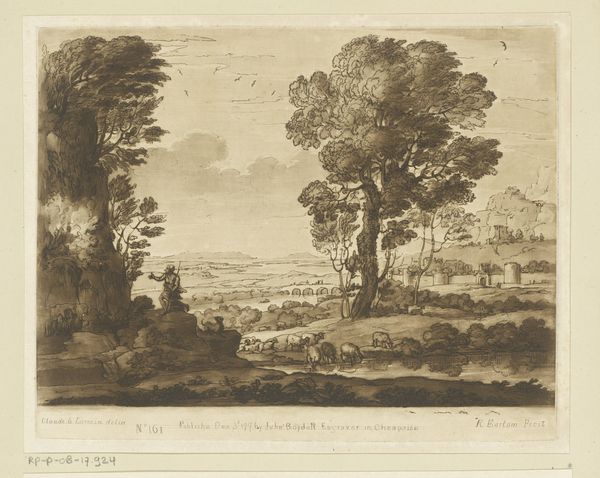
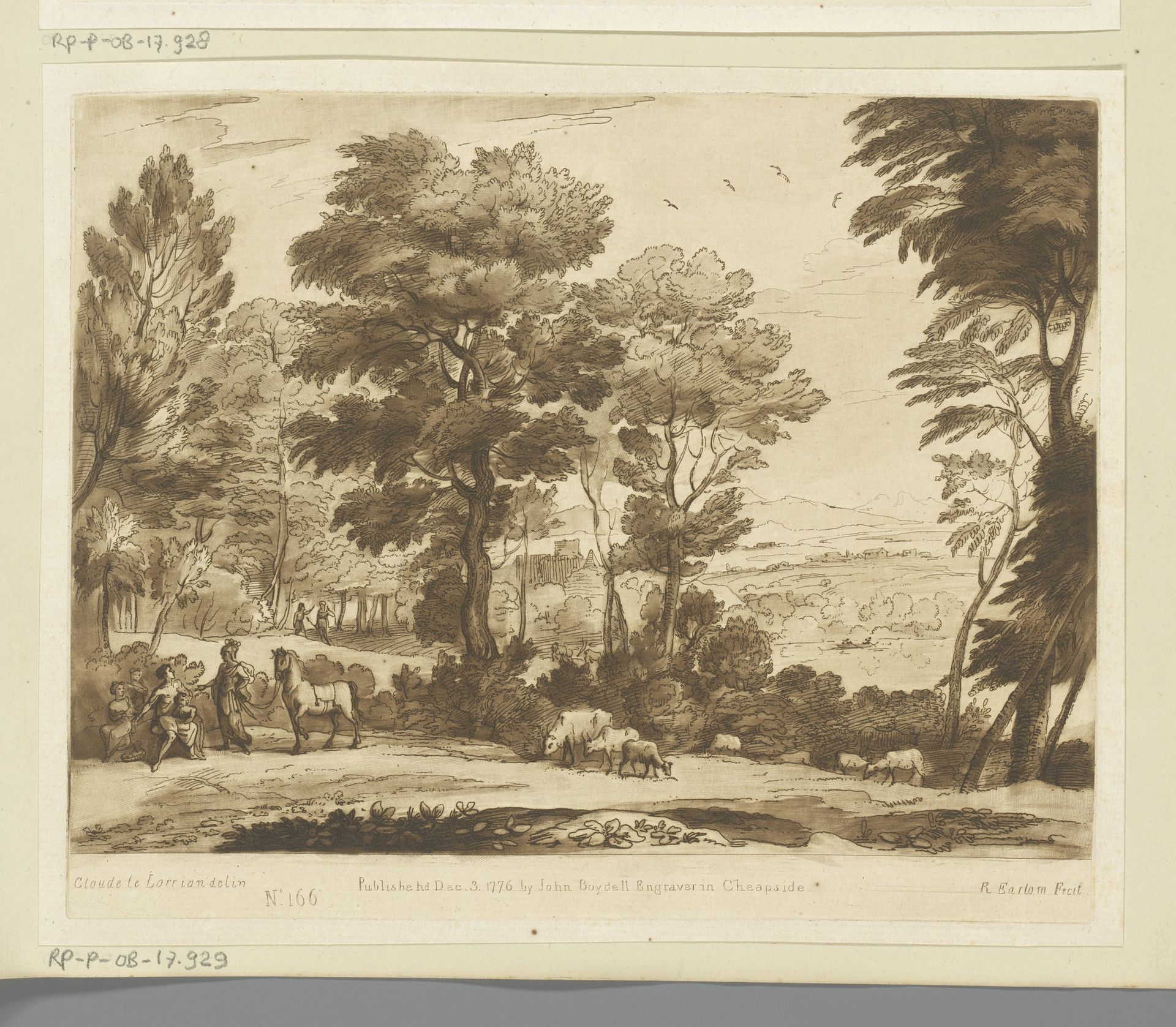
Landschap met Erminia en de oude schaapsherder

Richard Earlom
1743 - 1822Location
RijksmuseumListen to curator's interpretation
Curatorial notes
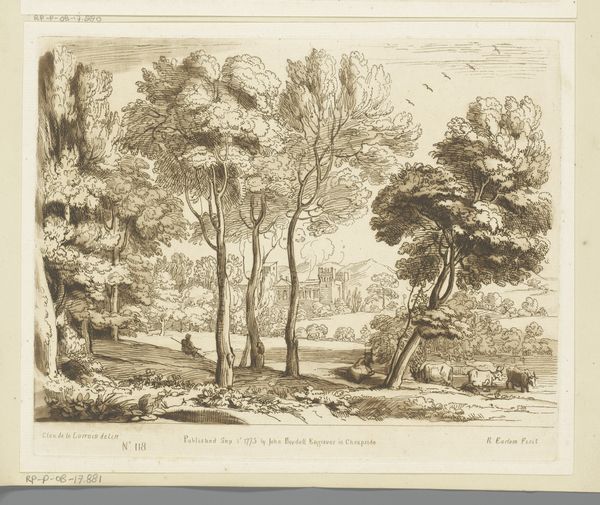
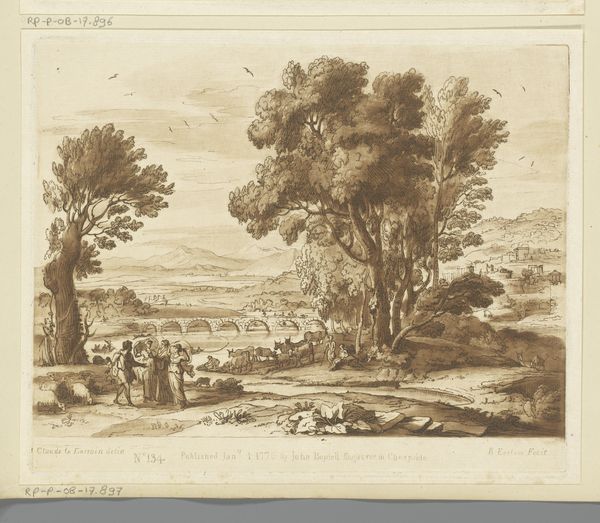
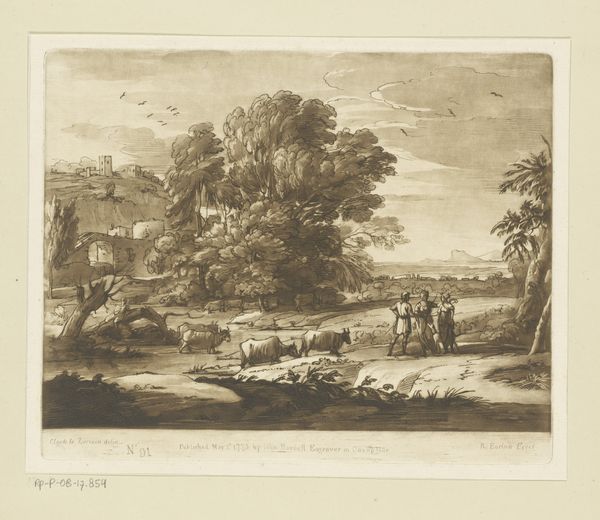
Richard Earlom created this print, "Landschap met Erminia en de oude schaapsherder," using etching and burin techniques in 1776. It's an interpretation of a painting by Claude Lorrain, demonstrating the period's fascination with landscape and its translation across media. The artwork reveals the social and cultural values of 18th-century Europe, particularly England, where Earlom worked. Landscapes weren't merely depictions of nature; they were statements about property, nationhood, and the picturesque aesthetic favored by the elite. The inclusion of figures, like Erminia and the shepherd, adds a narrative element, elevating the landscape beyond simple scenery to a tableau rich with literary and cultural references. Earlom’s print speaks to the burgeoning art market and the increasing accessibility of art through reproduction. By studying patronage records, exhibition catalogs, and contemporary criticism, we gain insights into the social conditions that shaped artistic production and reception in Earlom's time.