About this artwork
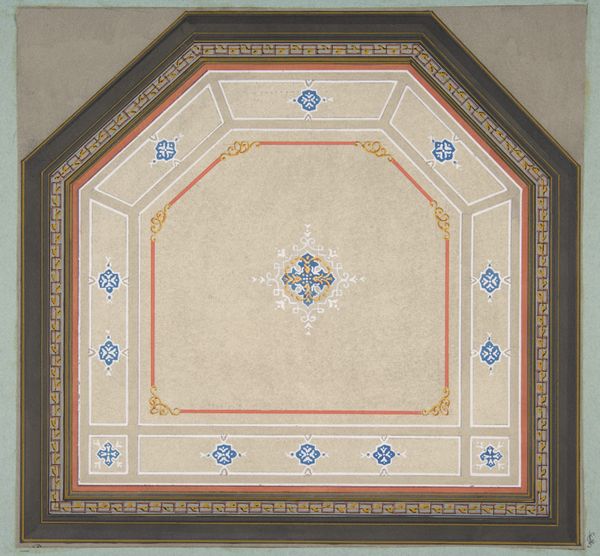
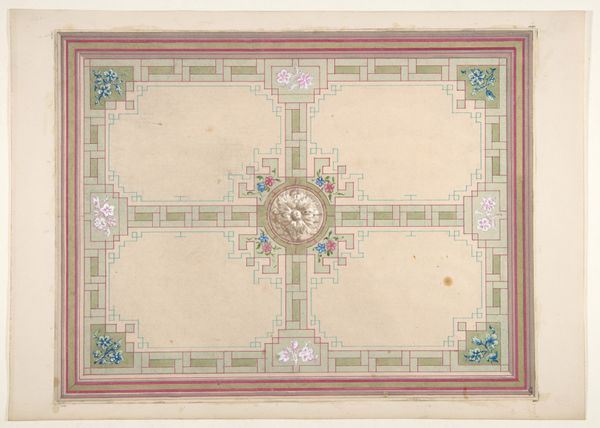
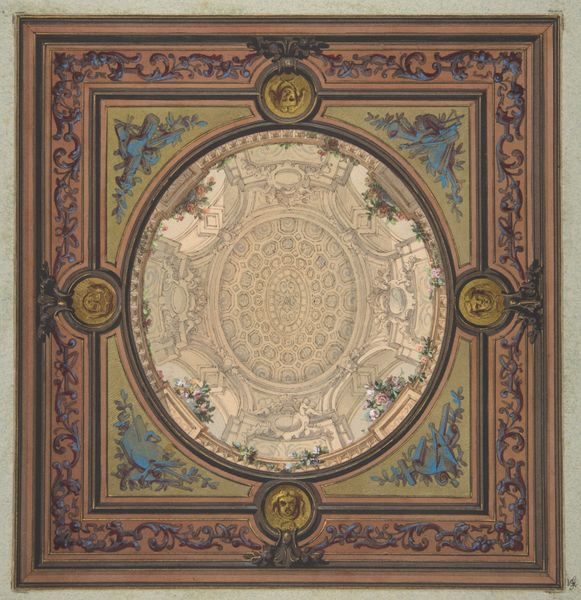
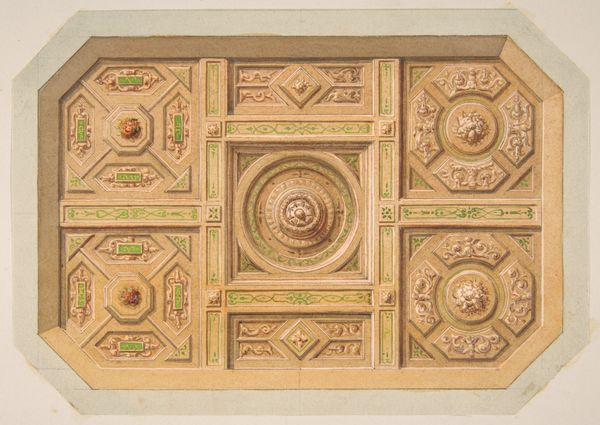
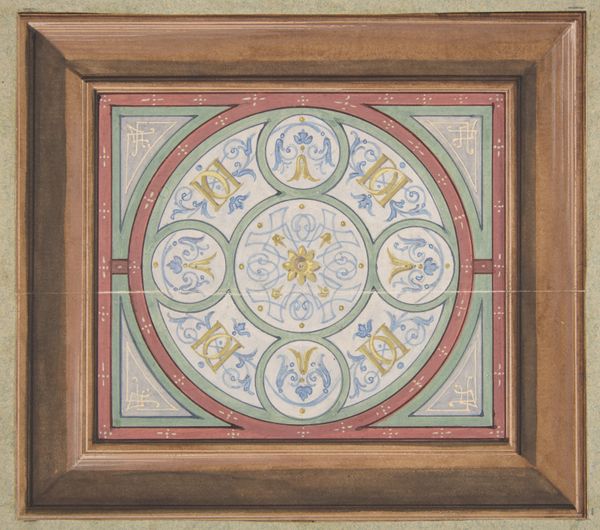
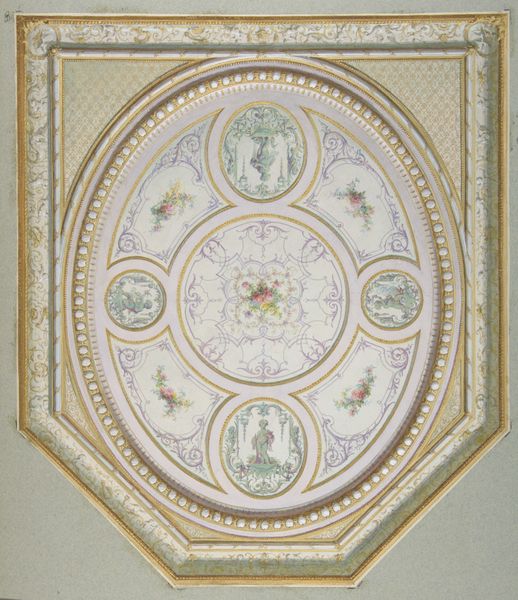
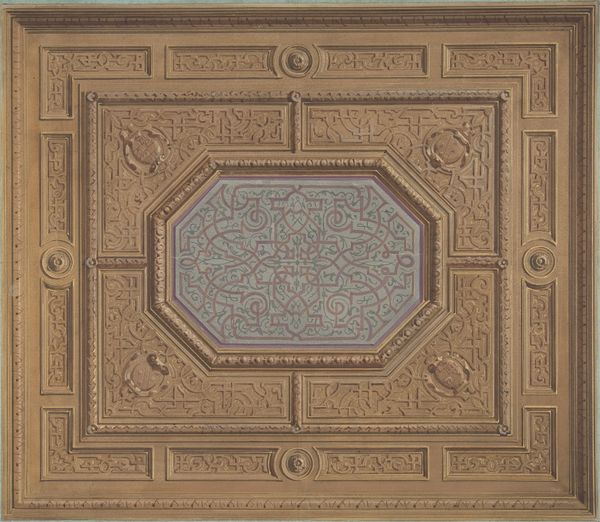
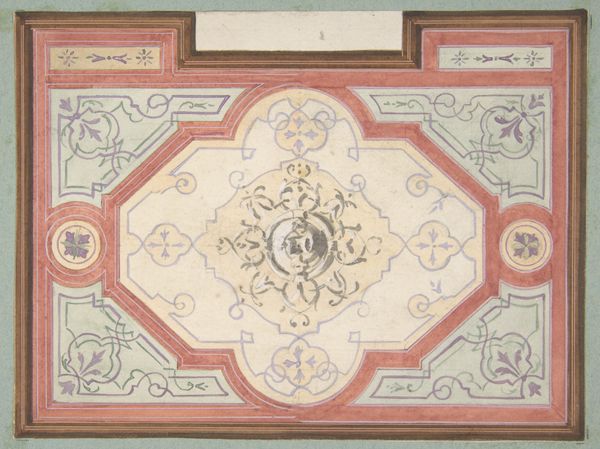
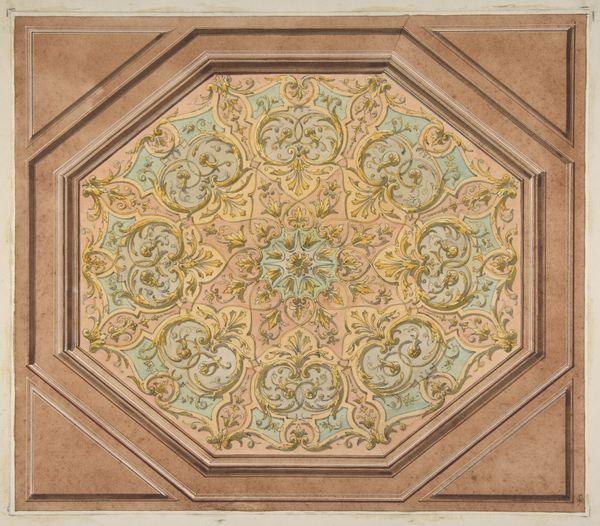
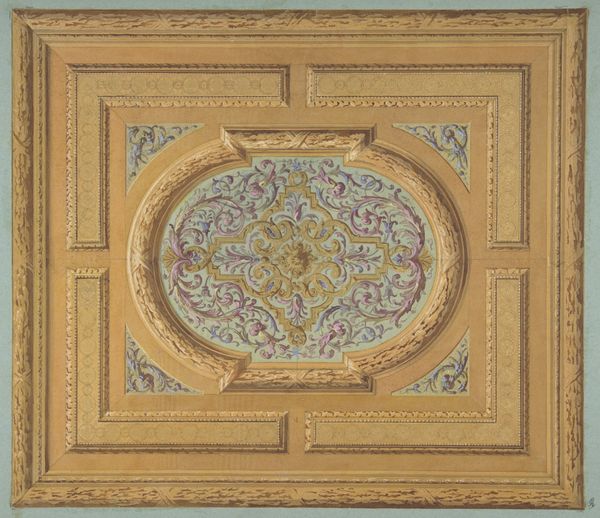
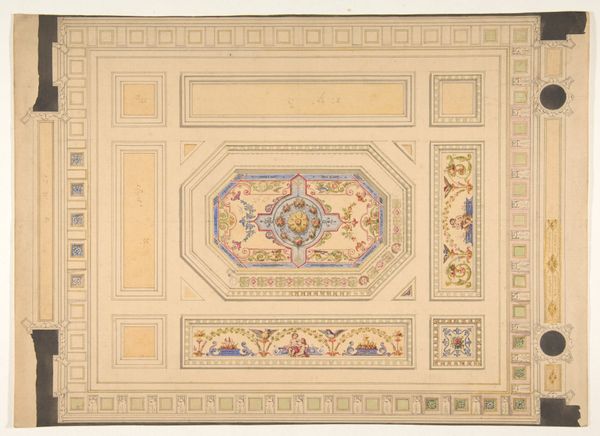
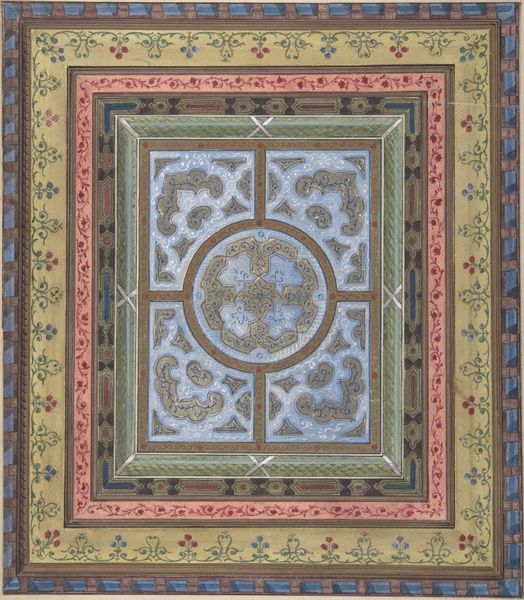
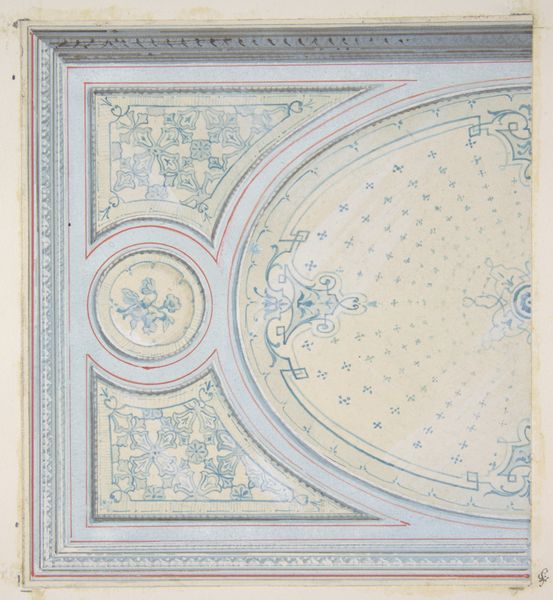
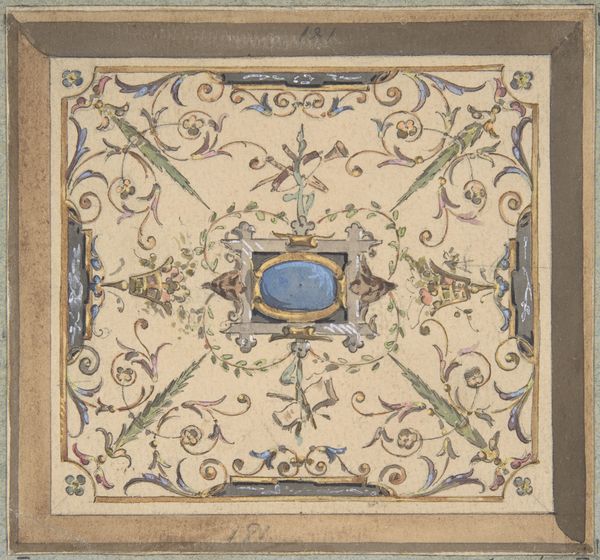
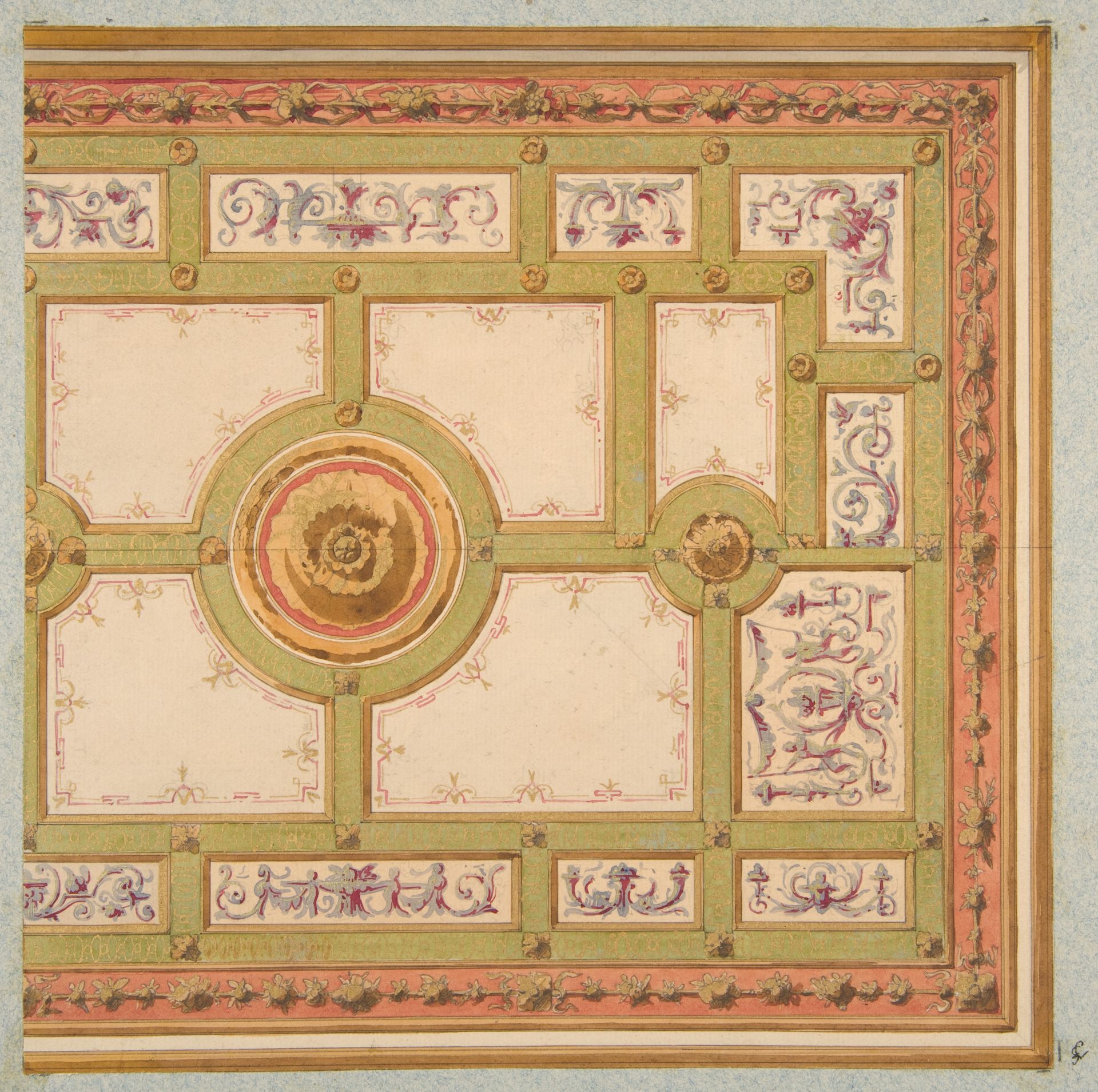
Jules-Edmond-Charles Lachaise rendered these alternative designs for a painted ceiling decoration in watercolor, gouache, and graphite, possibly in France. The design evokes the architectural details of the 18th century, with its emphasis on classical motifs like stylized leaves and palmettes, organized in geometric patterns of rectangles, squares, and circles. It presents us with a vision of how institutional spaces, such as aristocratic residences, government buildings, or museums, would have asserted power and projected authority through a sense of ornamented order. The effect is one of controlled opulence. In thinking about this artwork, we can look at the history of interior decoration, or investigate archives of French design. We might also consider how museums in France or America collected and displayed decorative arts. Looking closely at an artwork like this one reminds us that art always exists in a social and institutional context.
Alternative designs for the painted decoration of a ceiling
1820 - 1897

Jules-Edmond-Charles Lachaise
1897
The Metropolitan Museum of Art
Metropolitan Museum of Art, New York, NYArtwork details
- Medium
- drawing, painting, print, watercolor, architecture
- Location
- Metropolitan Museum of Art, New York, NY
- Copyright
- Public Domain
Tags
Comments
Share your thoughts
About this artwork
Jules-Edmond-Charles Lachaise rendered these alternative designs for a painted ceiling decoration in watercolor, gouache, and graphite, possibly in France. The design evokes the architectural details of the 18th century, with its emphasis on classical motifs like stylized leaves and palmettes, organized in geometric patterns of rectangles, squares, and circles. It presents us with a vision of how institutional spaces, such as aristocratic residences, government buildings, or museums, would have asserted power and projected authority through a sense of ornamented order. The effect is one of controlled opulence. In thinking about this artwork, we can look at the history of interior decoration, or investigate archives of French design. We might also consider how museums in France or America collected and displayed decorative arts. Looking closely at an artwork like this one reminds us that art always exists in a social and institutional context.
Comments
Share your thoughts