1644
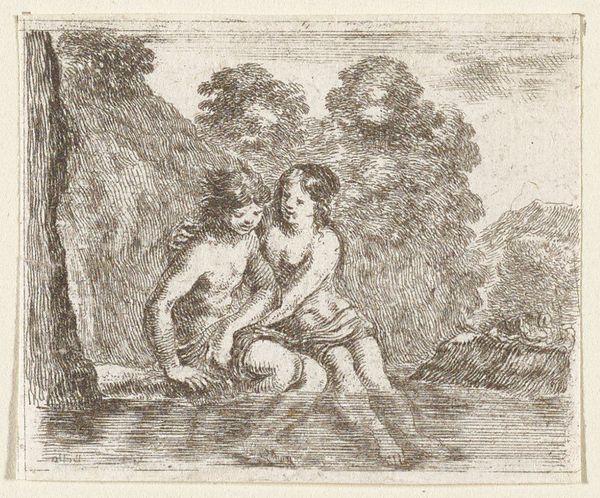
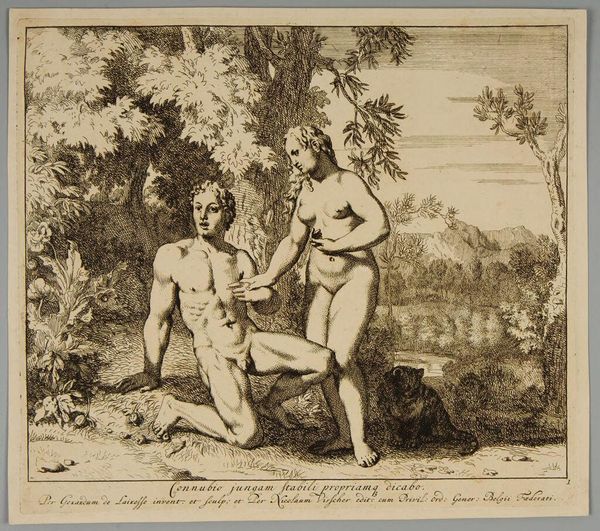
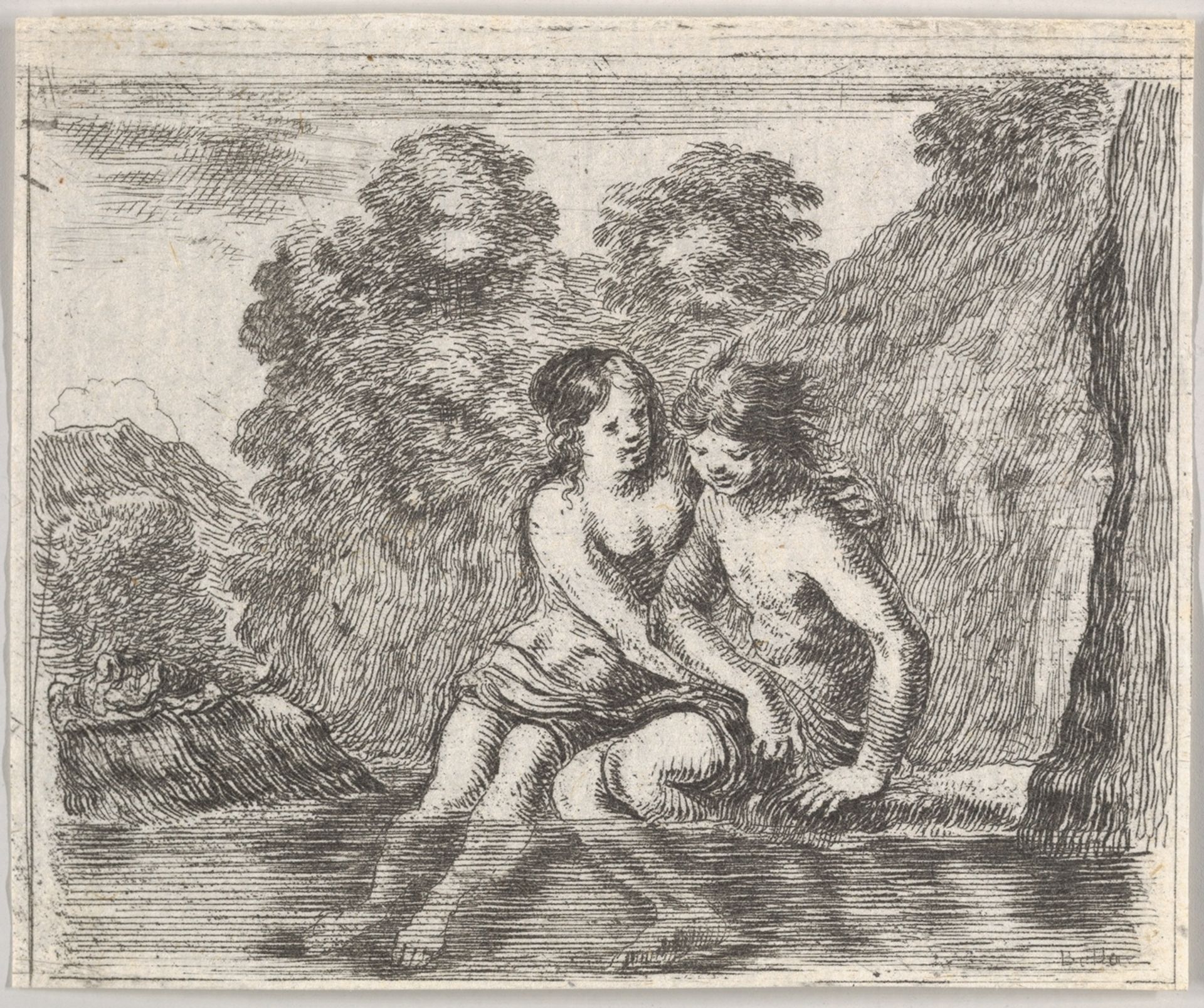
Salmacis and Hermaphrodite, from 'Game of Mythology' (Jeu de la Mythologie)

Stefano della Bella
1610 - 1664
The Metropolitan Museum of Art
Metropolitan Museum of Art, New York, NYListen to curator's interpretation
Curatorial notes
This tiny etching, made by Stefano della Bella, in Italy, sometime in the mid-seventeenth century, captures a scene from Ovid's Metamorphoses: the nymph Salmacis entwining herself with Hermaphroditus. While the image illustrates a well-known classical myth, its placement in a deck of playing cards titled 'Game of Mythology' offers a glimpse into the culture of the time. Playing cards, newly popular, were entering into a kind of dialogue with elite culture. Della Bella was connected to powerful patrons and his work reflects the tastes of court society. The prevalence of mythology in games such as this indicates how classical themes were fashionable, and were used to ennoble even the most mundane activities. To truly understand this artwork, we can delve into seventeenth-century Italian social history, examining the networks of patronage, the rise of print culture, and the enduring fascination with classical antiquity through sources such as letters, inventories, and other printed ephemera. The meaning of even a humble playing card becomes contingent on social and institutional context.