About this artwork
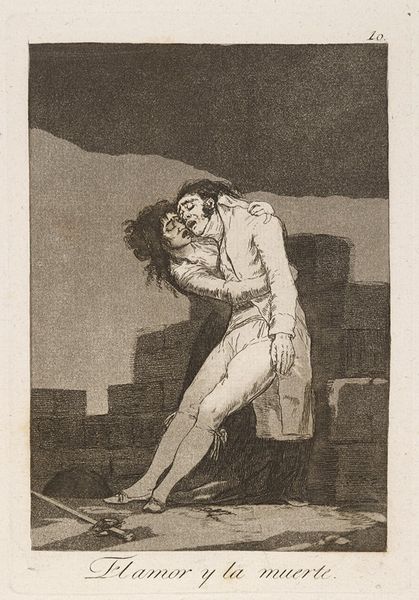
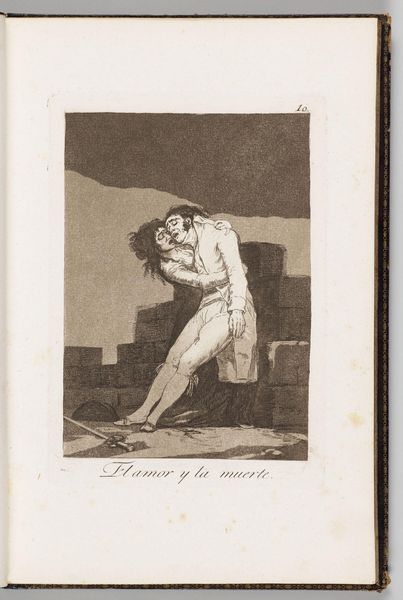
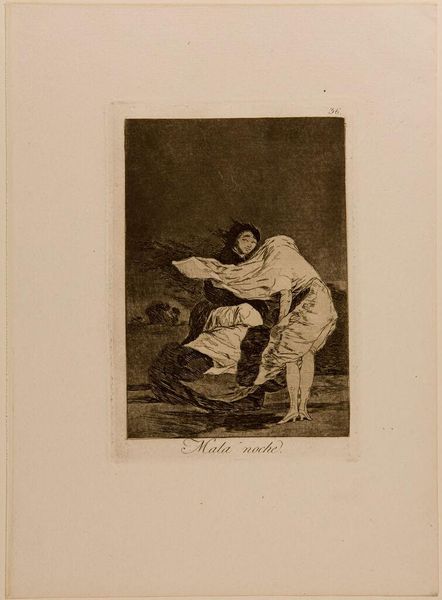
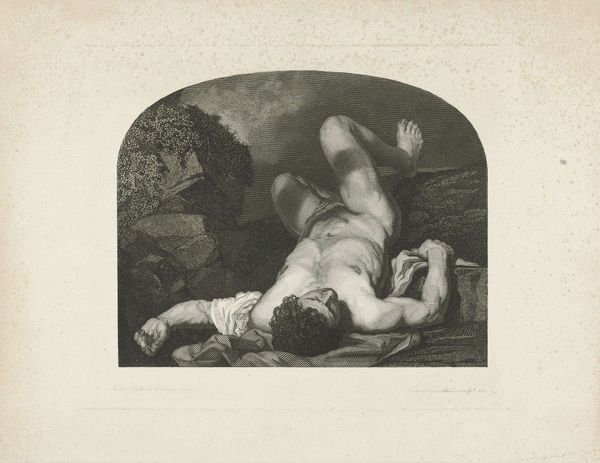
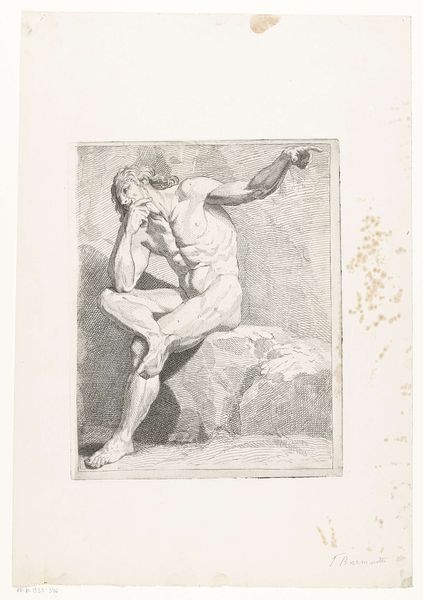
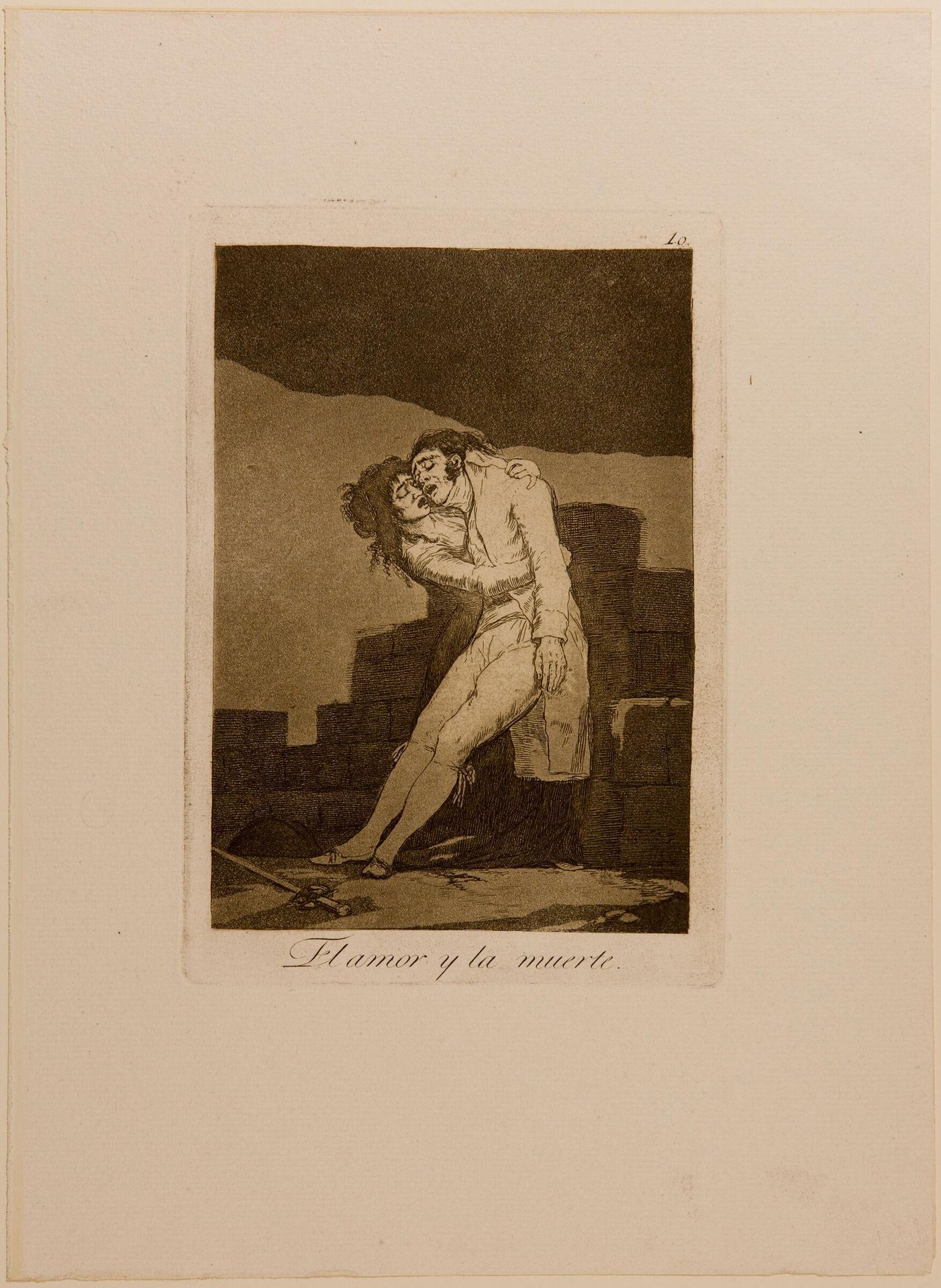
Editor: Here we have Goya’s print, "Love and Death." It’s a stark image, but the etching itself seems delicate. I’m struck by how the medium contrasts with the subject matter. What's your perspective on this piece? Curator: The etching process, using acid to bite into the metal plate, mirrors the corrosive forces at play in the depicted scene. Consider the social context: Goya was working during a time of upheaval. The materials used, from the paper to the ink, speak to the economics of printmaking and its accessibility as a medium for disseminating subversive ideas. Editor: So, the choice of etching itself contributes to the work's meaning? Curator: Precisely. It's not just about the image, but the means of its production and its potential for wider consumption and impact. Seeing it this way, does it shift your understanding? Editor: Definitely, it makes me think about the choices behind the creation, and how the materials communicate just as much as the figures.
Love and Death c. 18th century
Francisco José de Goya y Lucientes
@franciscojosadegoyaylucientes
Harvard Art Museums
Harvard Art MuseumsArtwork details
- Dimensions
- sheet: 35.4 x 25.8 cm (13 15/16 x 10 3/16 in.) platemark: 21.9 x 15.2 cm (8 5/8 x 6 in.)
- Location
- Harvard Art Museums
- Copyright
- CC0 1.0
Comments
No comments
About this artwork
Editor: Here we have Goya’s print, "Love and Death." It’s a stark image, but the etching itself seems delicate. I’m struck by how the medium contrasts with the subject matter. What's your perspective on this piece? Curator: The etching process, using acid to bite into the metal plate, mirrors the corrosive forces at play in the depicted scene. Consider the social context: Goya was working during a time of upheaval. The materials used, from the paper to the ink, speak to the economics of printmaking and its accessibility as a medium for disseminating subversive ideas. Editor: So, the choice of etching itself contributes to the work's meaning? Curator: Precisely. It's not just about the image, but the means of its production and its potential for wider consumption and impact. Seeing it this way, does it shift your understanding? Editor: Definitely, it makes me think about the choices behind the creation, and how the materials communicate just as much as the figures.
Comments
No comments