About this artwork
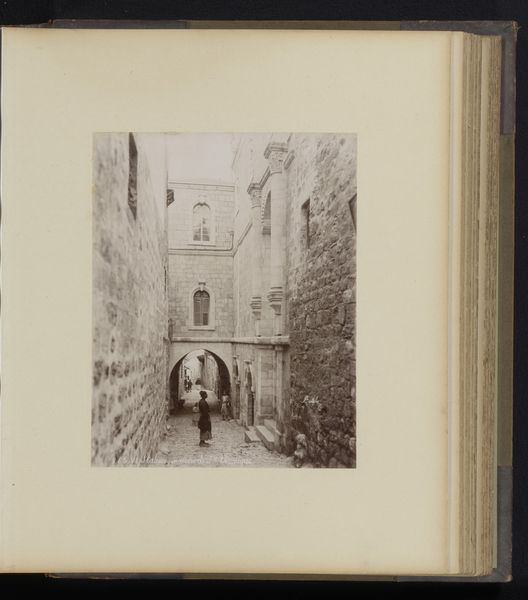
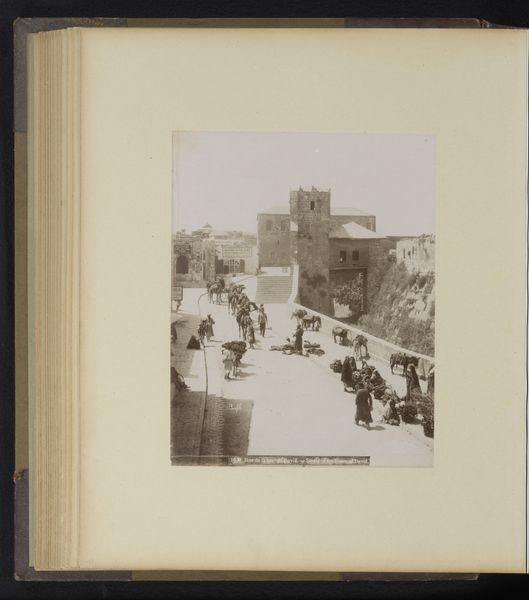
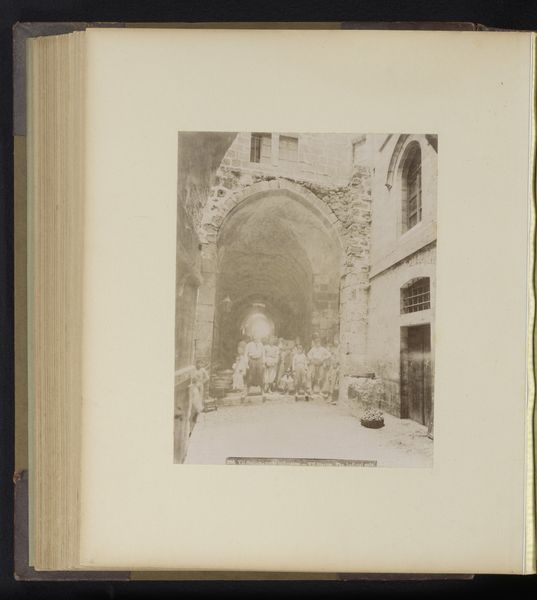
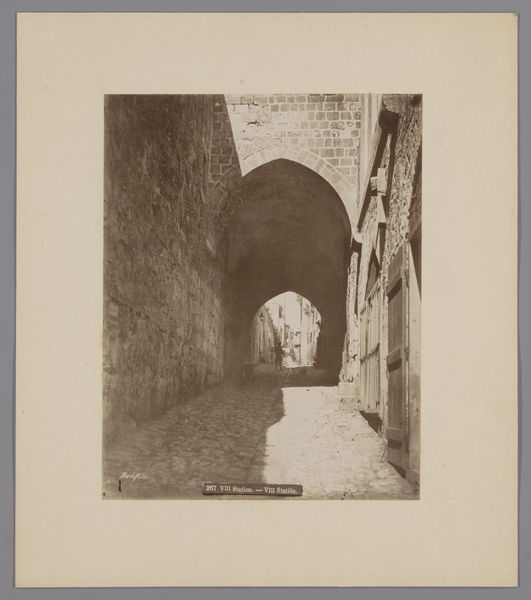
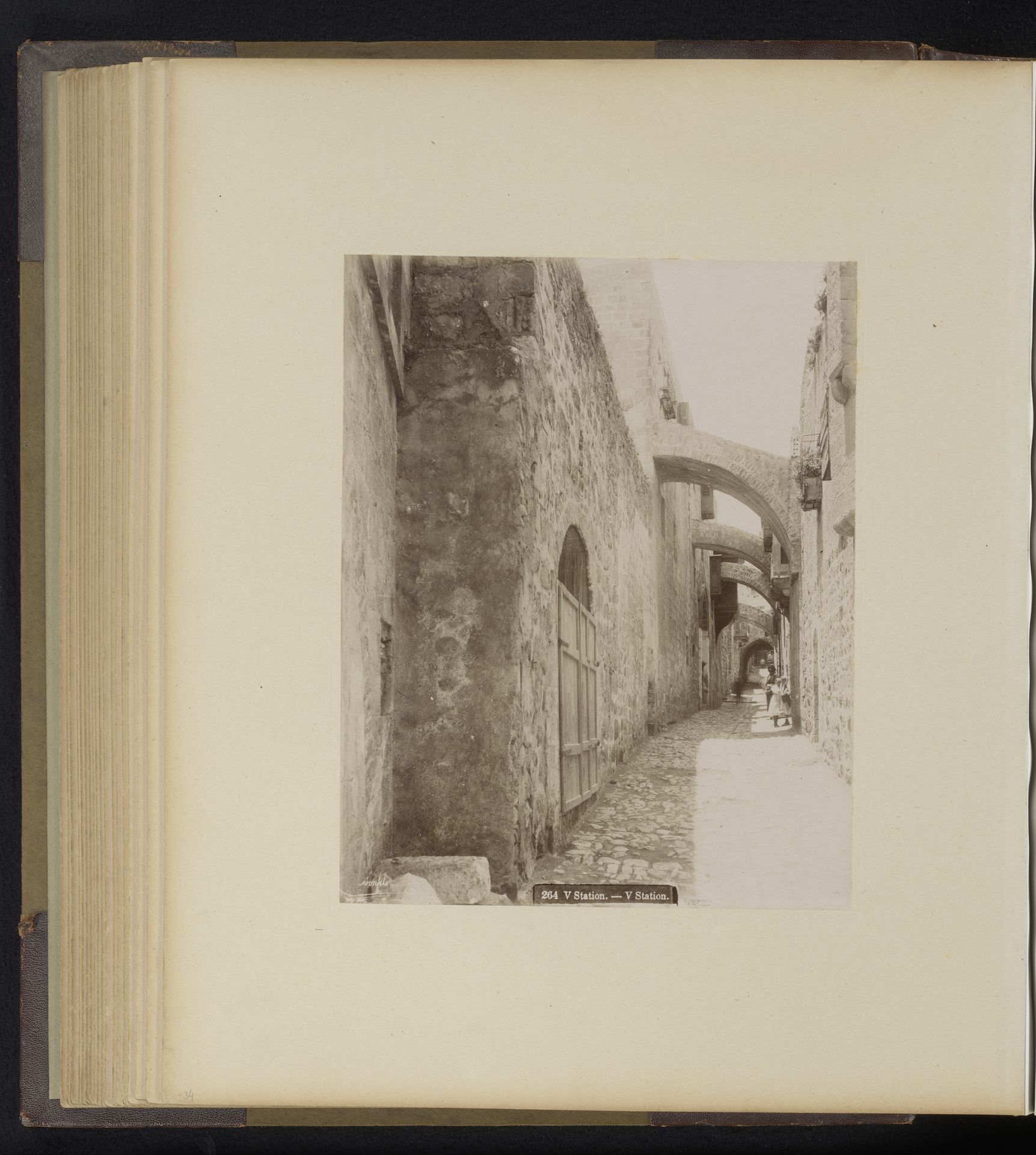
Félix Bonfils made this albumen print of the Fifth Station of the Via Dolorosa in Jerusalem sometime in the late 19th century. It’s one of many photographs he produced in the Middle East, often catering to European and American tourists eager to see biblical sites. This image captures a narrow, winding street with stone buildings, likely part of the old city. The Via Dolorosa, or “Way of Suffering,” is traditionally believed to be the path Jesus walked to his crucifixion. What Bonfils offers us isn’t just a depiction of a place, but also a potent symbol of religious history and pilgrimage. Bonfils' work gained popularity during a period of increased Western interest in the Middle East, fueled by colonial ambitions and religious fervor. This photograph, like others, can be seen as a visual document of that complex historical encounter. By consulting travel accounts, missionary records, and colonial archives, we can gain greater insight into the political and cultural dynamics. The image becomes meaningful only in its social and institutional context.
Vijfde kruiswegstatie op de Via Dolorosa in Jeruzalem
1867 - 1885

Félix Bonfils
1831 - 1885Location
RijksmuseumArtwork details
- Medium
- photography, gelatin-silver-print
- Dimensions
- height 277 mm, width 219 mm
- Location
- Rijksmuseum
- Copyright
- Rijks Museum: Open Domain
Tags
Comments
Share your thoughts
About this artwork
Félix Bonfils made this albumen print of the Fifth Station of the Via Dolorosa in Jerusalem sometime in the late 19th century. It’s one of many photographs he produced in the Middle East, often catering to European and American tourists eager to see biblical sites. This image captures a narrow, winding street with stone buildings, likely part of the old city. The Via Dolorosa, or “Way of Suffering,” is traditionally believed to be the path Jesus walked to his crucifixion. What Bonfils offers us isn’t just a depiction of a place, but also a potent symbol of religious history and pilgrimage. Bonfils' work gained popularity during a period of increased Western interest in the Middle East, fueled by colonial ambitions and religious fervor. This photograph, like others, can be seen as a visual document of that complex historical encounter. By consulting travel accounts, missionary records, and colonial archives, we can gain greater insight into the political and cultural dynamics. The image becomes meaningful only in its social and institutional context.
Comments
Share your thoughts