About this artwork
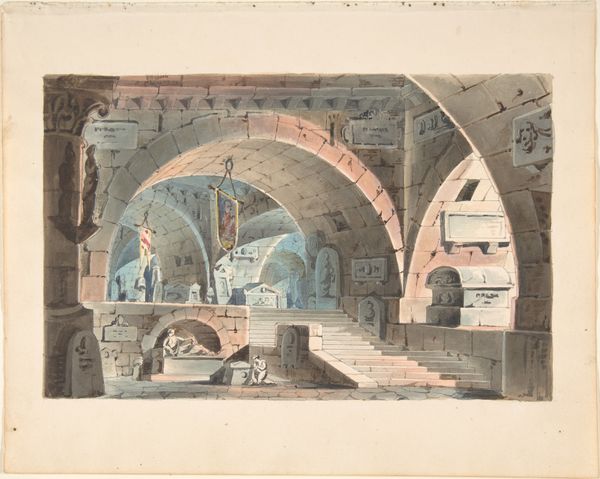
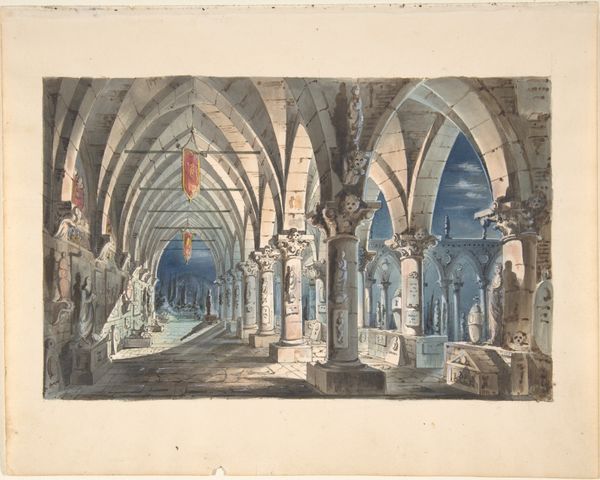
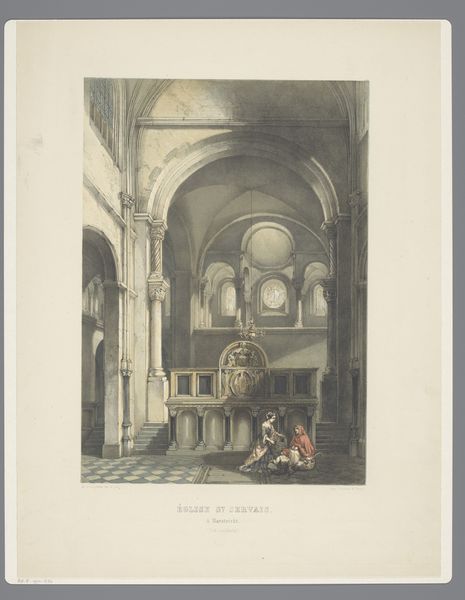
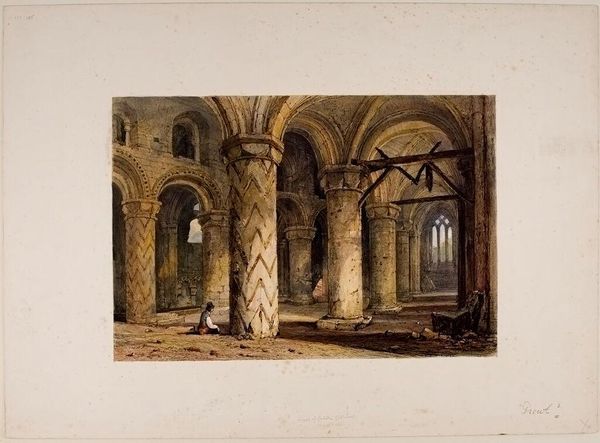
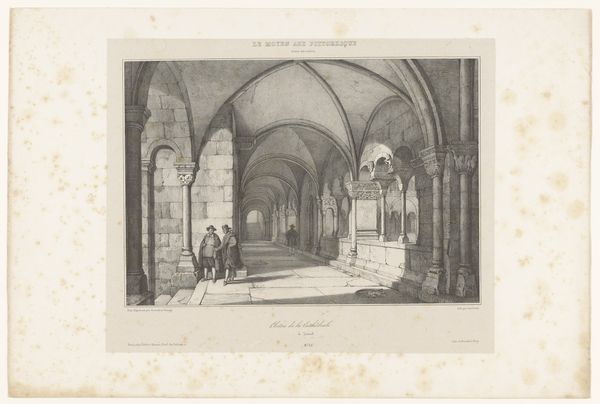
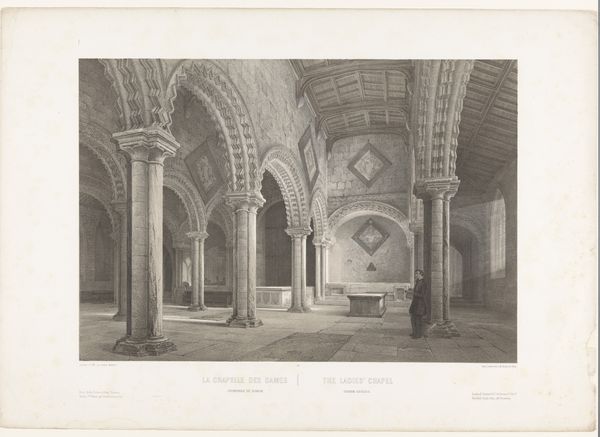
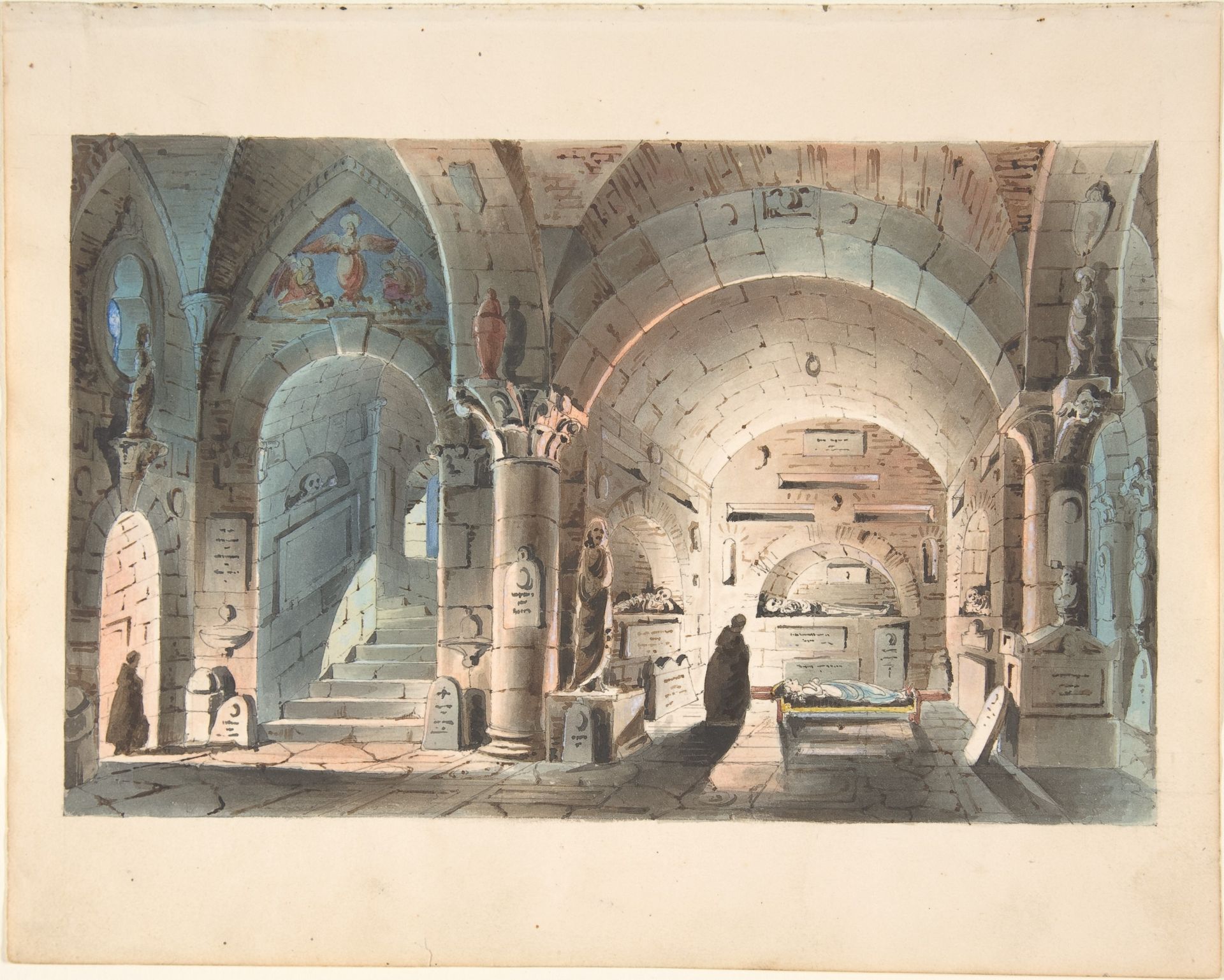
This is a watercolor stage set design of a crypt scene by an anonymous artist. The crypt, with its arches, columns, and tombs, is rendered in muted tones, establishing a somber, contemplative mood. Light filters in, creating strong contrasts that guide the viewer's eye through the space, and shadows add depth and mystery. The architecture employs a calculated use of perspective. The arches diminish in size, leading us deeper into the scene, but the composition is not simply illusionistic. It uses semiotic signs to interpret visual components and cultural codes which may have informed the artwork’s making and reception. The figures, dwarfed by their surroundings, are staged as cultural codes. Their role within the crypt introduces a narrative element, suggesting themes of mortality and memory. Ultimately, the stage set design uses formal elements to communicate a sense of transition. The play of light and shadow is not merely decorative. It's a deliberate construction that functions as a cultural and philosophical exploration of our understanding of mortality and the spaces we create to confront it.
Design for a Stage Set: Crypt Scene
1830 - 1840


Artwork details
- Medium
- drawing, mixed-media, print
- Dimensions
- 7-1/2 x 9-1/4 in
- Location
- Metropolitan Museum of Art, New York, NY
- Copyright
- Public Domain
Tags
Comments
Share your thoughts
About this artwork
This is a watercolor stage set design of a crypt scene by an anonymous artist. The crypt, with its arches, columns, and tombs, is rendered in muted tones, establishing a somber, contemplative mood. Light filters in, creating strong contrasts that guide the viewer's eye through the space, and shadows add depth and mystery. The architecture employs a calculated use of perspective. The arches diminish in size, leading us deeper into the scene, but the composition is not simply illusionistic. It uses semiotic signs to interpret visual components and cultural codes which may have informed the artwork’s making and reception. The figures, dwarfed by their surroundings, are staged as cultural codes. Their role within the crypt introduces a narrative element, suggesting themes of mortality and memory. Ultimately, the stage set design uses formal elements to communicate a sense of transition. The play of light and shadow is not merely decorative. It's a deliberate construction that functions as a cultural and philosophical exploration of our understanding of mortality and the spaces we create to confront it.
Comments
Share your thoughts