About this artwork
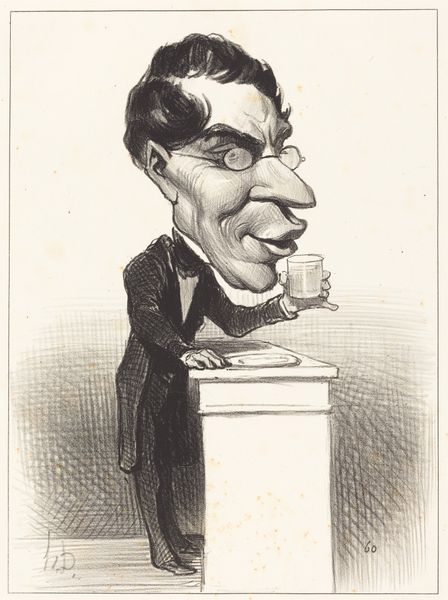
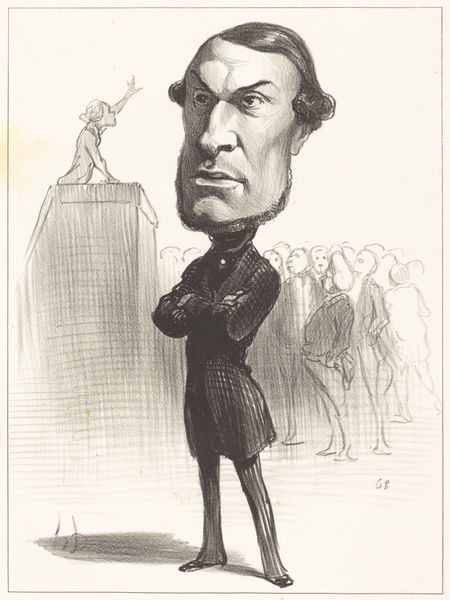
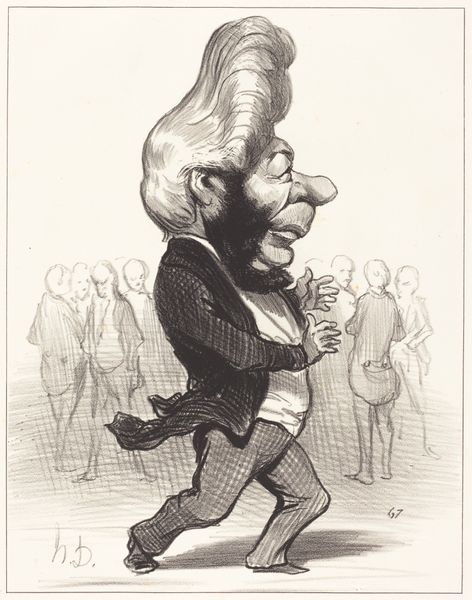
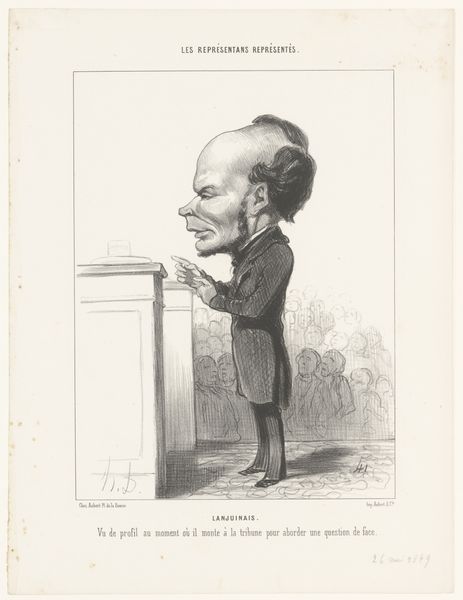
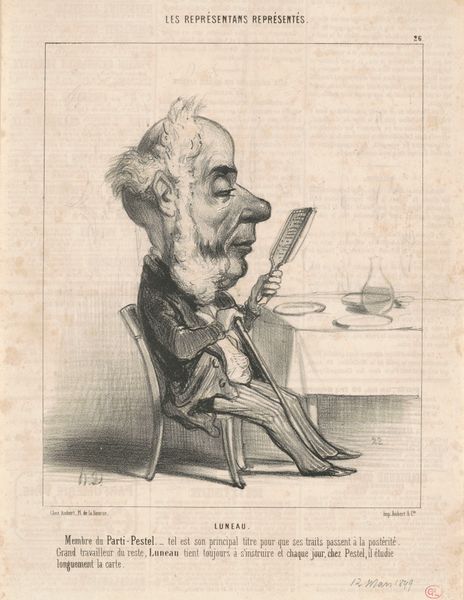
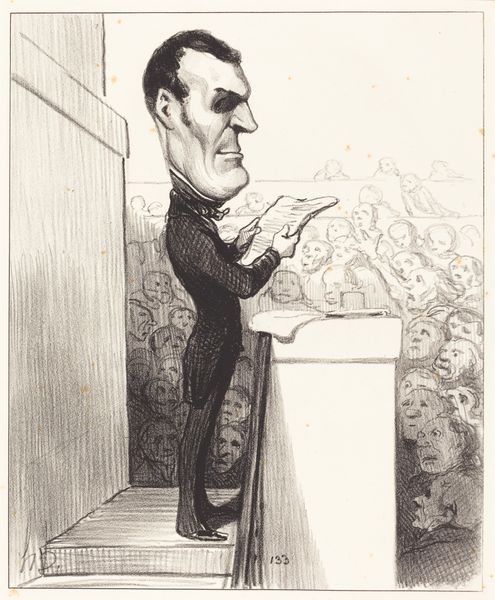
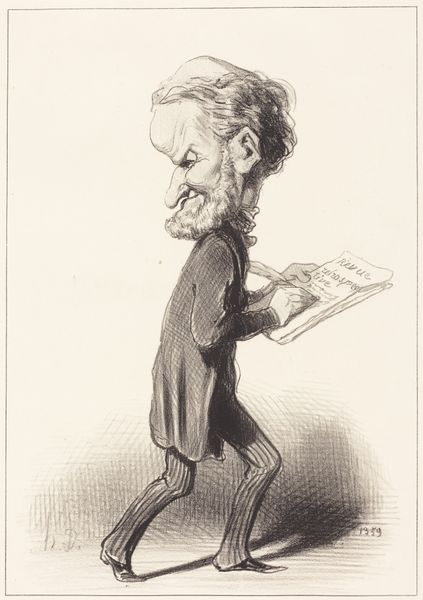
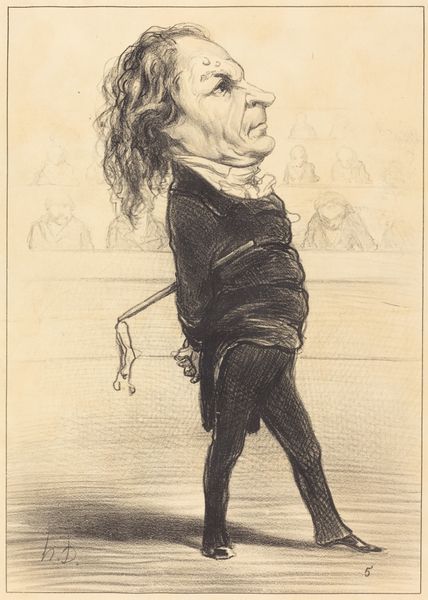
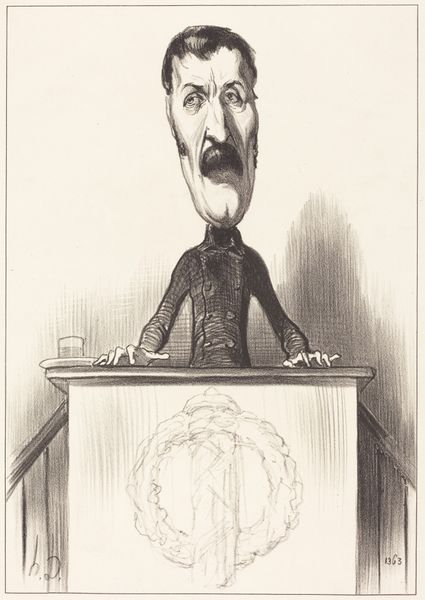
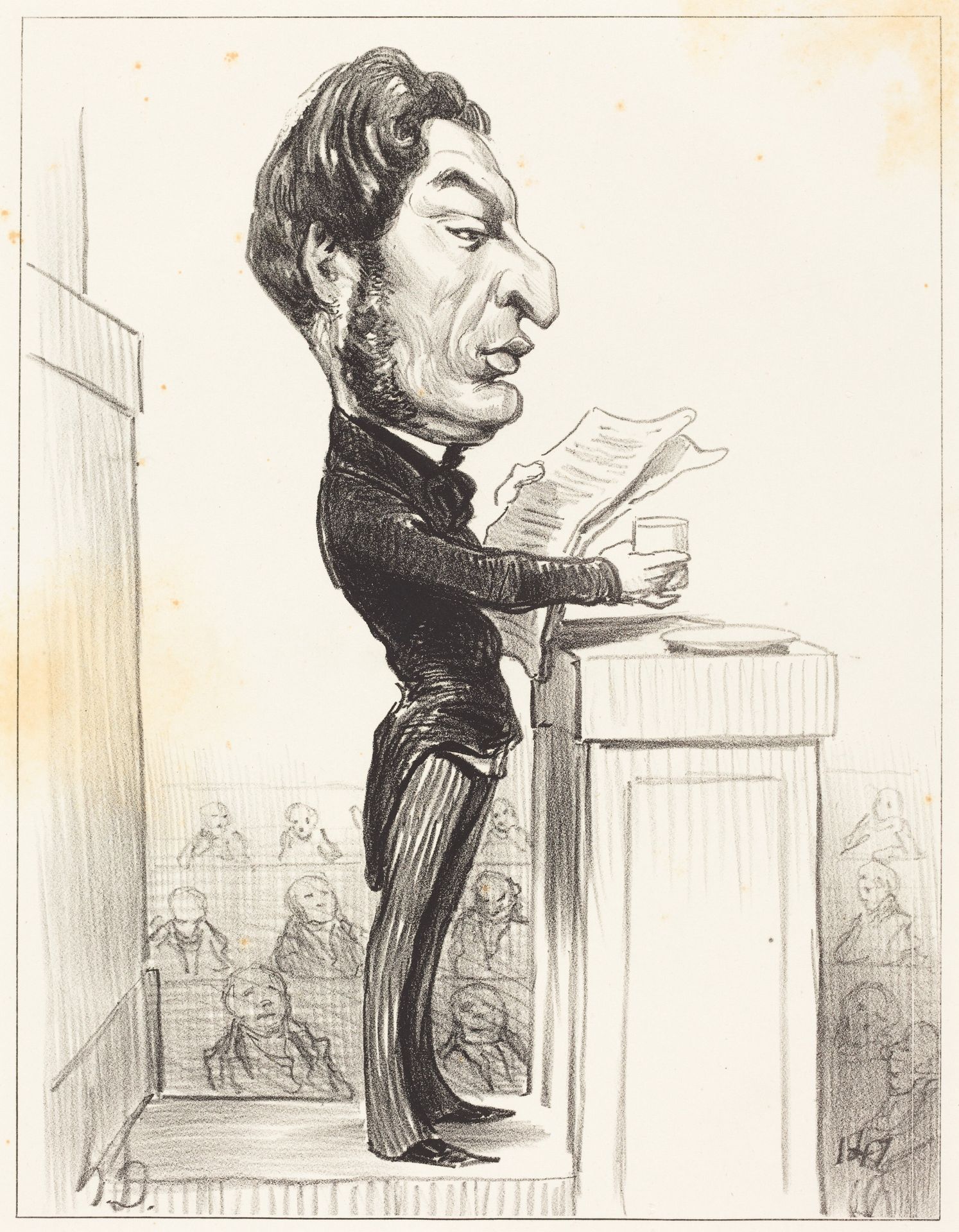
Honoré Daumier created this caricature of Eugène Rouher using lithographic crayon and a scraper. These are simple tools, but in Daumier's hand, they become instruments of sharp observation. The lithographic process, involving the transfer of an image from stone to paper, was a relatively new technology at the time, perfectly suited to mass production. Daumier made thousands of these kinds of prints for periodicals. His skill with the crayon allowed for an incredible range of tones and textures, from the smooth planes of Rouher's face to the frenetic hatching suggesting the crowd. The artist doesn't flatter his subject. The corpulent body and exaggerated features speak to Daumier's critical eye, a commentary on political power. Yet there is a dignity here too, and a respect for the graphic medium itself. In Daumier's hands, the tools of mass production become a means of individual expression, transcending the divide between craft and art.


Artwork details
- Medium
- drawing, print, pencil
- Copyright
- National Gallery of Art: CC0 1.0
Tags
portrait
drawing
16_19th-century
caricature
pencil sketch
caricature
pencil
portrait drawing
realism
Comments
No comments
About this artwork
Honoré Daumier created this caricature of Eugène Rouher using lithographic crayon and a scraper. These are simple tools, but in Daumier's hand, they become instruments of sharp observation. The lithographic process, involving the transfer of an image from stone to paper, was a relatively new technology at the time, perfectly suited to mass production. Daumier made thousands of these kinds of prints for periodicals. His skill with the crayon allowed for an incredible range of tones and textures, from the smooth planes of Rouher's face to the frenetic hatching suggesting the crowd. The artist doesn't flatter his subject. The corpulent body and exaggerated features speak to Daumier's critical eye, a commentary on political power. Yet there is a dignity here too, and a respect for the graphic medium itself. In Daumier's hands, the tools of mass production become a means of individual expression, transcending the divide between craft and art.
Comments
No comments