About this artwork
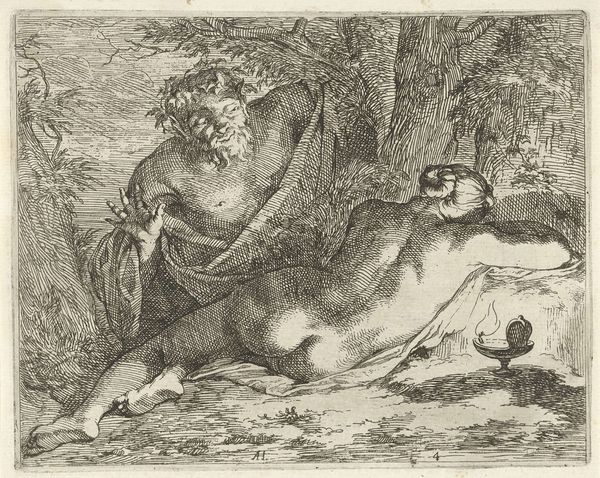
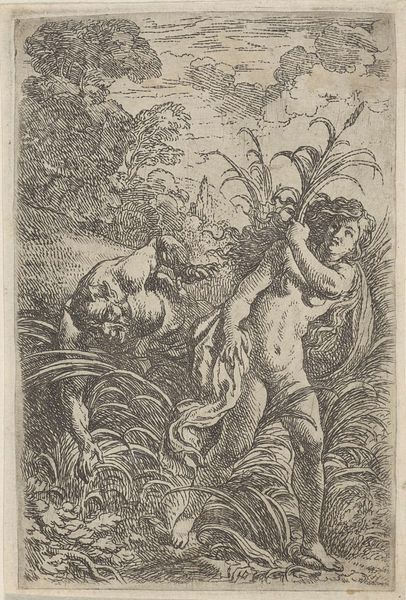
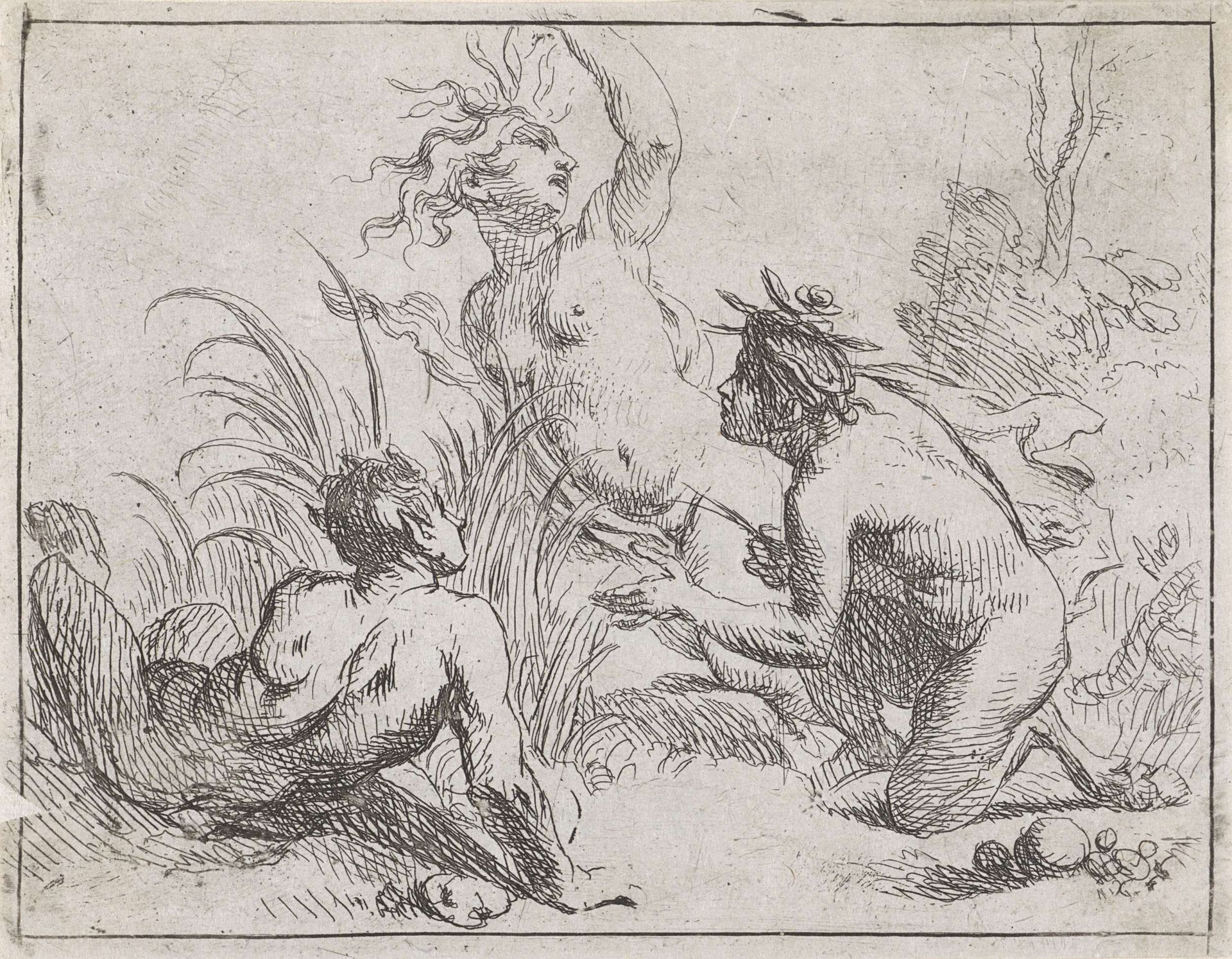
Cornelis Schut created this etching, titled "Nymph with Two Satyrs in a Landscape," sometime in the first half of the 17th century. Schut lived in a world where the legacy of classical antiquity was palpable. It is hard to ignore the male gaze present in this depiction. Two satyrs, creatures from classical myth who were known for their lust, are watching a nymph. Her raised arm could be interpreted as a gesture of resistance. The forest or landscape setting is, of course, a classical trope for encounters of this kind. But what does it mean to picture these encounters, and what feelings do they evoke? Rather than maintain traditional representations, Schut’s etching develops a narrative that stirs a cauldron of societal issues, reflecting the position of women in 17th-century society. It's a reminder of the emotional and personal dimensions embedded in historical narratives.
Nimf met twee saters in een landschap
1618 - 1655

Cornelis Schut
1597 - 1655Location
RijksmuseumArtwork details
- Medium
- drawing, etching
- Dimensions
- height 72 mm, width 100 mm
- Location
- Rijksmuseum
- Copyright
- Rijks Museum: Open Domain
Tags
Comments
Share your thoughts
About this artwork
Cornelis Schut created this etching, titled "Nymph with Two Satyrs in a Landscape," sometime in the first half of the 17th century. Schut lived in a world where the legacy of classical antiquity was palpable. It is hard to ignore the male gaze present in this depiction. Two satyrs, creatures from classical myth who were known for their lust, are watching a nymph. Her raised arm could be interpreted as a gesture of resistance. The forest or landscape setting is, of course, a classical trope for encounters of this kind. But what does it mean to picture these encounters, and what feelings do they evoke? Rather than maintain traditional representations, Schut’s etching develops a narrative that stirs a cauldron of societal issues, reflecting the position of women in 17th-century society. It's a reminder of the emotional and personal dimensions embedded in historical narratives.
Comments
Share your thoughts