About this artwork
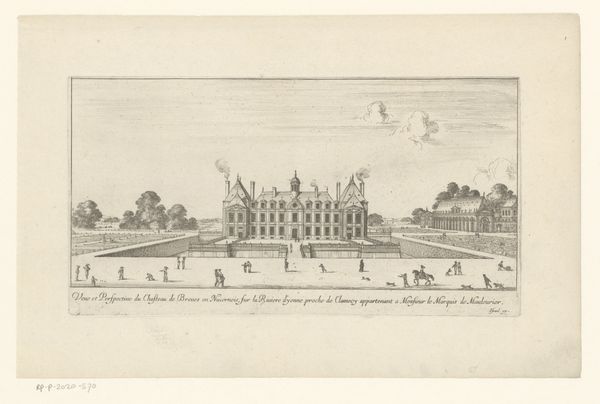
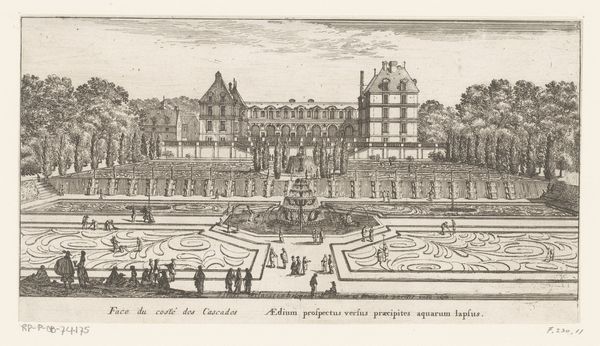
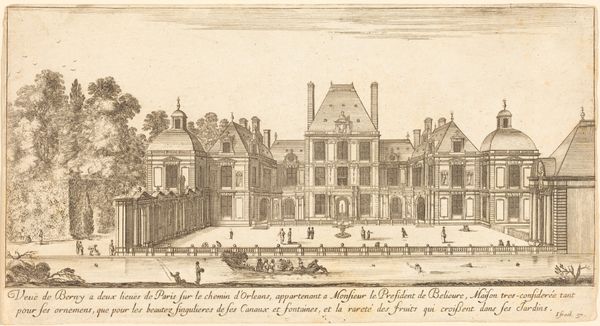
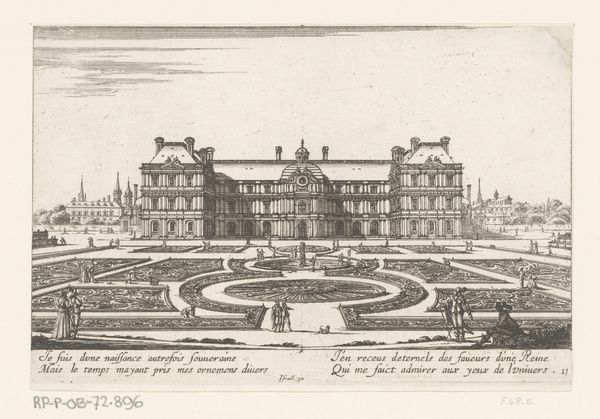
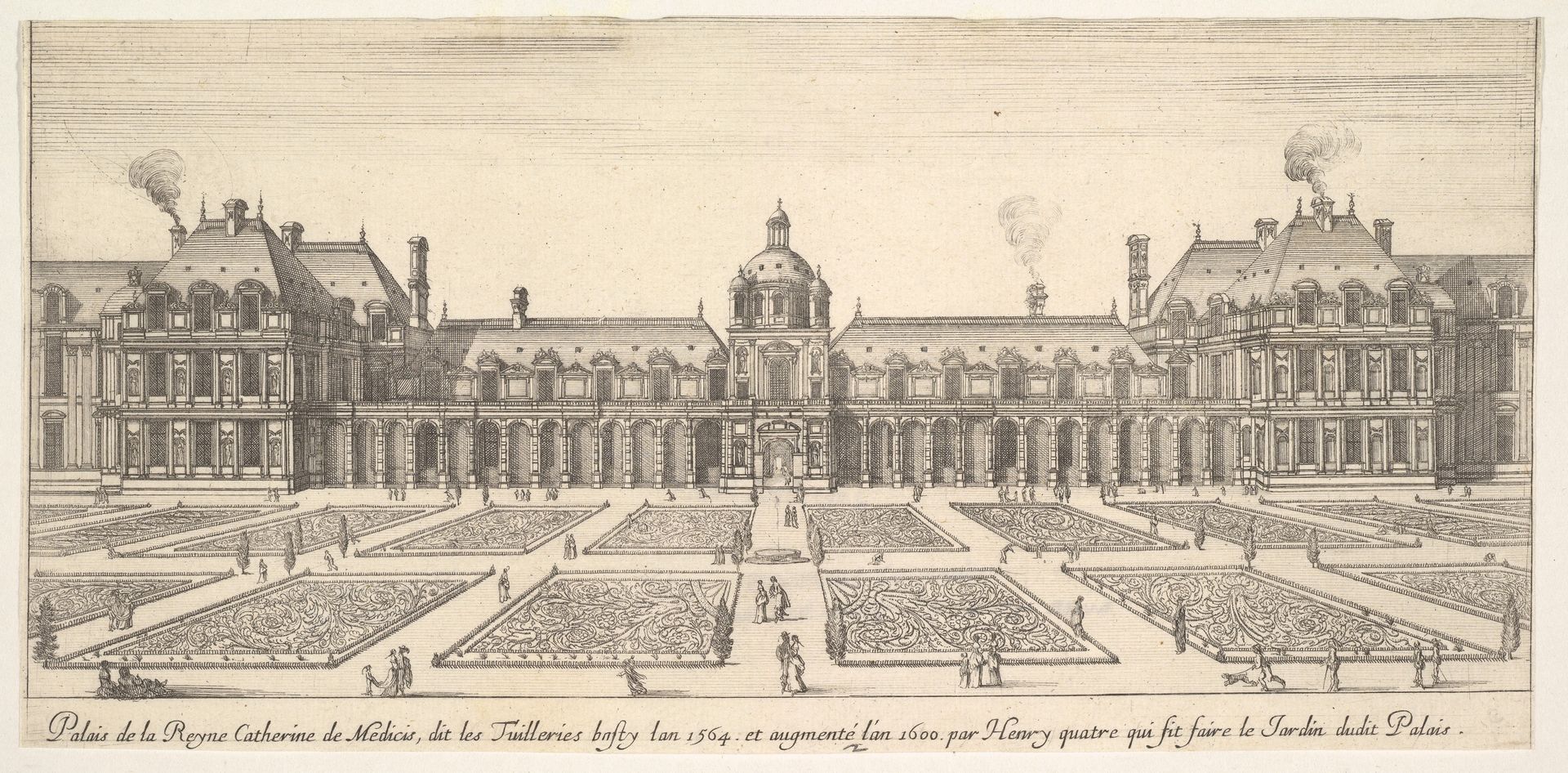
Editor: So, this is "The palace of Catherine de Medici, called the Tuilleries" by Stefano della Bella, created between 1649 and 1651. It’s an etching, quite detailed. It strikes me as very formal, a sort of stage for courtly life. What do you make of it? Curator: It’s a fascinating window into the performance of power. Consider how meticulously the Tuileries gardens are depicted – straight lines, geometric patterns. This wasn’t just landscaping; it was a visual statement of control and order, imposed by the monarchy, literally reshaping nature. How do you think this relates to the role of Catherine de Medici? Editor: Well, she was known for being politically shrewd, and very interested in appearances. Was this an attempt to legitimize her reign, or her family's place, perhaps? Curator: Exactly! Landscape became a political tool. Consider the symbolism of the palace itself. Bella captures the scale, but also the constant visibility that came with court life. Etchings like this were themselves tools, designed to circulate these images, projecting a specific vision of royal power to a wider audience, domestic and international. How would this engraving influence how others perceive the monarchy and France itself? Editor: I guess seeing this grandeur would reinforce ideas of French power and sophistication. Like, if their gardens are this impressive, imagine everything else! Curator: Precisely. And this wasn't a neutral portrayal. The perspective, the framing – these choices reinforce the intended message of control and majesty. Bella’s work here is both art and propaganda, intertwined. Editor: It’s amazing how much is communicated, not just what's there but what it’s trying to say about power at the time. Curator: Indeed. Seeing the Tuileries this way reveals so much about the social and political forces that shaped both the physical landscape and the perception of royal authority in 17th-century France.
The palace of Catherine de Medici, called the Tuilleries, from 'Various views of remarkable places in Italy and France' (Diverses vues d'endroits remarquables d'Italie et de France)
1649 - 1651

Stefano della Bella
1610 - 1664
The Metropolitan Museum of Art
Metropolitan Museum of Art, New York, NYArtwork details
- Medium
- drawing, print, etching, engraving, architecture
- Dimensions
- Sheet: 4 1/4 x 5 3/4 in. (10.8 x 14.6 cm)
- Location
- Metropolitan Museum of Art, New York, NY
- Copyright
- Public Domain
Tags
Comments
Share your thoughts
About this artwork
Editor: So, this is "The palace of Catherine de Medici, called the Tuilleries" by Stefano della Bella, created between 1649 and 1651. It’s an etching, quite detailed. It strikes me as very formal, a sort of stage for courtly life. What do you make of it? Curator: It’s a fascinating window into the performance of power. Consider how meticulously the Tuileries gardens are depicted – straight lines, geometric patterns. This wasn’t just landscaping; it was a visual statement of control and order, imposed by the monarchy, literally reshaping nature. How do you think this relates to the role of Catherine de Medici? Editor: Well, she was known for being politically shrewd, and very interested in appearances. Was this an attempt to legitimize her reign, or her family's place, perhaps? Curator: Exactly! Landscape became a political tool. Consider the symbolism of the palace itself. Bella captures the scale, but also the constant visibility that came with court life. Etchings like this were themselves tools, designed to circulate these images, projecting a specific vision of royal power to a wider audience, domestic and international. How would this engraving influence how others perceive the monarchy and France itself? Editor: I guess seeing this grandeur would reinforce ideas of French power and sophistication. Like, if their gardens are this impressive, imagine everything else! Curator: Precisely. And this wasn't a neutral portrayal. The perspective, the framing – these choices reinforce the intended message of control and majesty. Bella’s work here is both art and propaganda, intertwined. Editor: It’s amazing how much is communicated, not just what's there but what it’s trying to say about power at the time. Curator: Indeed. Seeing the Tuileries this way reveals so much about the social and political forces that shaped both the physical landscape and the perception of royal authority in 17th-century France.
Comments
Share your thoughts