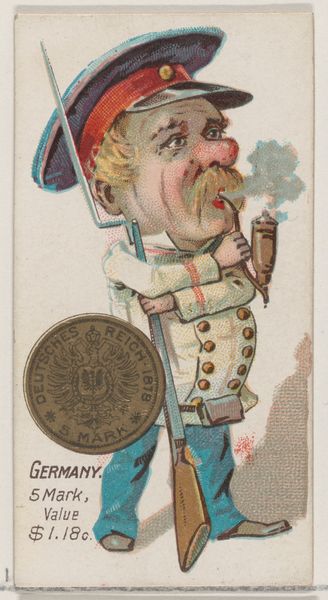
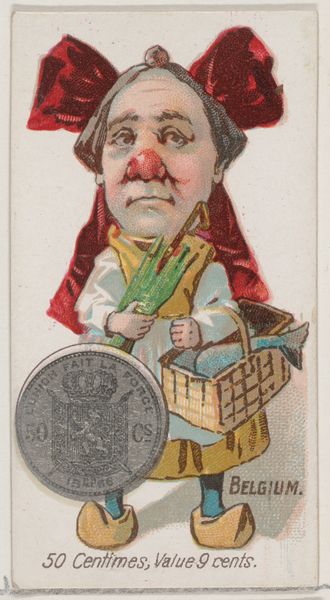
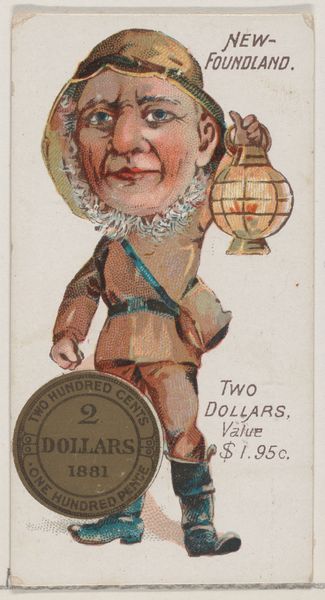
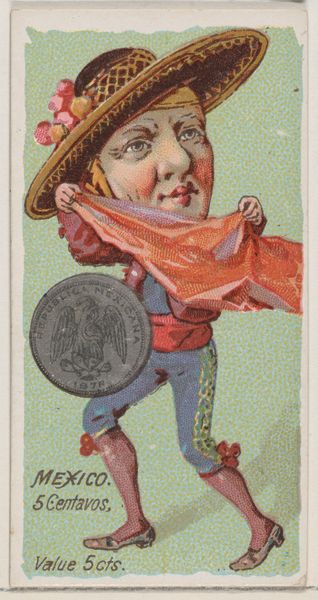
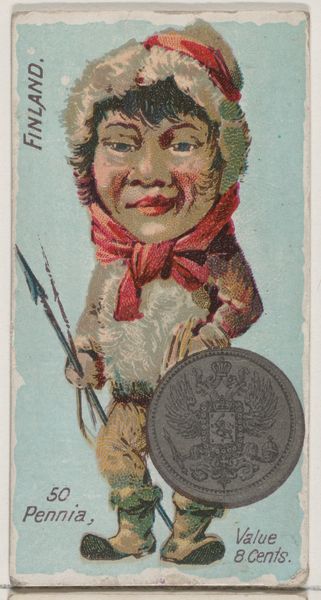
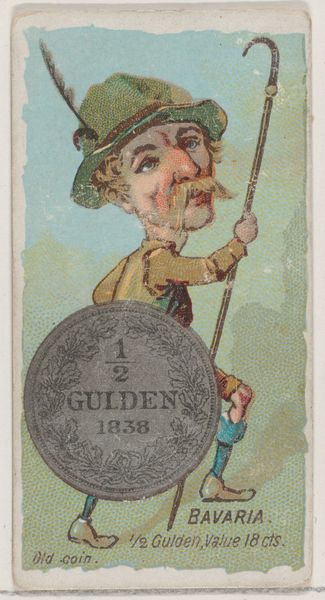
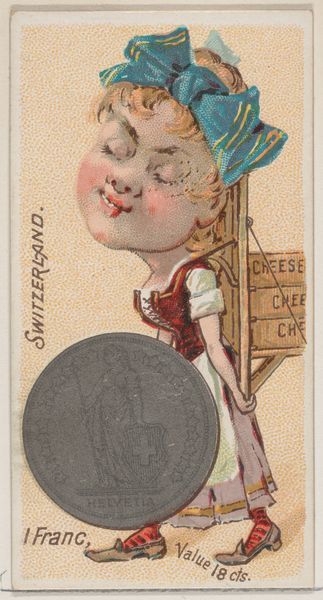
Caricatured Irishman, 10 Pence, from the series Coins of All Nations (N72, variation 1) for Duke brand cigarettes 1889
0:00
0:00


Dimensions: Sheet: 2 3/4 x 1 1/2 in. (7 x 3.8 cm)
Copyright: Public Domain
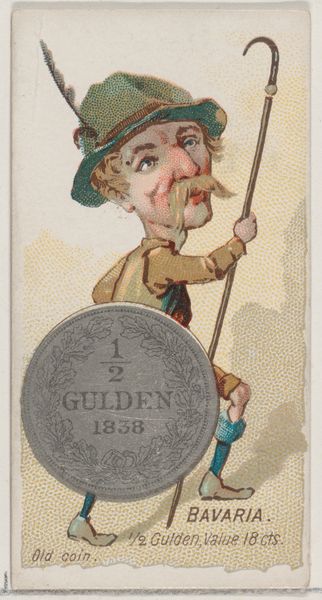
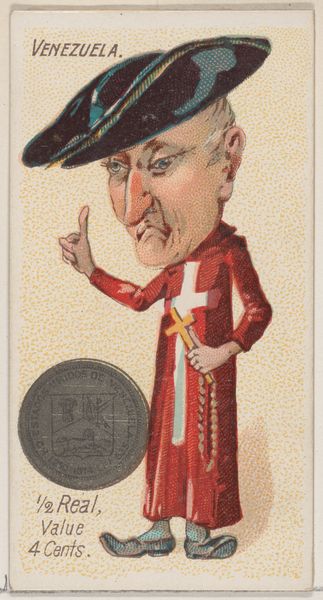
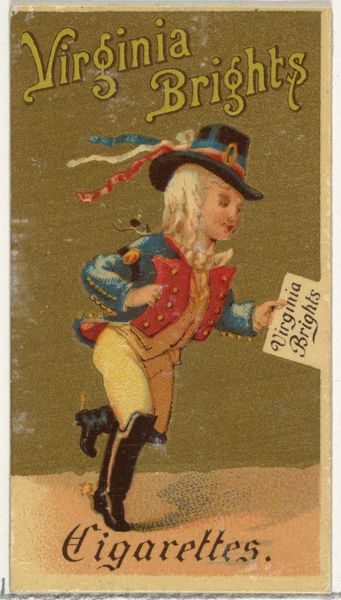
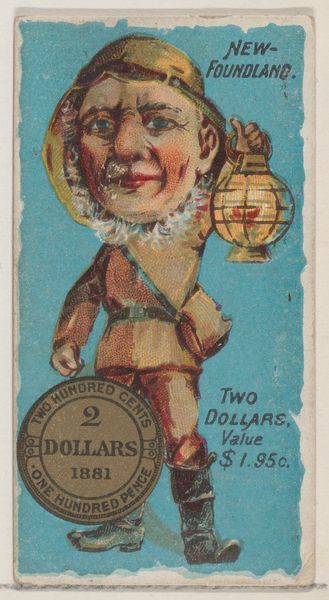
This small, chromolithographed card was printed by W. Duke, Sons & Co. around 1900 as part of a series of cigarette cards. These were designed to stiffen the packs and advertise the brand, while also serving as collectible items. Looking at the image, notice the caricatured Irishman: face red, bottle in hand, and a somewhat raggedy appearance. Lithography like this involves a division of labor. First, an artist creates the original image, then skilled technicians transfer that design onto a series of lithographic stones or metal plates, each responsible for a single color. The card is then printed in multiple passes to build up the full-color image. The mass production and distribution of these cards were integral to the growth of the tobacco industry, which relied on both cheap labor and global markets. The cards presented idealized or stereotypical images for mass consumption. This particular card presents a prejudiced view of the Irish, in turn reflecting the social and cultural biases of the time. These cards are a reminder that even seemingly trivial commercial ephemera can offer valuable insights into the industrial processes, labor practices, and cultural attitudes of their time.
Comments
No comments
Be the first to comment and join the conversation on the ultimate creative platform.
 Collect
 React
React Comment
More like this