About this artwork
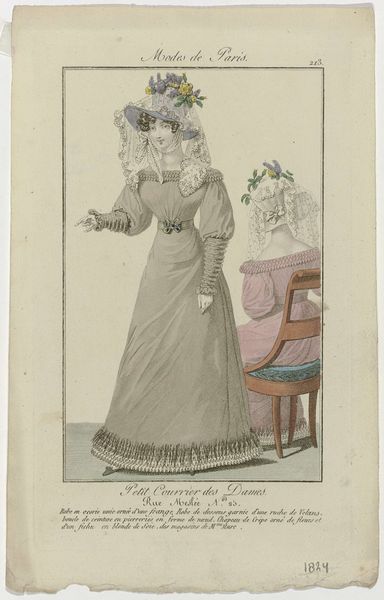
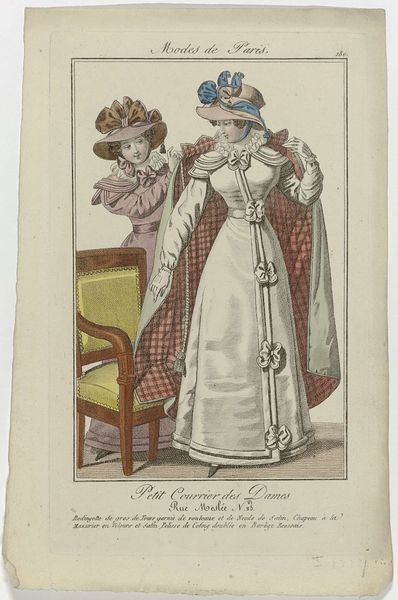
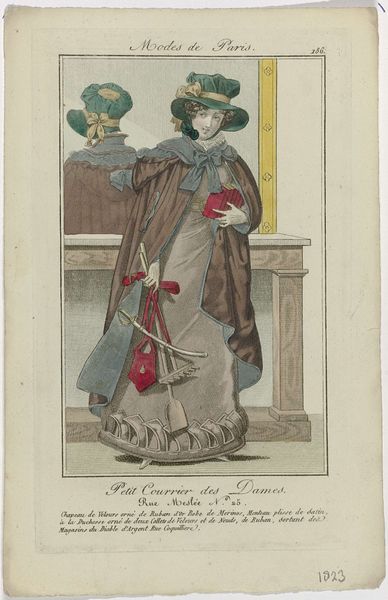
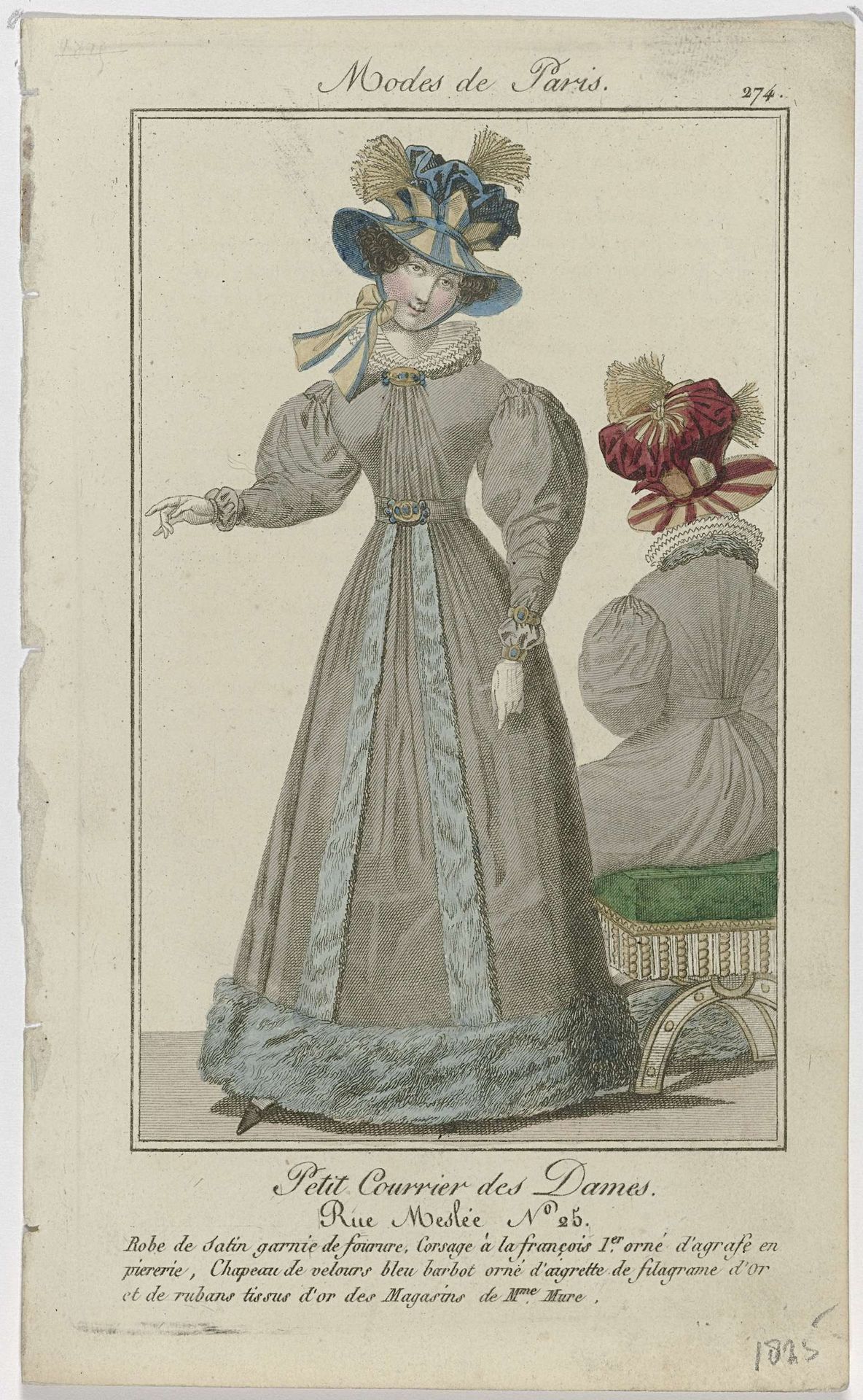
This fashion plate from 1825, titled "Petit Courrier des Dames," offers a glimpse into the sartorial expectations of women in post-revolutionary France. The image, likely a print from a fashion magazine, presents an ideal of feminine elegance. The focus is a full-length gown trimmed with fur, its design reflective of the era's emphasis on slender silhouettes and ornate details. The gown speaks to the rigid class structures of the time, suggesting the wealth and status of its intended wearer. Fashion was a tool that women in high society could use to reinforce existing gender and class hierarchies. Yet, in an era of shifting political landscapes, the gown may also have served to empower the wearer by demonstrating her taste and affluence. The woman’s posture and expression convey a sense of restrained poise, embodying the era’s ideals of femininity. The artwork prompts us to consider how fashion, identity, and social standing intersect.
Petit Courrier des Dames, 1825, No. 274 : Robe de Satin garnie de fourur (...)
1825

Artwork details
- Medium
- drawing, print
- Dimensions
- height 124 mm, width 205 mm
- Copyright
- Rijks Museum: Open Domain
Tags
Comments
Share your thoughts
About this artwork
This fashion plate from 1825, titled "Petit Courrier des Dames," offers a glimpse into the sartorial expectations of women in post-revolutionary France. The image, likely a print from a fashion magazine, presents an ideal of feminine elegance. The focus is a full-length gown trimmed with fur, its design reflective of the era's emphasis on slender silhouettes and ornate details. The gown speaks to the rigid class structures of the time, suggesting the wealth and status of its intended wearer. Fashion was a tool that women in high society could use to reinforce existing gender and class hierarchies. Yet, in an era of shifting political landscapes, the gown may also have served to empower the wearer by demonstrating her taste and affluence. The woman’s posture and expression convey a sense of restrained poise, embodying the era’s ideals of femininity. The artwork prompts us to consider how fashion, identity, and social standing intersect.
Comments
Share your thoughts