About this artwork
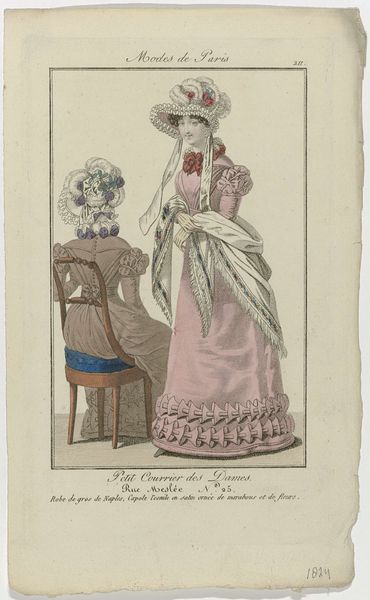
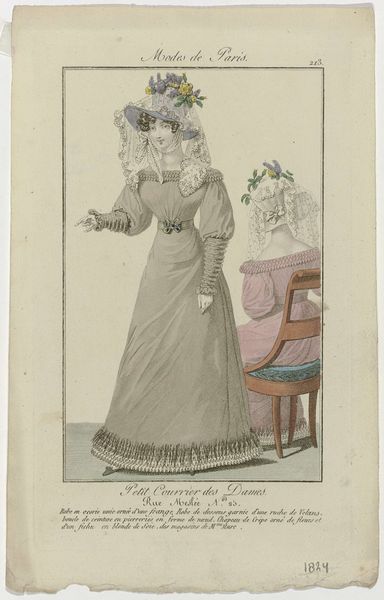
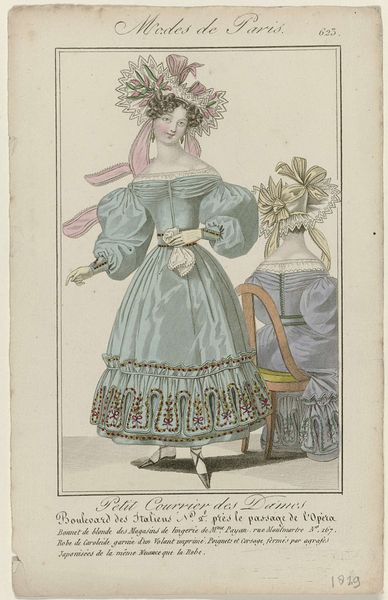
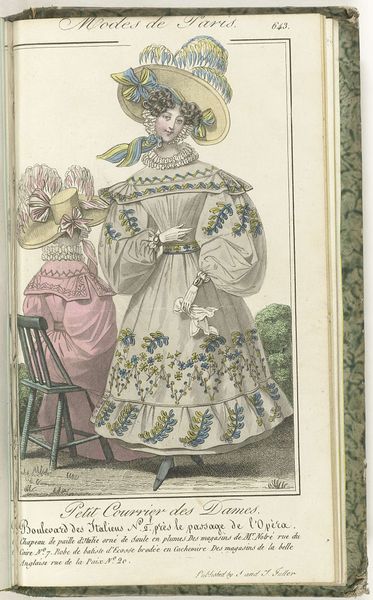
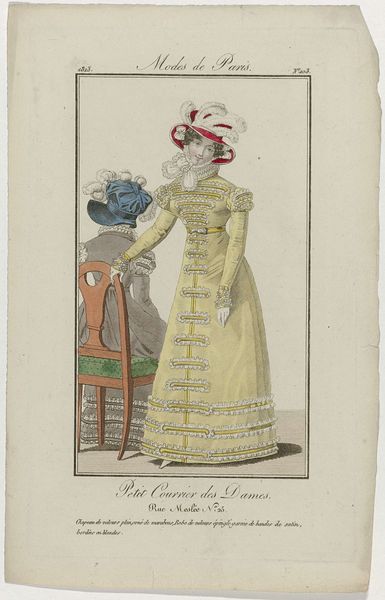
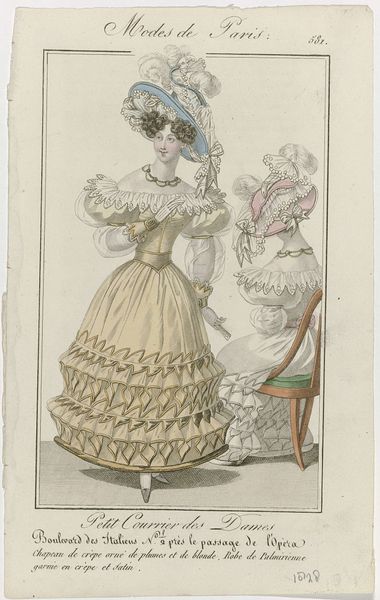
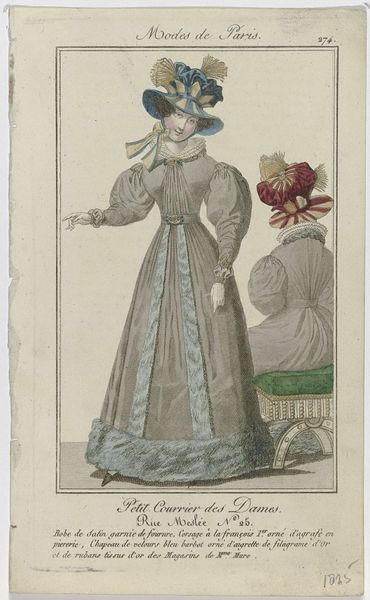
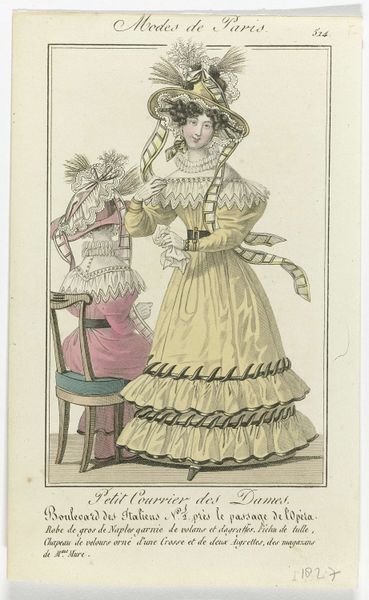
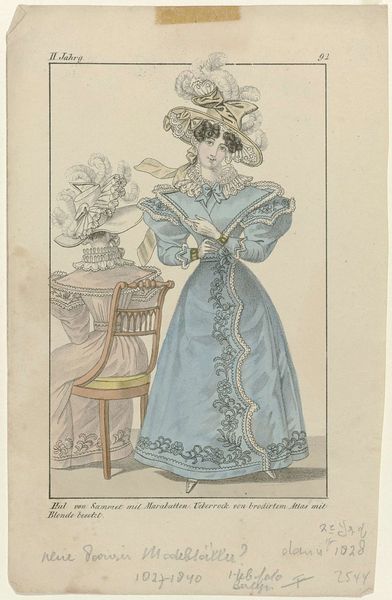
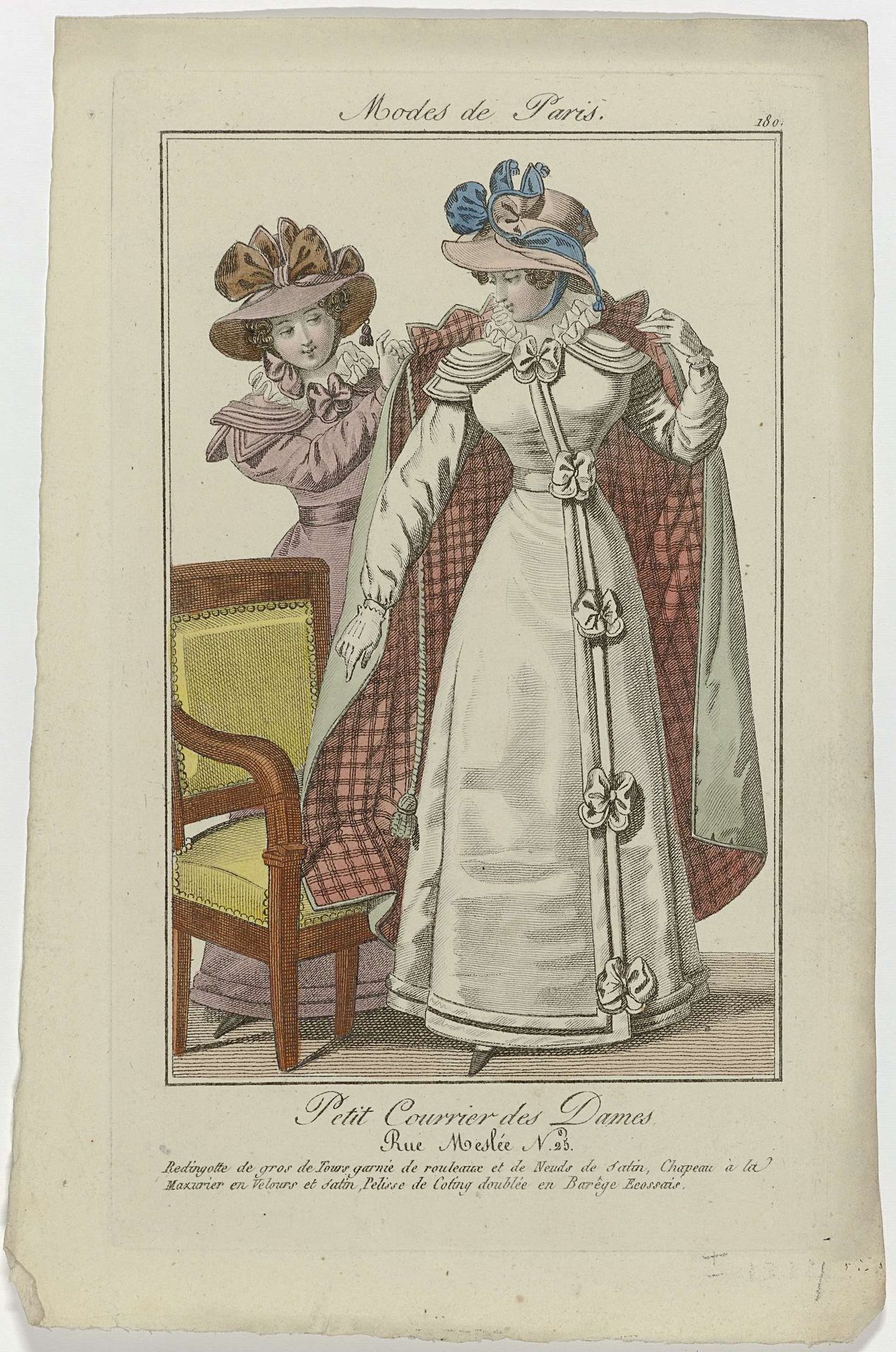
This fashion plate was made in Paris in 1823. The image shows a woman being fitted with a "Redingotte de gros de Tours," which was a type of overcoat made from heavy silk. Fashion plates like this one were produced to circulate ideas about style among affluent women. They show us the importance of visual media in shaping consumer culture and social status. This plate comes from the journal "Petit Courrier des Dames," which was one of many publications that helped to establish Paris as a center of fashion in the 19th century. Note that the plate identifies the street address of the journal, suggesting that readers might visit the offices for further information about the latest styles. As an art historian, I'd want to explore how the journal was produced, who its target audience was, and how it contributed to the construction of gender and class identities in early 19th-century France. Examining these questions helps us to understand art as embedded in wider social and institutional structures.
Petit Courrier des Dames, 1823, No. 180 : Redingotte de gros de Tours (...)
1823

Artwork details
- Medium
- drawing, print, etching
- Dimensions
- height 194 mm, width 118 mm
- Copyright
- Rijks Museum: Open Domain
Tags
Comments
Share your thoughts
About this artwork
This fashion plate was made in Paris in 1823. The image shows a woman being fitted with a "Redingotte de gros de Tours," which was a type of overcoat made from heavy silk. Fashion plates like this one were produced to circulate ideas about style among affluent women. They show us the importance of visual media in shaping consumer culture and social status. This plate comes from the journal "Petit Courrier des Dames," which was one of many publications that helped to establish Paris as a center of fashion in the 19th century. Note that the plate identifies the street address of the journal, suggesting that readers might visit the offices for further information about the latest styles. As an art historian, I'd want to explore how the journal was produced, who its target audience was, and how it contributed to the construction of gender and class identities in early 19th-century France. Examining these questions helps us to understand art as embedded in wider social and institutional structures.
Comments
Share your thoughts