About this artwork
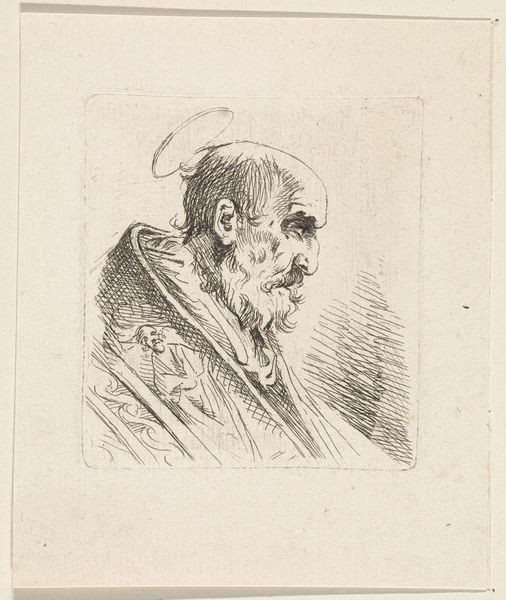
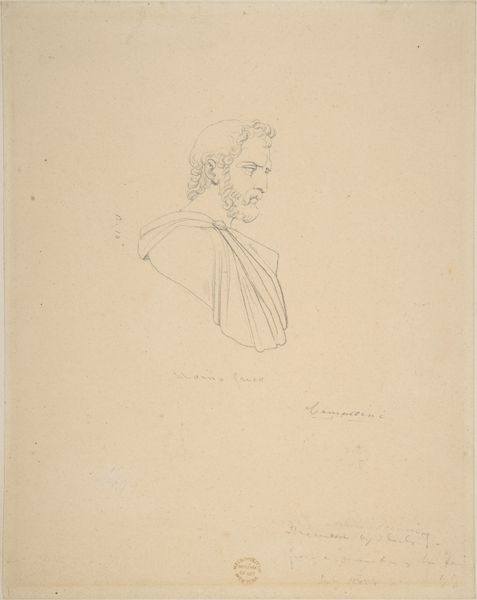
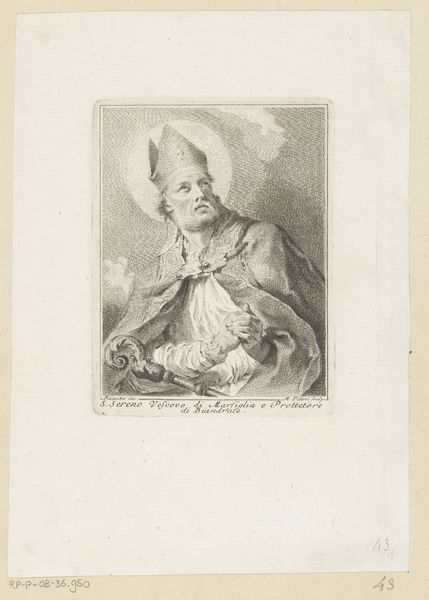
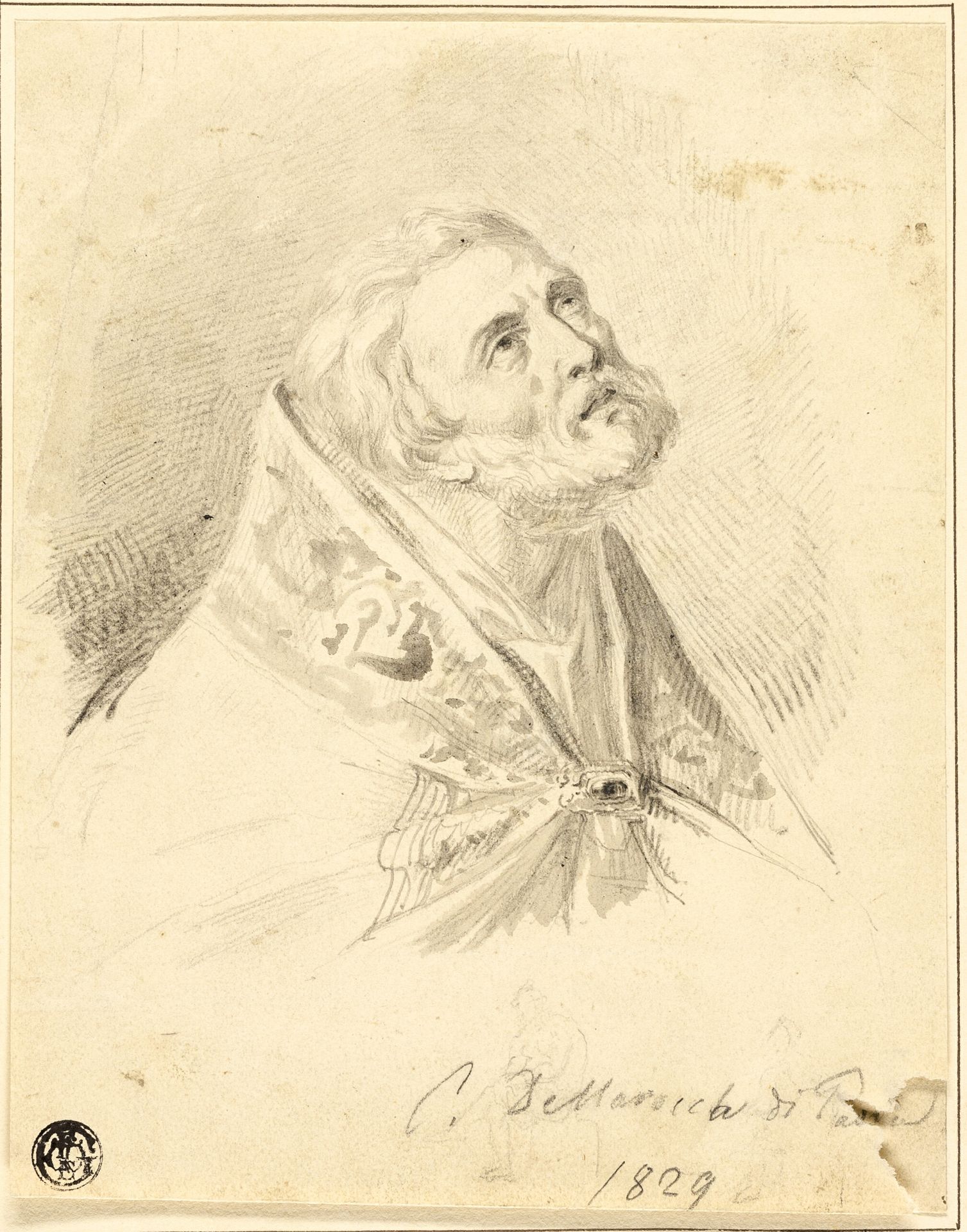
Carlo Dellarocca made this pencil drawing of a bishop saint in 1829. The image presents a figure of religious authority at a time when the Catholic Church's power was being challenged by new political ideas and social movements in Europe. Dellarocca's choice of subject reflects the ongoing importance of religious institutions in Italian society during the 19th century. The bishop's upward gaze may symbolize his connection to the divine, reinforcing the Church's authority. However, the sketch-like quality of the drawing, with its visible erasures and unfinished areas, could also be seen as questioning the Church's traditional image of power and stability. Was the artist perhaps a member of the progressive group? To fully understand this work, we might explore the history of the Catholic Church in 19th-century Italy, as well as the artistic conventions of religious portraiture. By considering the social and institutional context, we can gain a deeper appreciation of the complex meanings embedded in this seemingly simple drawing.
Bust of Bishop Saint, with Slight Figure Sketches
1829


Artwork details
- Medium
- drawing, print, paper, ink, pencil, chalk
- Dimensions
- 177 × 139 mm
- Location
- The Art Institute of Chicago
- Copyright
- Public Domain
Tags
Comments
Share your thoughts
About this artwork
Carlo Dellarocca made this pencil drawing of a bishop saint in 1829. The image presents a figure of religious authority at a time when the Catholic Church's power was being challenged by new political ideas and social movements in Europe. Dellarocca's choice of subject reflects the ongoing importance of religious institutions in Italian society during the 19th century. The bishop's upward gaze may symbolize his connection to the divine, reinforcing the Church's authority. However, the sketch-like quality of the drawing, with its visible erasures and unfinished areas, could also be seen as questioning the Church's traditional image of power and stability. Was the artist perhaps a member of the progressive group? To fully understand this work, we might explore the history of the Catholic Church in 19th-century Italy, as well as the artistic conventions of religious portraiture. By considering the social and institutional context, we can gain a deeper appreciation of the complex meanings embedded in this seemingly simple drawing.
Comments
Share your thoughts