c. 1880
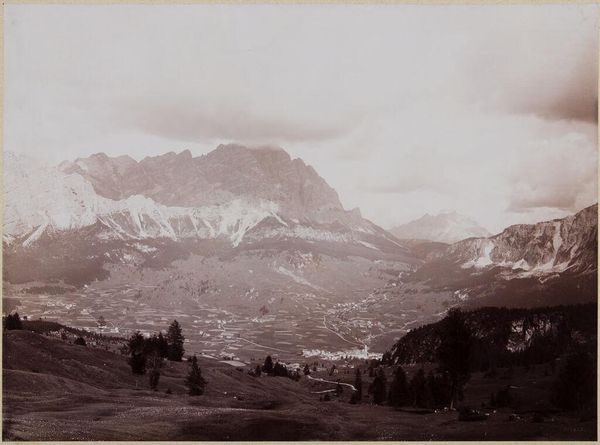
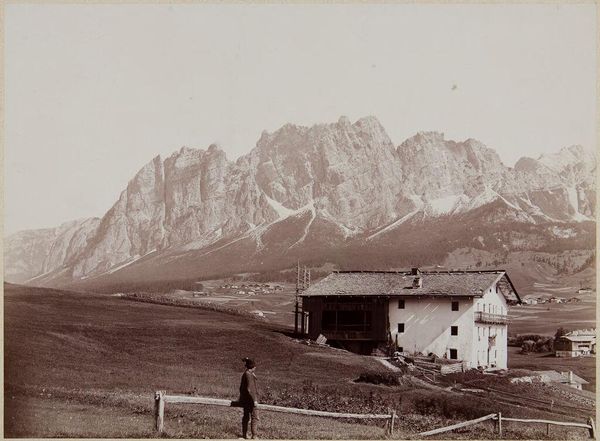
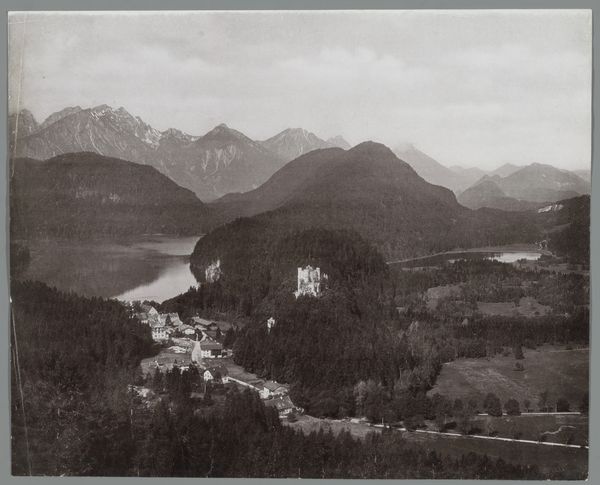
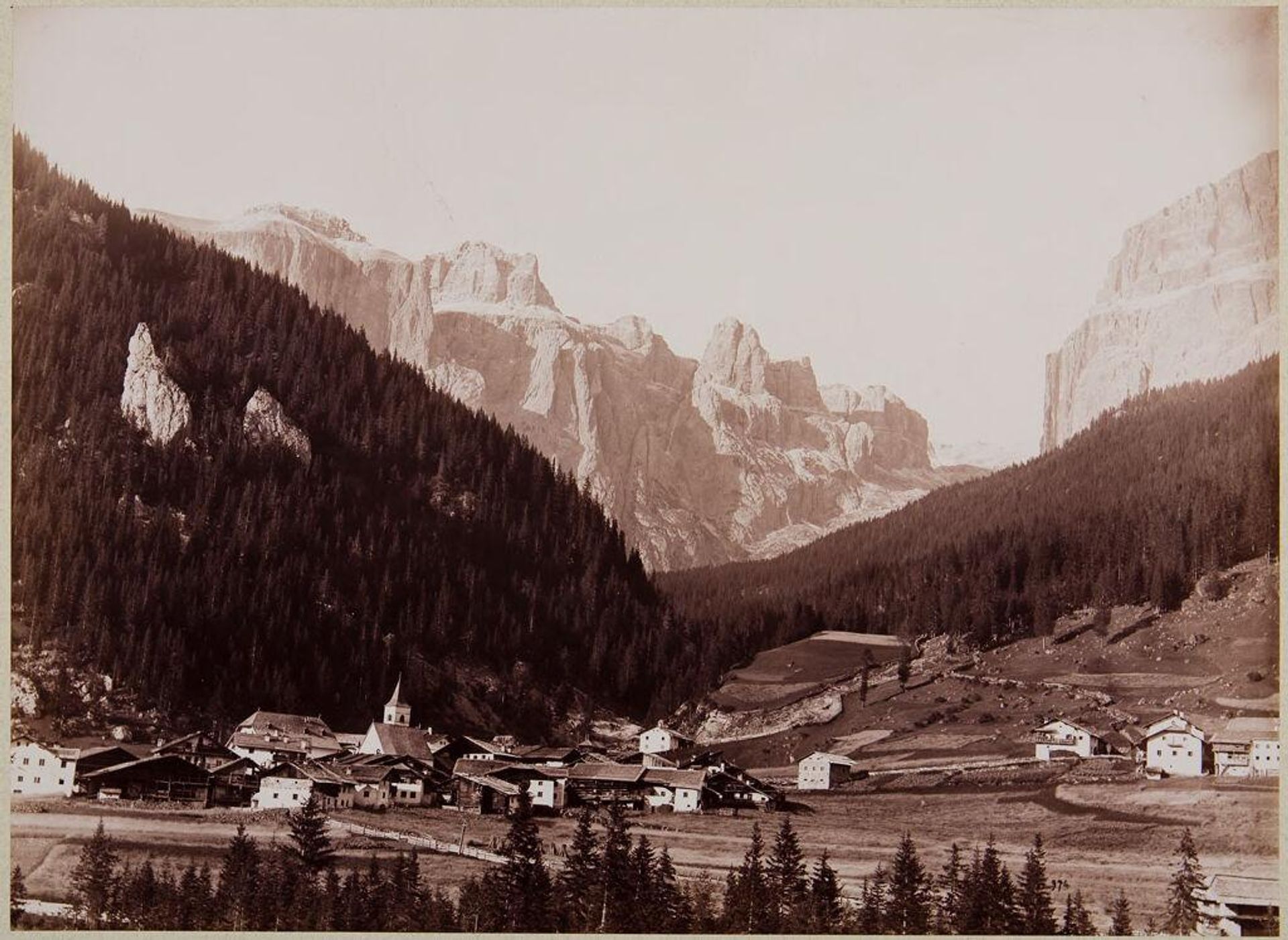
Hameau Canazei près Campitello

Listen to curator's interpretation
Curatorial notes
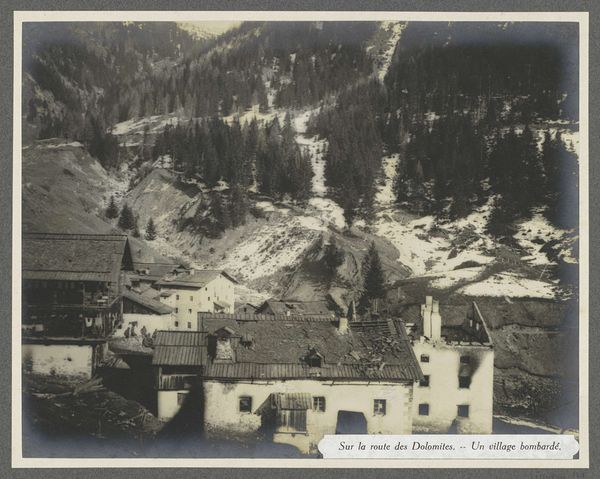
Curator: Vittorio Sella’s “Hameau Canazei près Campitello," now at the Harvard Art Museums, strikes me immediately with its somber grandeur. It feels like a landscape wrestling with something. Editor: It certainly exudes a romantic sensibility. Sella, a mountaineer himself, documents this village nestled in the Italian Dolomites, a place caught between nature's majesty and human settlement. Curator: And what is the significance of situating this village specifically? What historical forces were at play in the Italian Dolomites during the time of Sella's artistic endeavors? Editor: Well, notice the church spire, how it pierces the skyline alongside the mountains; it's a deliberate juxtaposition of faith and nature, suggesting a dialogue between earthly and spiritual realms. The village looks so small against the immensity of the landscape; it represents human endeavor amidst a sublime, enduring power. Curator: Yes, that tension is palpable, and it speaks volumes about our fraught relationship with the natural world, even then. Perhaps especially then. Editor: Indeed. It reminds us that symbols and visual language speak across time. Curator: It's a photograph that lingers, making one think about the narratives embedded in the land. Editor: Absolutely, an image to contemplate.