About this artwork
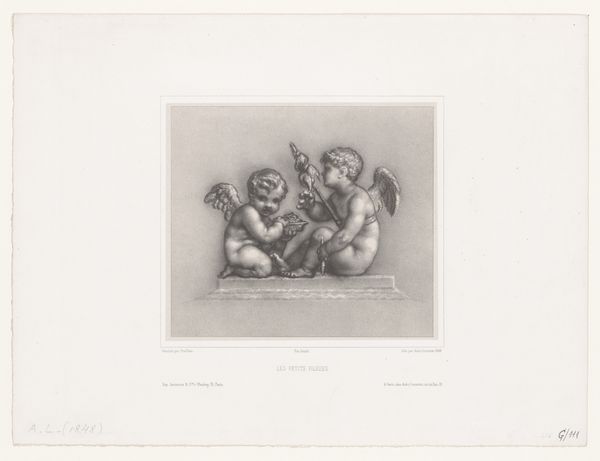
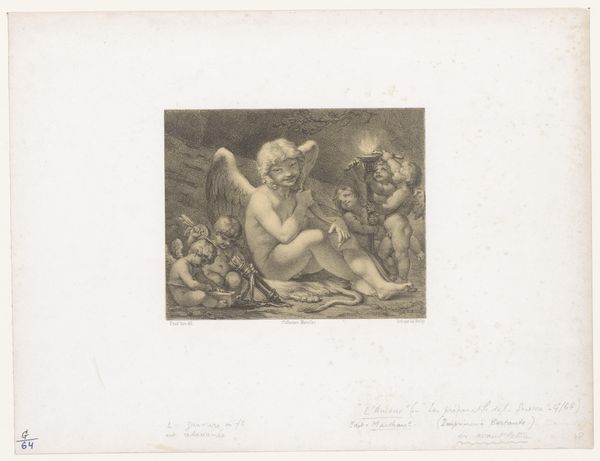
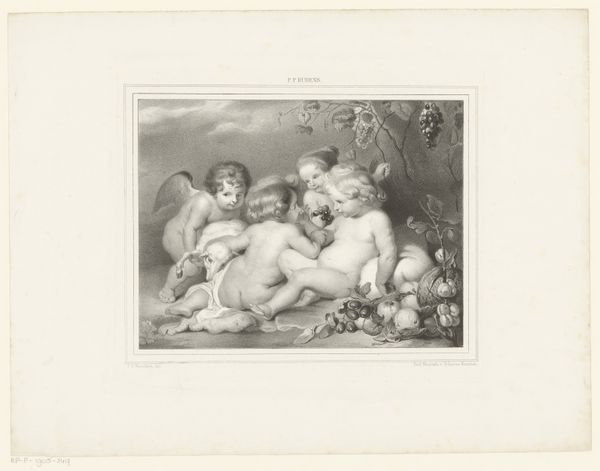
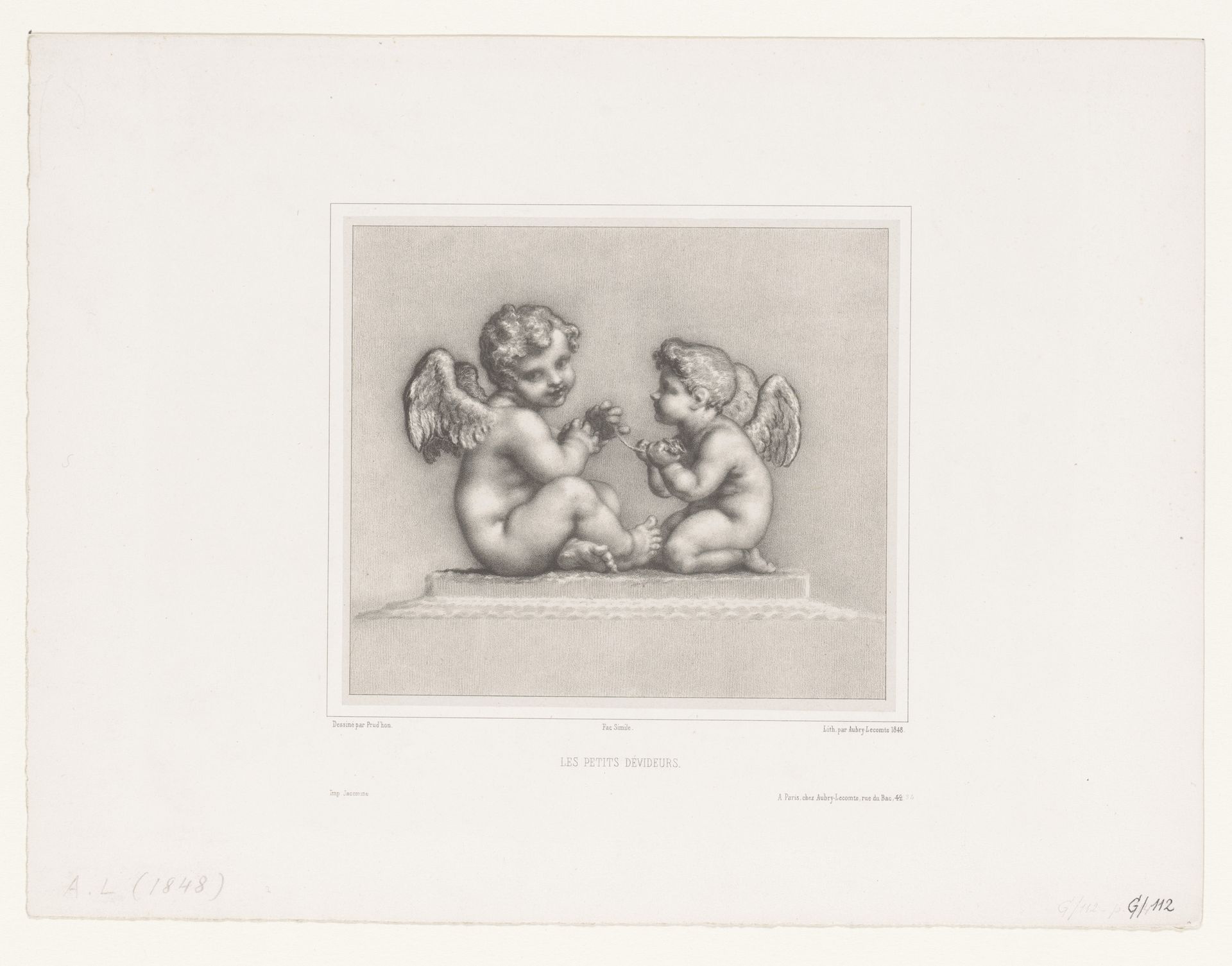
This lithograph by Hyacinthe-Louis-Victor-Jean-Baptiste Aubry-Lecomte depicts two putti, or cherubic children, winding wool. These figures, reminiscent of classical depictions of Eros or Cupid, embody innocence and divine love. The motif of putti, winged infants, has ancient roots, appearing in Roman art and architecture, often associated with themes of love and desire. These cherubic figures find new life during the Renaissance, symbolizing purity and heavenly love, yet their origins as pagan symbols subtly linger, creating a fascinating tension between the sacred and the sensual. Observe how the act of winding wool becomes an intimate interaction, mirroring the classical theme of Eros playing with Psyche's soul, a union that evokes a sense of completeness and harmony. This connection may tap into a collective memory of the soul’s journey, evoking longing for a return to an idyllic state. It is a powerful emblem, revealing how images resonate across time, echoing primal longings and aspirations.
Twee putti haspelen wol
1848

Hyacinthe-Louis-Victor-Jean-Baptiste Aubry-Lecomte
1797 - 1858Location
RijksmuseumArtwork details
- Medium
- print, etching
- Dimensions
- height 240 mm, width 320 mm
- Location
- Rijksmuseum
- Copyright
- Rijks Museum: Open Domain
Tags
Comments
Share your thoughts
About this artwork
This lithograph by Hyacinthe-Louis-Victor-Jean-Baptiste Aubry-Lecomte depicts two putti, or cherubic children, winding wool. These figures, reminiscent of classical depictions of Eros or Cupid, embody innocence and divine love. The motif of putti, winged infants, has ancient roots, appearing in Roman art and architecture, often associated with themes of love and desire. These cherubic figures find new life during the Renaissance, symbolizing purity and heavenly love, yet their origins as pagan symbols subtly linger, creating a fascinating tension between the sacred and the sensual. Observe how the act of winding wool becomes an intimate interaction, mirroring the classical theme of Eros playing with Psyche's soul, a union that evokes a sense of completeness and harmony. This connection may tap into a collective memory of the soul’s journey, evoking longing for a return to an idyllic state. It is a powerful emblem, revealing how images resonate across time, echoing primal longings and aspirations.
Comments
Share your thoughts