
Curatorial notes
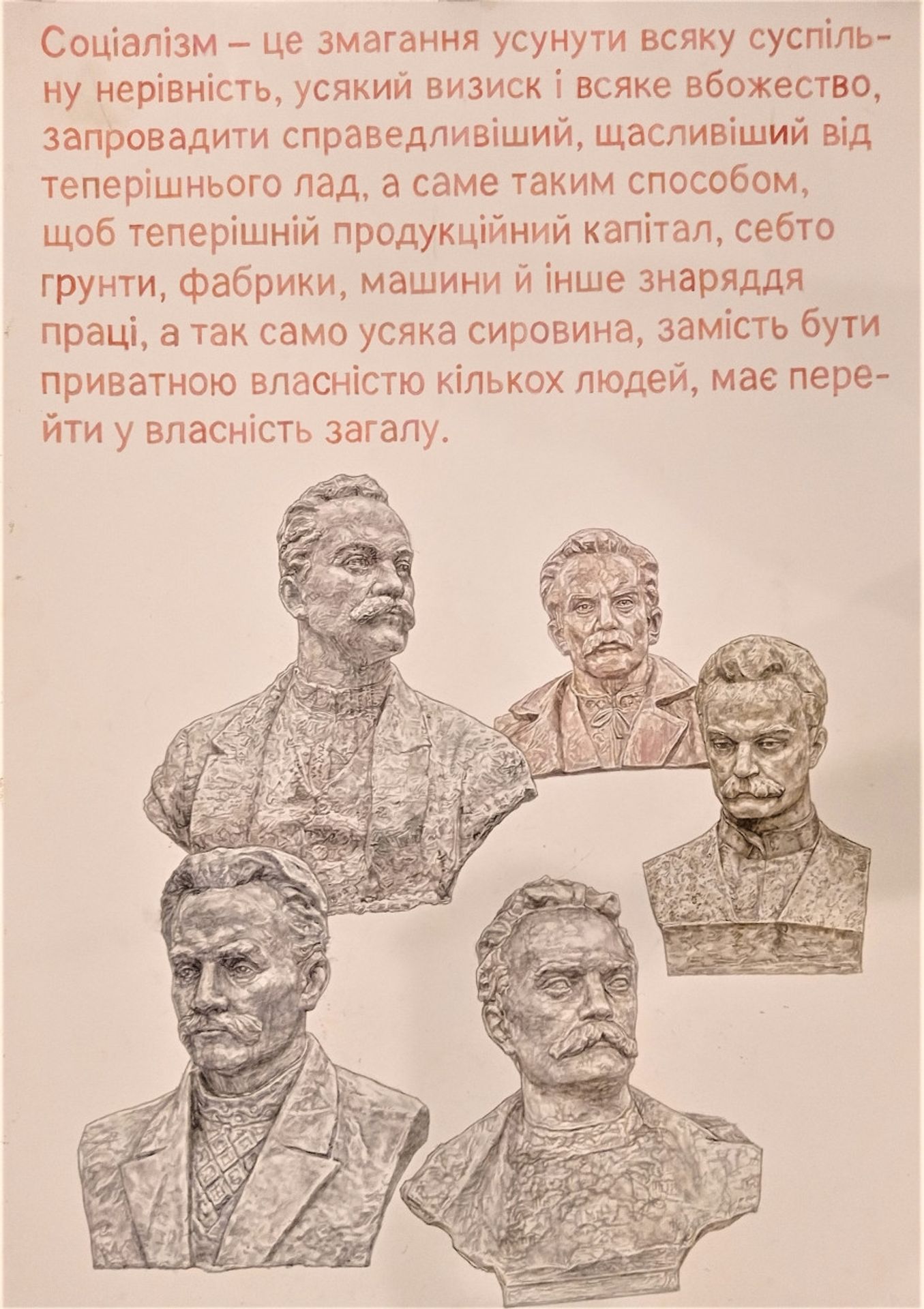
Curator: We're looking at Davyd Chychkan's "Untitled" from 2018, a textile relief piece. What are your first thoughts? Editor: It strikes me as a very deliberate collision of textures and ideas. You have the sculpted plaster busts evoking classical ideals, yet they are presented on fabric with printed text relating to Socialism and labor. How should we interpret this combination? Curator: Think about the artist’s means of production. Chychkan utilizes readily available materials – plaster, fabric, and printed text – likely sourced from his immediate environment. What does it signify to represent busts traditionally made in marble using cheaper, more accessible materials? Editor: Is he perhaps democratizing art? Taking images usually associated with the elite and reproducing them in a commonplace form? Curator: Exactly! He's questioning the hierarchies of art, its ownership, and its accessibility. These "busts" are not unique art objects; they hint at mass production and socialist ideals. And what does it mean that these portraits share a page with this communist-era slogan, especially being displayed today? Editor: So, by using inexpensive materials and explicitly referencing Socialist principles, he's not just creating an image; he's making a statement about the means of artistic production itself. Curator: Precisely. And furthermore, how labor and materials themselves hold cultural weight. The textile isn't just a backing; it carries its own history of production, connecting it to broader social and economic structures. Editor: I see it now; it's about unpacking the whole system that brings art—and everything else—into existence! Thanks for shedding some light. Curator: It’s a reminder that art is not created in a vacuum. Always consider the labor, materials, and social contexts that inform its creation and reception.