#
3d model
#
rounded shape
#
shading render
#
3d character model
#
curved arc
#
stoneware
#
child character design
#
men
#
3d modeling
#
round circular shape
#
musical-instrument
#
3d character modeling
Dimensions: Total W. 24.1 x D. 8.4 x L. 78.7cm (9 1/2 x 3 5/16 x 31in.)
Copyright: Public Domain
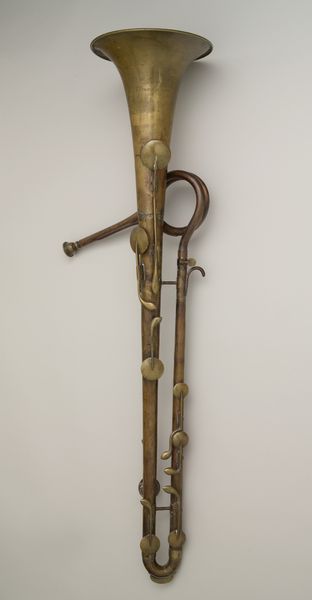
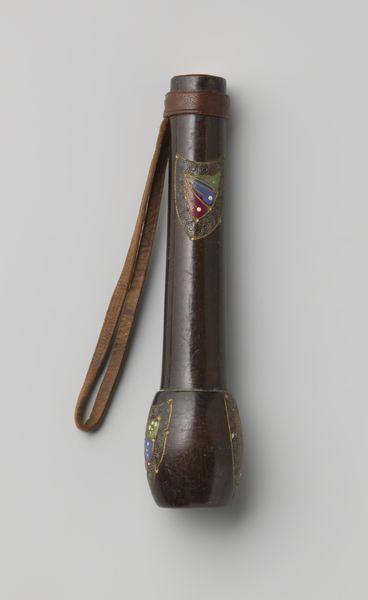
Curator: Here we have two Sgra-Snyan stringed instruments, likely crafted sometime between 1870 and 1899. The craftsmanship...it speaks volumes about the artisan's dedication. Editor: They're striking. Raw and aged, with an almost mournful presence. The wear hints at a lot of history—were these purely ceremonial? Curator: That's a question we must explore. Considering their placement within the Met’s collection, we can infer their acquisition was tied to specific interests of the museum at the time, likely reflecting a desire to represent global musical traditions and Tibetan cultural heritage to the broader public. The history of collection says a lot. Editor: But consider their materiality: wood, hide, sinew… the artisan worked within constraints of material access. And look at the decoration. Were those floral motifs painted? Engraved? Are they consistent with other visual symbols circulating in Tibetan culture at that time, signaling deeper belief systems? Curator: We know instruments often carry rich iconography and serve complex societal roles, these materials tell stories. Editor: Absolutely. How were these instruments employed? I'm immediately drawn to the way each seems intentionally shaped, each line imbued with artistic expression and perhaps community standards. I would even wonder if the community for which these were produced used instruments made with specific materials for other artistic outputs. Curator: That’s what makes these more than just musical instruments; they embody resourcefulness, labor, cultural practice. The decorations show craft is deeply tied to the community that produced the artworks. It reflects trade routes, social structure and status… a history book in stringed form. Editor: I wonder about the original musical context. Where were they played? Religious festivals? Daily life? What social stratification affected who made them? Curator: These Sgra-Snyan provide such layered insights into Tibetan society of the late 19th century. Editor: It gives you a much better insight than traditional history may suggest. A lot can be learned about an artwork's social context from the making of an object, the work behind it, and the way people respond to it.
Comments
No comments
Be the first to comment and join the conversation on the ultimate creative platform.
 Collect
 React
React Comment
More like this