About this artwork
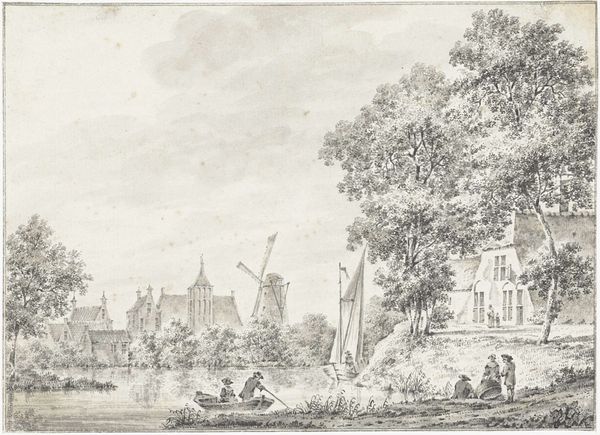
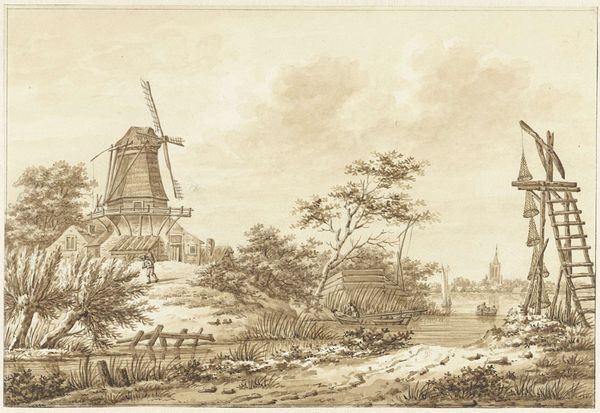
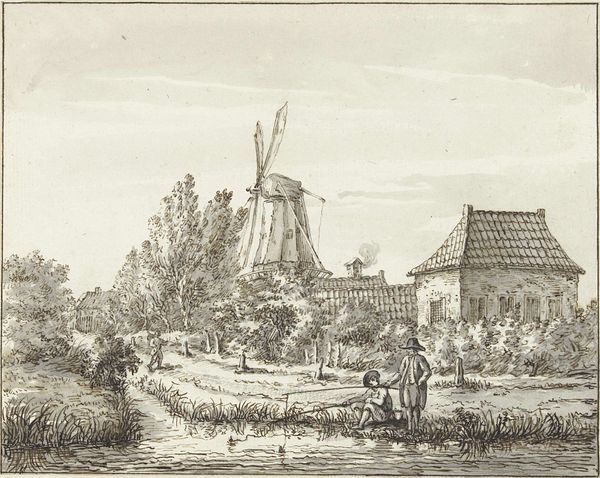
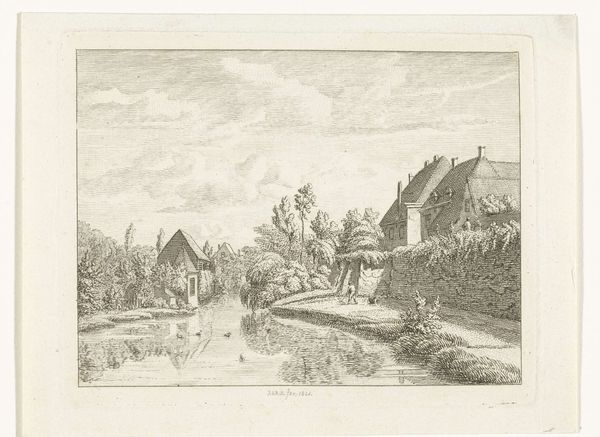
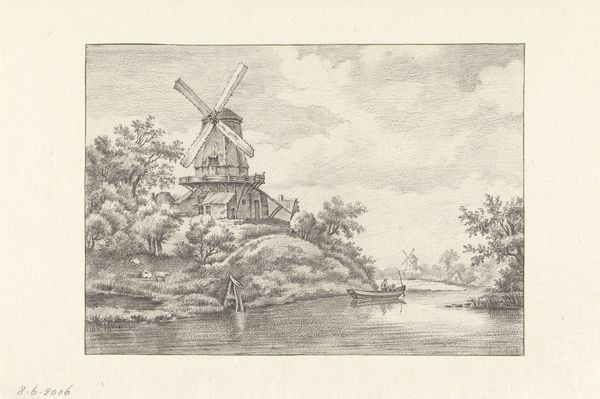
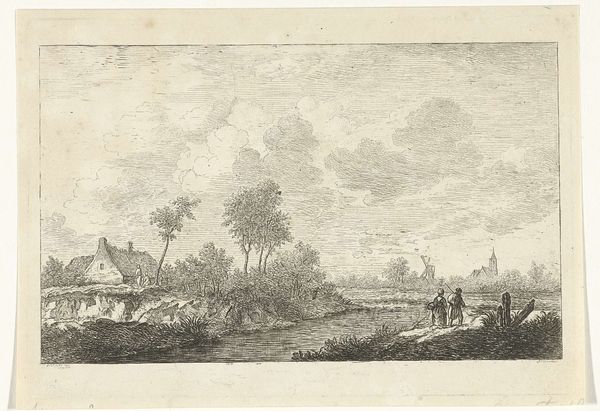
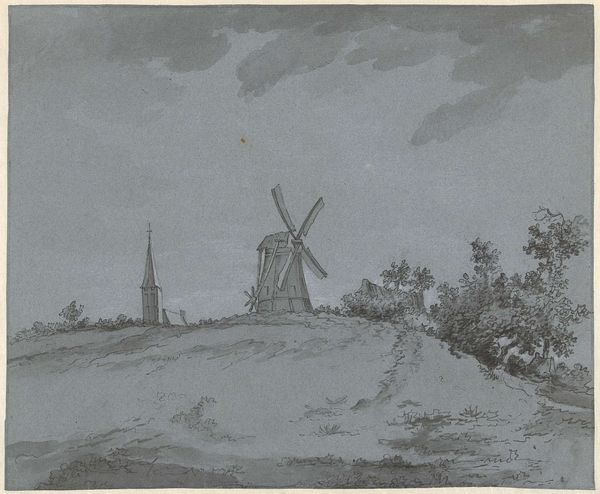
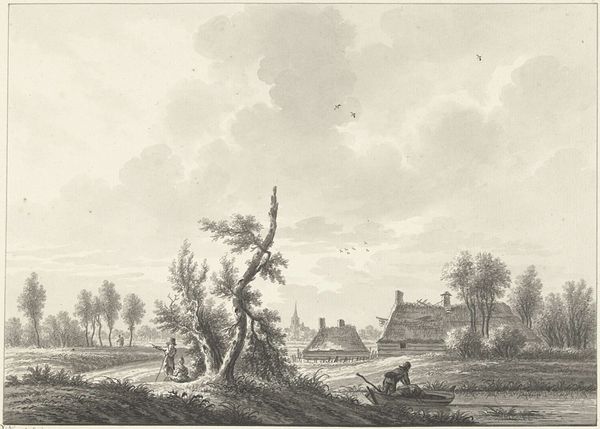
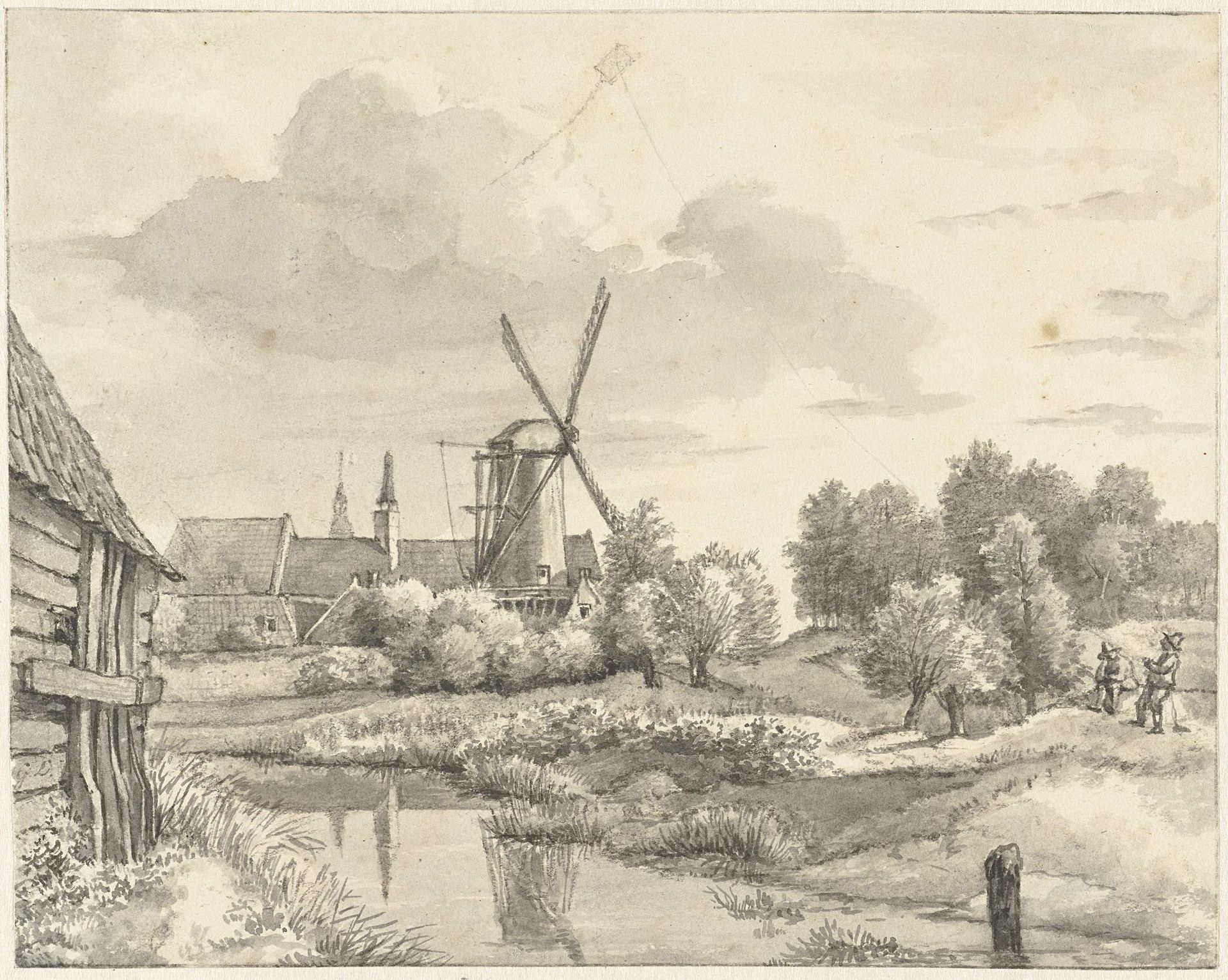
Gerrit Lamberts made this watercolor and pen drawing of Haarlem, showing two boys flying a kite, using paper as a readily available, and relatively inexpensive ground. The drawing captures a serene moment in the Dutch countryside, made all the more evocative by Lamberts' skillful use of monochrome washes. The subtle gradations of tone create depth and atmosphere, emphasizing the textures of the landscape. Look closely, and you can see the paper's texture coming through. It wasn't an expensive sheet, and the goal here wasn't to create a slick illusion, but to capture a place and time. It's worth noting that while Lamberts was a trained artist, the techniques he employed here were accessible to many. Drawing was a common skill, and watercolor painting a popular pastime. So, this work reflects a broader culture of making and looking, one that valued both artistic skill and everyday experience. This piece is an excellent reminder that art isn't just about grand gestures, but can also be found in the quiet observation of ordinary life.
Twee jongens met een vlieger bij de Wal van Haarlem
1786 - 1850

Gerrit Lamberts
1776 - 1850Location
RijksmuseumArtwork details
- Medium
- drawing, paper, ink
- Dimensions
- height 180 mm, width 227 mm
- Location
- Rijksmuseum
- Copyright
- Rijks Museum: Open Domain
Tags
Comments
Share your thoughts
About this artwork
Gerrit Lamberts made this watercolor and pen drawing of Haarlem, showing two boys flying a kite, using paper as a readily available, and relatively inexpensive ground. The drawing captures a serene moment in the Dutch countryside, made all the more evocative by Lamberts' skillful use of monochrome washes. The subtle gradations of tone create depth and atmosphere, emphasizing the textures of the landscape. Look closely, and you can see the paper's texture coming through. It wasn't an expensive sheet, and the goal here wasn't to create a slick illusion, but to capture a place and time. It's worth noting that while Lamberts was a trained artist, the techniques he employed here were accessible to many. Drawing was a common skill, and watercolor painting a popular pastime. So, this work reflects a broader culture of making and looking, one that valued both artistic skill and everyday experience. This piece is an excellent reminder that art isn't just about grand gestures, but can also be found in the quiet observation of ordinary life.
Comments
Share your thoughts