About this artwork
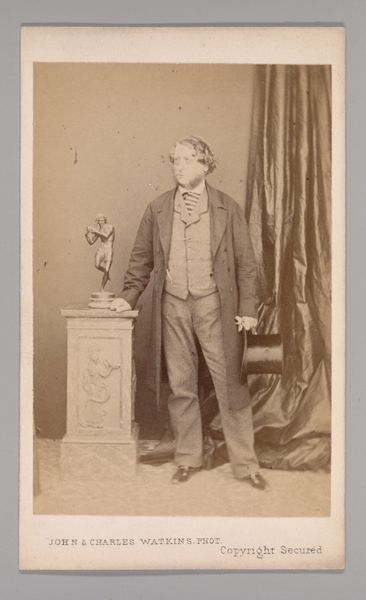
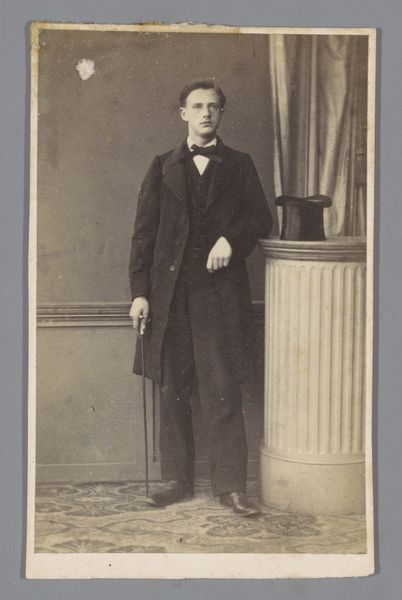
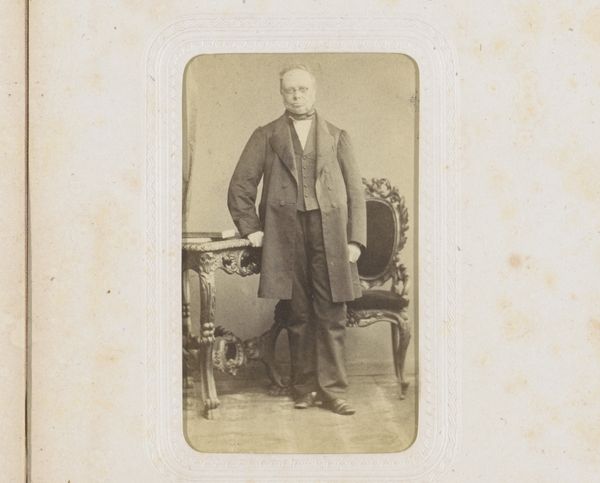
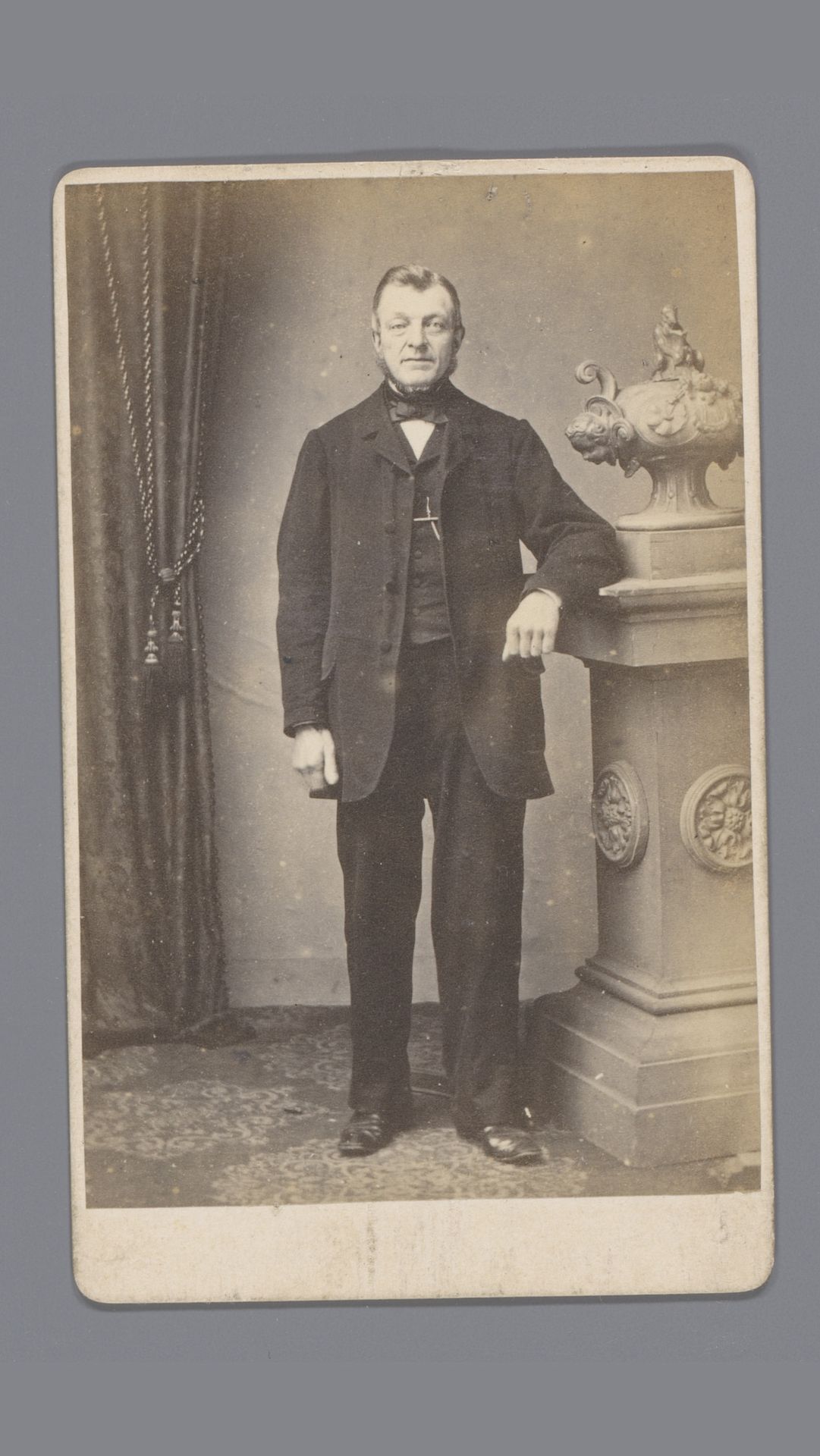
This is a photograph by A.K. de Koningh, portraying an unknown man standing beside a plinth. Observe the plinth. More than mere furniture, it is adorned with circular patterns and topped by a vase, echoing classical forms. This aesthetic reaches back to ancient Greece and Rome, where such motifs symbolized status, intellect, and civic virtue. We see this appropriation of classical motifs throughout the Renaissance, a resurgence that spoke to the spirit of humanism and the value of earthly achievements. Consider too, how these classical forms reappear in funerary art, evolving from symbols of worldly power to emblems of remembrance and continuity. Here, in this photograph, the plinth supports the sitter's self-presentation. Its presence suggests a dialogue with history, engaging us on a deeply human level with themes of legacy, memory, and identity. These motifs cycle through time, each appearance layering new meanings onto the old.
Portret van een onbekende man, staande naast een sokkel
1864 - 1867

Artwork details
- Medium
- photography, gelatin-silver-print
- Dimensions
- height 100 mm, width 62 mm
- Copyright
- Rijks Museum: Open Domain
Tags
Comments
Share your thoughts
About this artwork
This is a photograph by A.K. de Koningh, portraying an unknown man standing beside a plinth. Observe the plinth. More than mere furniture, it is adorned with circular patterns and topped by a vase, echoing classical forms. This aesthetic reaches back to ancient Greece and Rome, where such motifs symbolized status, intellect, and civic virtue. We see this appropriation of classical motifs throughout the Renaissance, a resurgence that spoke to the spirit of humanism and the value of earthly achievements. Consider too, how these classical forms reappear in funerary art, evolving from symbols of worldly power to emblems of remembrance and continuity. Here, in this photograph, the plinth supports the sitter's self-presentation. Its presence suggests a dialogue with history, engaging us on a deeply human level with themes of legacy, memory, and identity. These motifs cycle through time, each appearance layering new meanings onto the old.
Comments
Share your thoughts