1868 - 1871
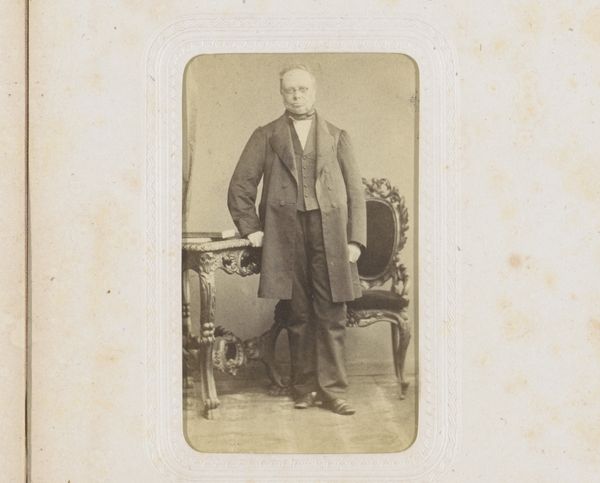
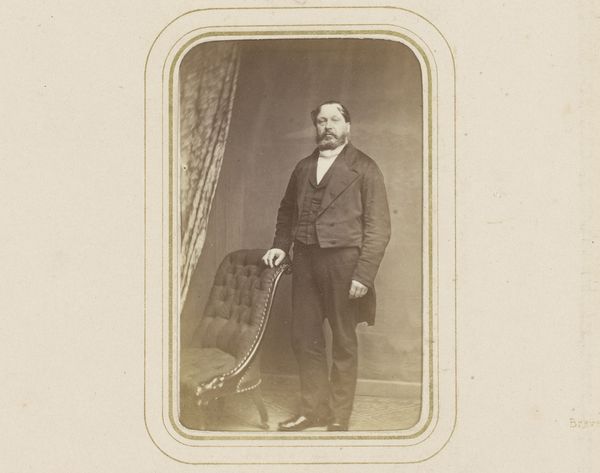
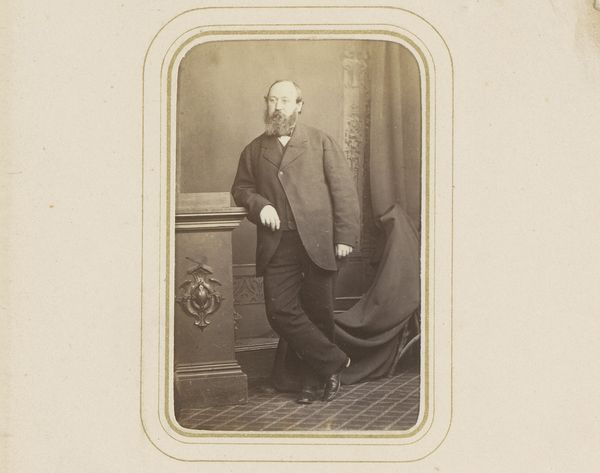
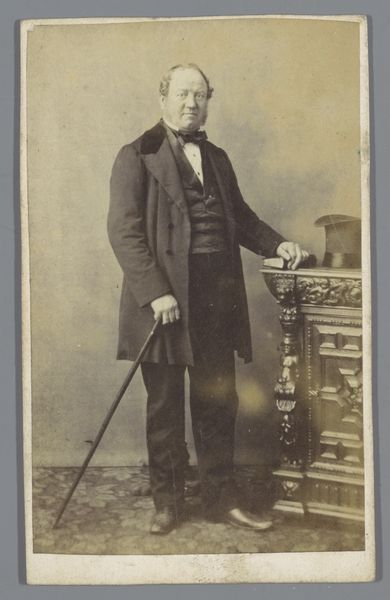
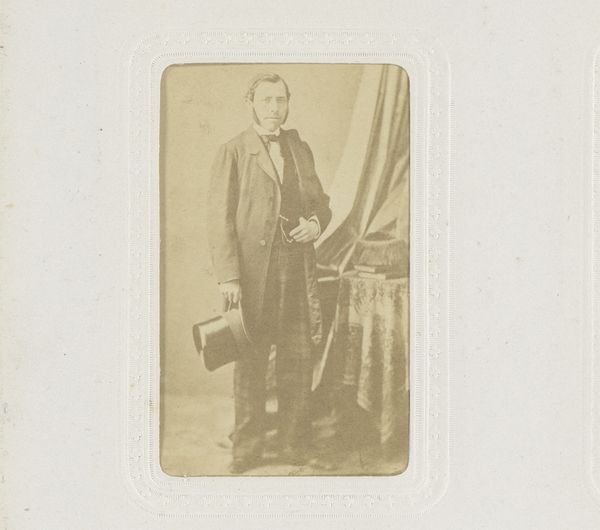
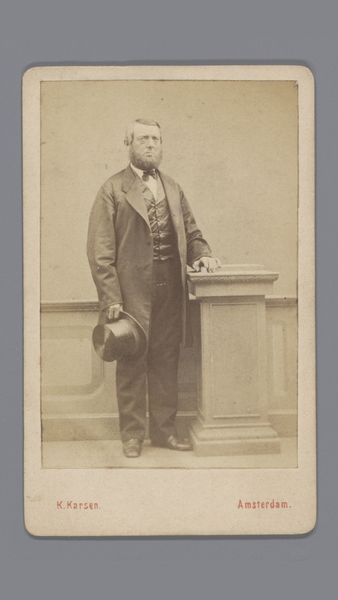
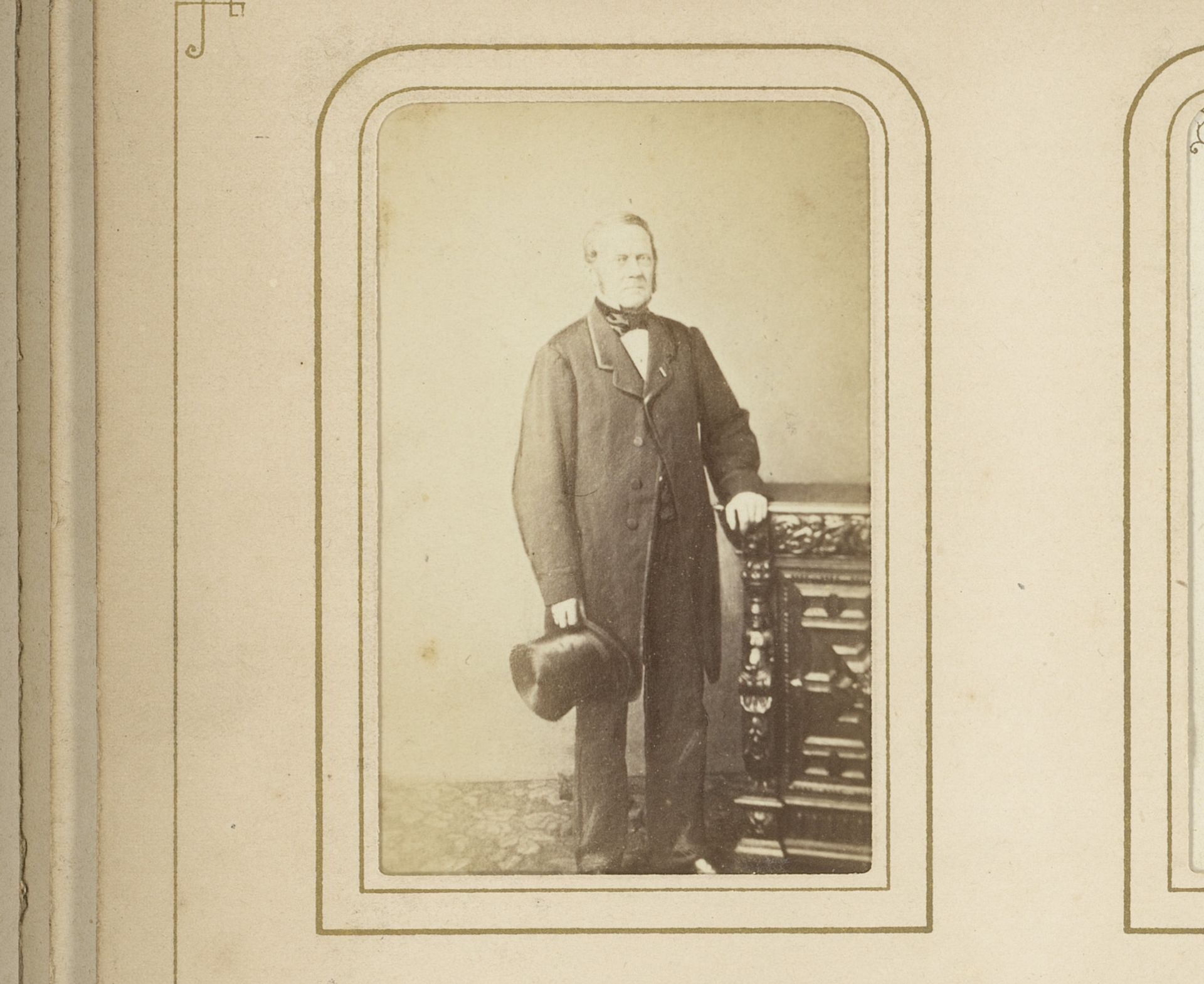
Portret van een staande man met hoge hoed in de hand

Listen to curator's interpretation
Curatorial notes
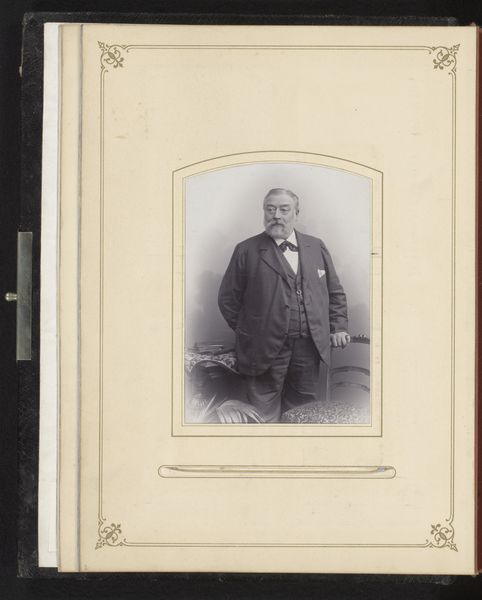
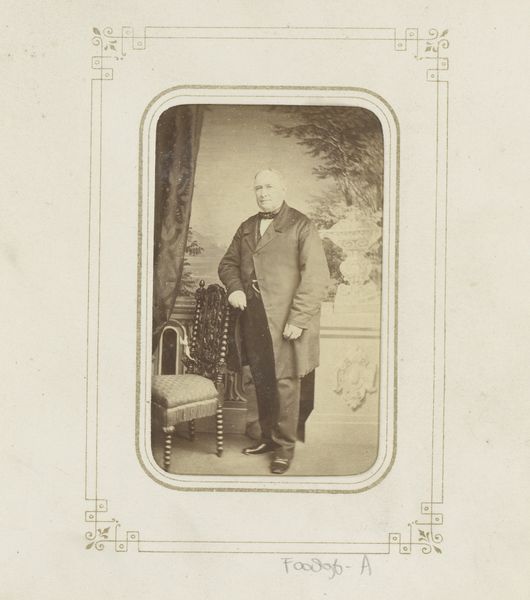
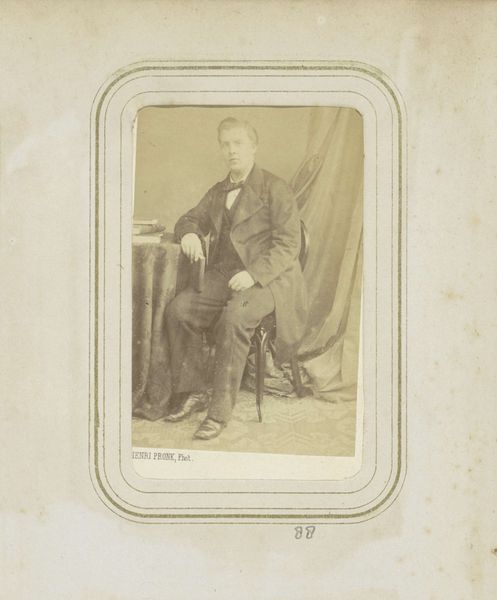
Curator: Let’s turn our attention to this portrait from between 1868 and 1871, by Édouard Keym. It's titled "Portret van een staande man met hoge hoed in de hand," or "Portrait of a standing man with top hat in hand." It's a photographic print showcasing Keym's talent for realism. Editor: He looks... formidable. Almost like a statue that has momentarily decided to hold a hat. Is that just me? He feels very still. Curator: Keym operated during a transformative period when photography was shifting from primarily documentary to artistic. In this work we can explore the dynamics of power, gender, and class representation in 19th-century portraiture. How the male identity was carefully curated and presented. Editor: You're right. Everything about this image is crafted – the position of the hat, the subtle leaning on what looks like an overly ornate console. It's less about capturing reality and more about building an image. Though, I must admit, it is missing a certain 'spark'. Do you agree? Curator: Interesting. Perhaps this lack of perceived “spark” stems from the sitter embodying and adhering to established codes of masculinity. It is more a construction of a desired social position than an authentic individual. Consider the lack of overt emotionality. It presents a carefully constructed image designed to project authority. Editor: Mmm, okay. But what if this portrait *is* an attempt to show vulnerability? All this composure and the elaborate set might mask what he feels. I am really enjoying this photo though, because it feels full of untold secrets. Curator: Well, our interpretation shows the nuances inherent in portraiture. And understanding the artistic choices helps reveal broader societal and historical contexts that defined our vision of identity and representation. Editor: Exactly! And hopefully we can start conversations and question the ‘truth’ behind every perfectly posed moment in our own time.