before 1868
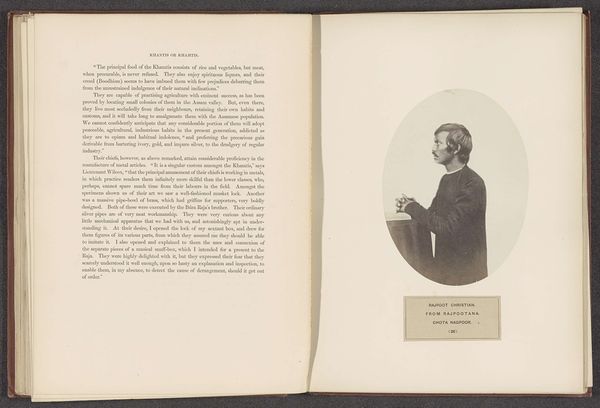
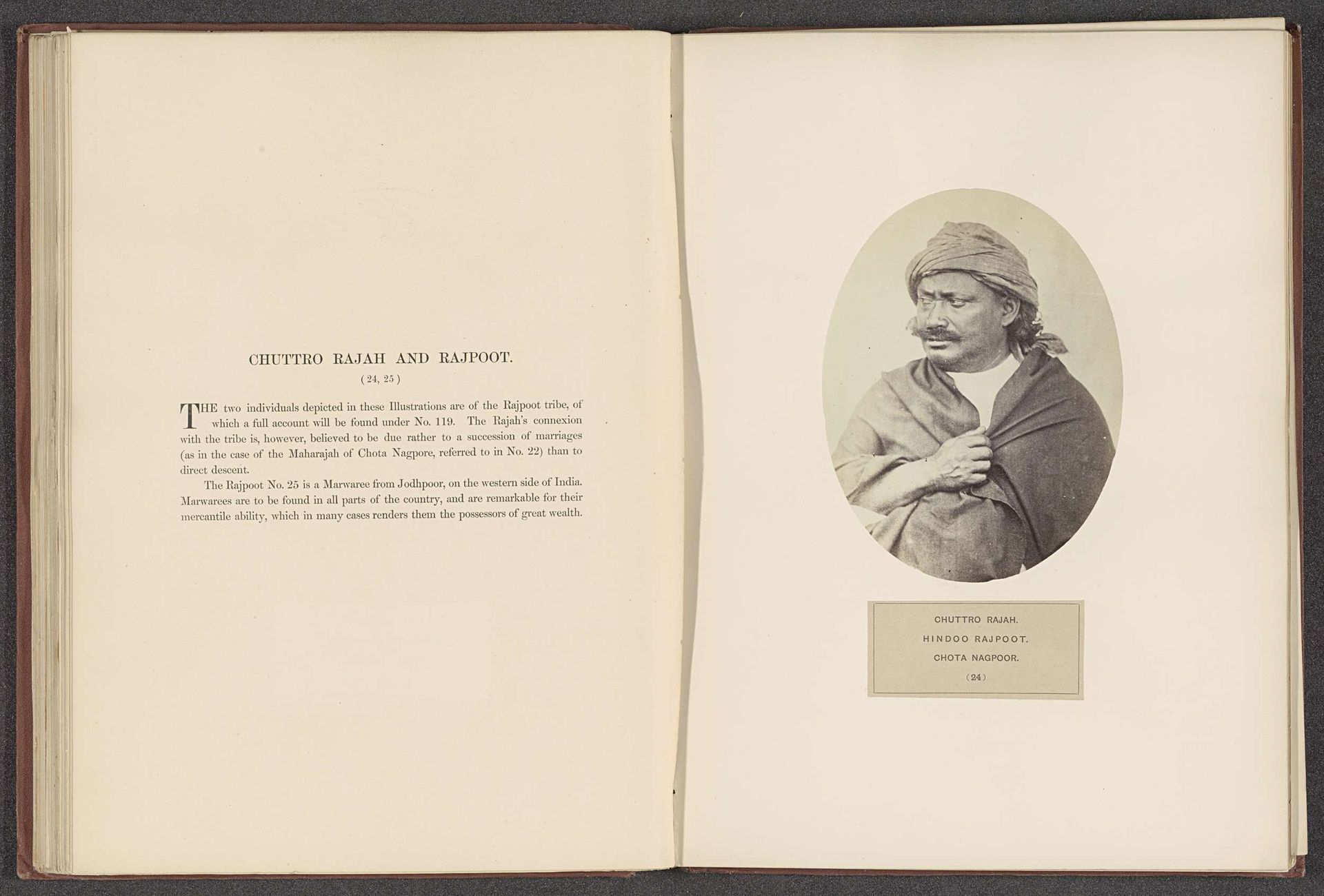
Portret van een onbekende Rajput man uit Chota Nagpur

Listen to curator's interpretation
Curatorial notes
This photographic print was made by Benjamin Simpson, depicting an unknown Rajput man from Chota Nagpur. The turban he wears is not merely headwear, but a potent symbol of honour and status, deeply embedded in the cultural memory of the Rajput. It evokes a sense of pride and belonging. Think of the ancient Roman senators, each donning a toga that symbolized civic duty and status. Similarly, across different times and spaces, headwear signifies power, identity, and lineage. But consider how such a symbol transforms. Today, a turban might represent religious identity or resistance against homogenization, its significance reshaped by contemporary struggles and collective memories. Symbols are never static. Their meanings ebb and flow through the currents of history, influenced by subconscious processes and societal shifts. The emotional weight they carry engages us on a deep, subconscious level.